← All essays·August 3, 2026·13 min read
Why I love the grocery store
The grocery store is the densest, most human decision environment in the economy: a box where nearly everyone, every week, spends real money deciding who they and their family are. That makes it two beautiful things at once, a voting machine that reveals what people actually want, and the hardest segmentation problem there is, where every shelf is a standing bet on how well someone understands you.
Most people walk into a grocery store and see errands. I see the busiest decision engine in the economy.
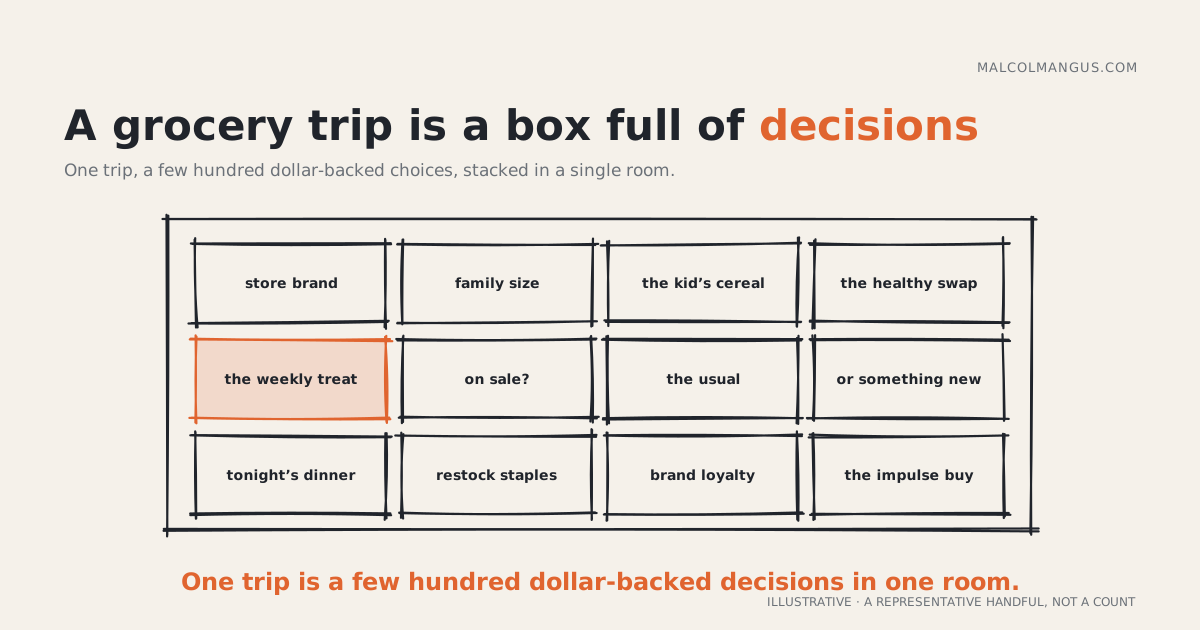
Stand in the cereal aisle and count. In one forty-foot stretch you make dozens of small, dollar-backed choices: this brand or the store one, the family size or the single, the treat for your kid or the bran for your conscience. Then you do it again in dairy, and again in the freezer, and again at the register when the gift cards and the candy make one last bid for your wallet. A single trip is a few hundred tiny decisions, each one with money attached, made in about forty minutes. Nowhere else in your week are you asked to reveal so much of what you actually want, so quickly, and pay for every answer.
That is the whole reason I cannot stop thinking about it. A grocery store is a box full of decisions, and behind every product is somebody who made a bet on you.
The shelf is a voting machine
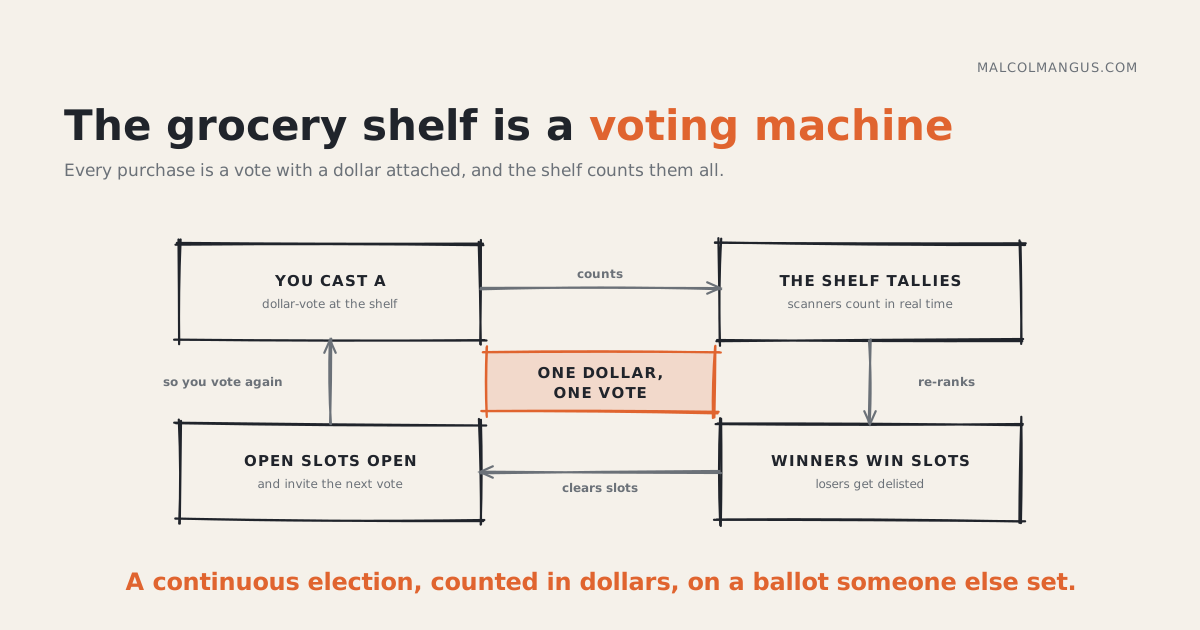
Here is the first thing I love. Every purchase is a vote, and it comes with a dollar stapled to it. You do not tell a survey what you prefer, you do not click a star, you hand over money and walk out, and the shelf counts it. Scanners tally the votes in real time. A product that keeps winning gets more facings and better position; a product that loses gets fewer, then gets delisted, then gets replaced by the next hopeful. The aisle you walk is the standings, updated continuously. Revealed preference, live, with a price on every ballot.
Two things make this election unusual, and both are worth saying out loud. It is not one person, one vote, it is one dollar, one vote, so the shelf listens hardest to whoever spends most, which is why the premium end of every aisle gets courted and the value end gets squeezed. And the ballot is curated: you can only vote for what the buyer decided to stock, so the election is real but the candidates were chosen before you arrived. That is what makes the grocery store such an honest instrument and such a rigged one at the same time. It tells you exactly what people will pay for, out of exactly the options someone bet they would want.
Put simply: A grocery store is a continuous election where you vote with dollars and the shelf tallies every ballot. It is the most honest preference machine we have, and also a curated one, because you can only choose from what a buyer already bet you would want.
The densest, most human decisions in the economy
I have gone looking for a richer decision environment and I cannot find one. The stock market moves real money, but for most people it is a handful of decisions a year, made by a minority. Elections are consequential but rare and unpriced. Apps harvest millions of choices an hour, but they are free clicks, not dollars. E-commerce is the closest rival, and it is a real one, but it is not something nearly every household does, in person, every week, for a table full of other people.
That intersection is what grocery has to itself. It is dollar-backed, so every choice is a real preference and not an idle one. It is near-universal, because almost every household in the country does it. It is weekly, so the dataset refreshes fifty-two times a year per person. And, the part I find most beautiful, it is done for other people. Add those together and you get the single densest stream of honest, human, money-weighted decisions anywhere in the economy. It is the closest thing we have to a live readout of what people actually want, taken from almost everyone, over and over.
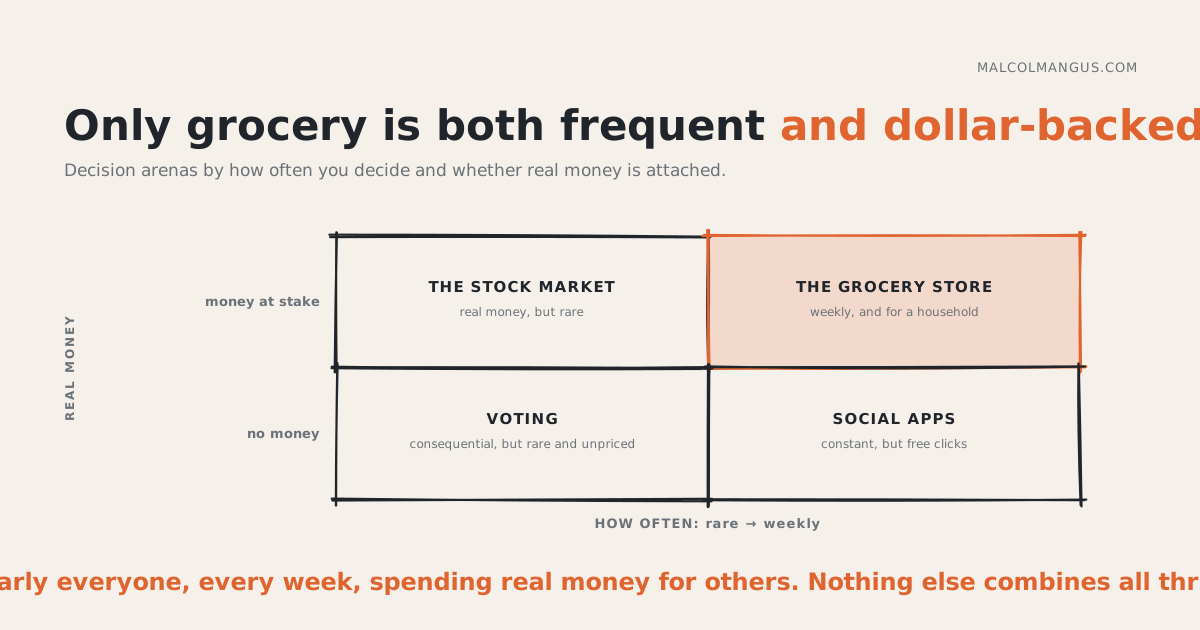
Put simply: No other place asks so many people to spend real money, so often, on decisions that reveal what they actually want. Grocery is the economy's densest and most human preference dataset, refreshed every week.
You are shopping for people you love
The part that turns a data problem into a human one is that you are almost never buying only for yourself. One cart carries a household. You are picking the cereal your kid will actually eat, the yogurt your partner likes, the thing your body needs, the treat that keeps everyone happy, all under a budget that has to net out. You are a purchasing agent for a small group of people with different tastes, different diets, and different jobs they need the food to do, and you are reconciling all of it in the aisle, on the fly, for money.
I do not know another routine, dollar-backed decision that is so consistently made on behalf of other people. A house or a car is bought for the family too, but once a decade. Groceries are the weekly negotiation, the place where love and budget and nutrition and who-ate-the-last-one all collide in a single basket. That is why the aisle feels emotional in a way a brokerage account never will. Every trip you are quietly deciding who your family is going to be this week.
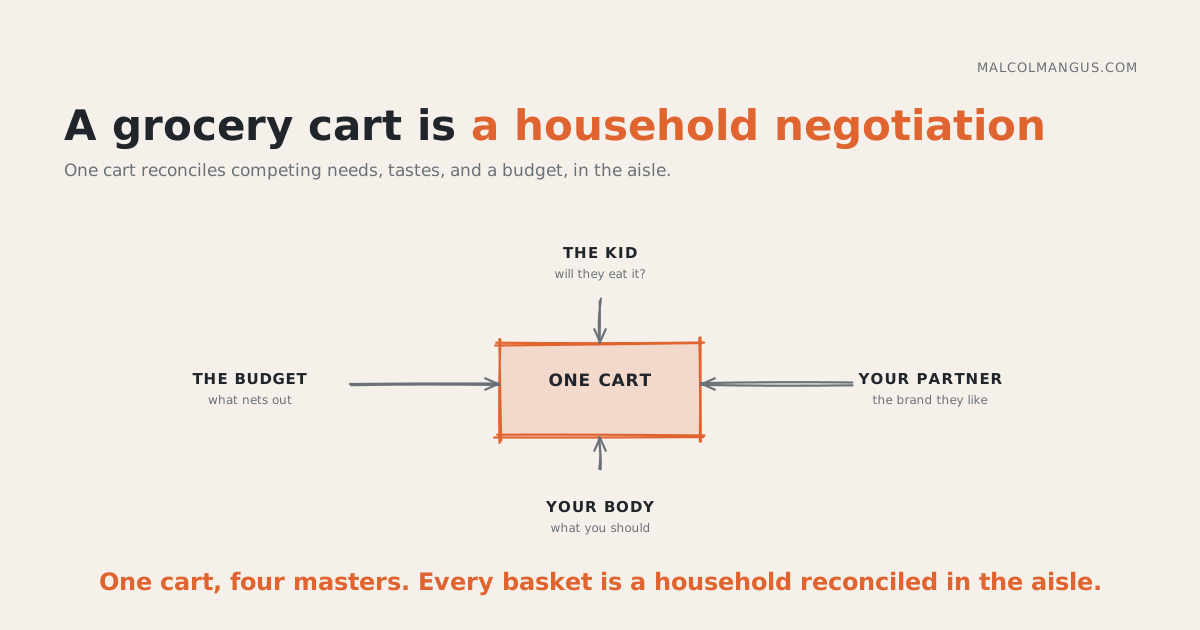
Put simply: You rarely shop only for yourself. Each basket reconciles a household of competing needs and budgets in real time, which makes grocery the rare dollar-backed decision you make, weekly, for the people you love.
Every shelf is a bet on knowing you
Now flip the store around and look at it from the shelf's side. If the shopper is voting, the shelf is a wall of candidates, and every single product is a standing bet on a person. A box is placed with a hypothesis baked in: we think you are this kind of shopper, hiring this product for this job, and willing to pay this price. Get the persona right and it sells; get it wrong and it loses its votes and its slot. A typical supermarket carries more than thirty thousand distinct products, which means the store is that many standing bets, each one priced and positioned and refreshed every reset.
This is the segmentation problem in its purest form, and it is why I keep coming back to write about it. The cereal aisle bets on your guilt, sorting fifty boxes from candy to atonement. Oatmeal bets on a function and coffee bets on a tribe, two shelves fanning from a commodity along completely different axes. And the whole apparatus behind it, the loyalty data, the ranked positions, the paid placement, is the reason your grocery store was quietly running Google's business model before Google existed. One static shelf has to serve every persona in the neighborhood at once, from a single fixed layout, and the better it reads people, the more of their votes it wins. That is a genuinely hard problem, and the store solves a version of it every day.
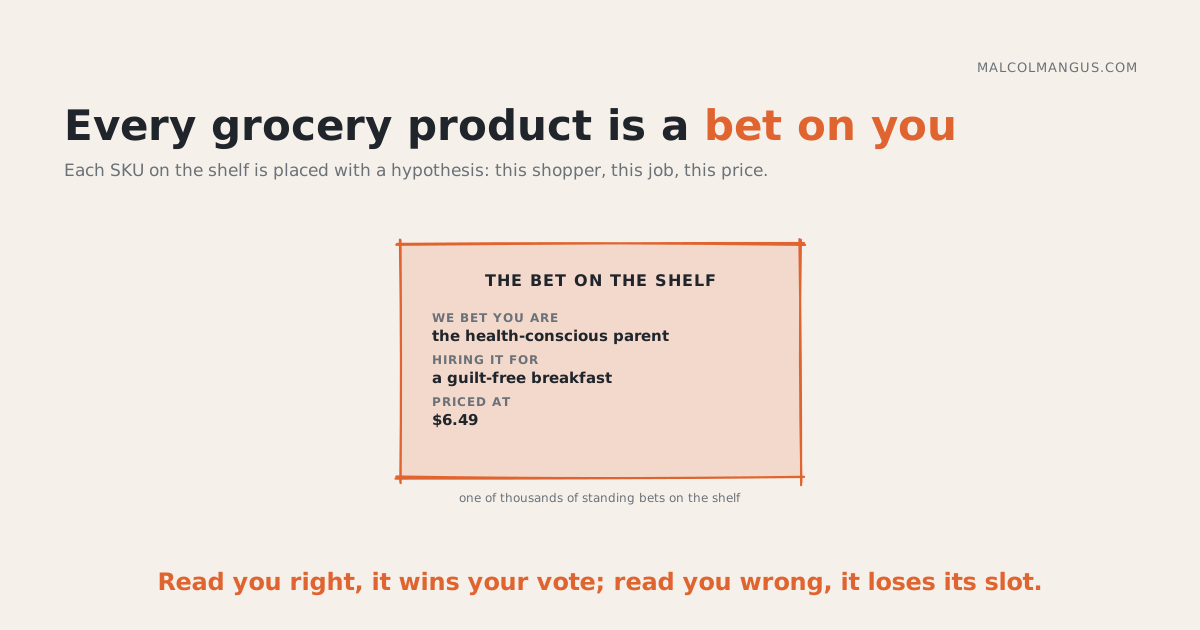
Put simply: Read the store the other way and every product is a bet on a person: this shopper, this job, this price. The whole shelf is thousands of standing wagers on how well someone understands you, and the ones that read you right win your dollars.
The shelf is a search results page
The store is also a ranking system, and this is the part closest to home for me. Walk up to the cereal set and you have effectively typed a query: breakfast my kid will actually eat, at a price I can stomach. The shelf is the results page. The buyer is the ranking algorithm, ordering the candidates by how well they fit the demand, and position is rank. Eye level is the first result, the endcap is the featured slot, the bottom shelf is page two. Some positions are organic, earned by selling, and some are paid, bought with slotting fees, exactly the way the top of a search page is. Reaching for the eye-level box is clicking the first result.
This is not a loose metaphor, it is the same machine: match a query to ranked candidates, blend paid with organic, and get paid when someone picks one. I wrote a whole piece on the paid half, the retail-media networks that quietly turned grocers into ad platforms. What keeps me standing in the aisle is the organic half, the ranking itself, one buyer sorting the entire catalog into a single order for everyone who walks in. And I notice all of it because it is the exact problem I have spent my career inside. Most of my working life has been in data and marketing analytics, a lot of it in SERP analytics: ranking, attribution, segmentation. Query and intent, rank and position, click and dollar, impression and facing. I have modeled every one of those on a screen, and here they all are in the world, built out of cardboard. That is probably the real reason the store pulls at me. It is my day job, printed on a box.
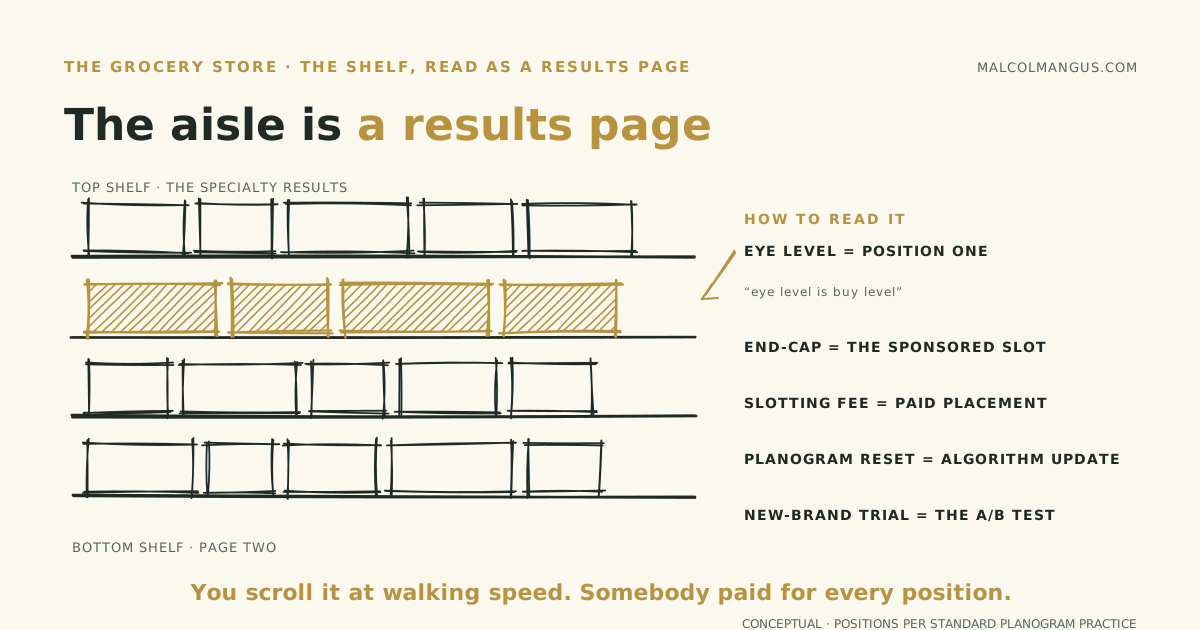
Put simply: A grocery shelf is a search results page you can walk through. Your intent is the query, shelf position is rank, paid placement sits above organic, and a click is a dollar. It is the same ranking, attribution, and segmentation problem I have worked on my whole career, built out of cardboard instead of pixels.
The shelf is where the chains cash out
There is one more thing I love, and it is the reason my other pieces keep ending up in this one building. The grocery shelf is the final destination of an astonishing number of supply chains. A wedge of alpine cheese that aged fourteen months, an egg that passed through a flock and an integrator, a coffee bean that crossed a farm, a trader, and a roaster: every one of those chains, with all its stages and handoffs and waiting, terminates at the same place, a shelf, holding still until someone hands over a dollar. Everyone upstream is positioning for this one moment.
It is also where the profit pools fill. When I map where an industry's money actually settles, the revenue that feeds every pool enters right here, at the register, out of a shopper's dollar-vote. The shelf is the cash register for the whole food economy: trace any food dollar backward and it fans out into a sprawling industry, watch it forward and it collapses into a single choice in an aisle. The store is the one place you can stand at the finish line of ten thousand supply chains at once and watch each of them get paid, or not.
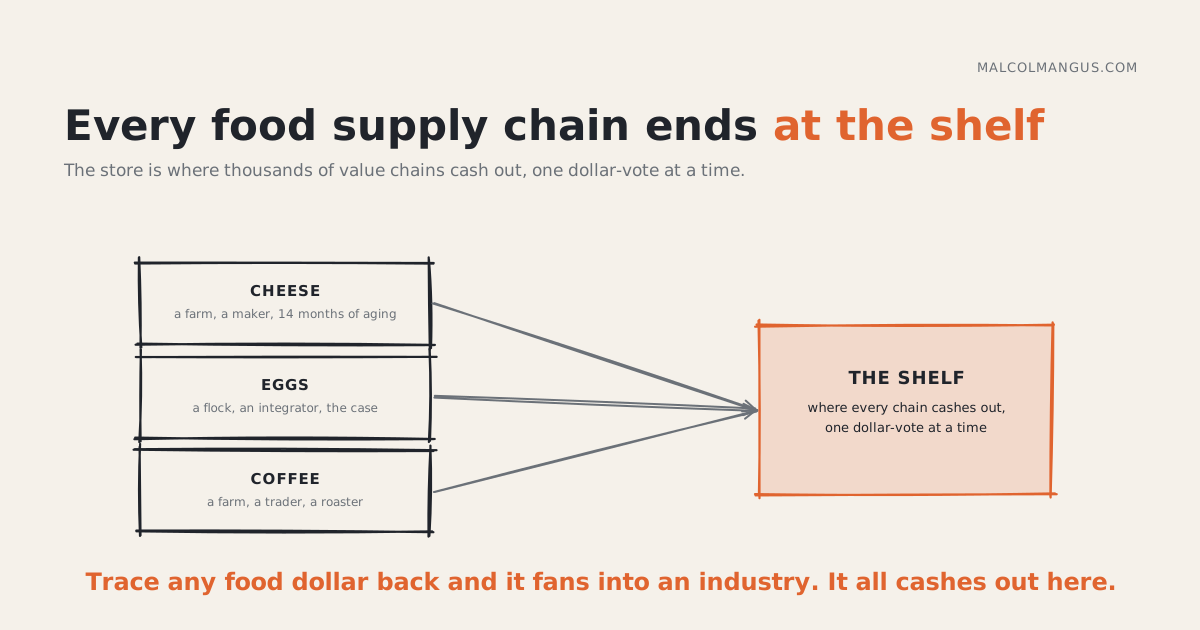
Put simply: The grocery shelf is the final destination of thousands of supply chains and the point where every food profit pool gets its revenue. Everything upstream is positioning for one transaction, a shopper in an aisle handing over a dollar. That is where the whole food economy cashes out.
Why I love the box
So that is the answer to why I keep coming back. Most people see a chore. I see the one room where the whole economy quietly shows its hand: you can stand in an aisle and watch strangers reveal, with their own money, who they are and who they are feeding, while thousands of silent bets on the shelves try to read them right. It is intimate and industrial at the same time, and I do not know another place that is both.
Every grocery piece I have written is one probe into this one box. I traced the money on a wedge of cheese and an eight-dollar egg and a five-dollar coffee. I mapped how the shelf sorts you and how the store sells you back to brands. Different probes, one subject. The store keeps rewarding the attention because it is doing something profound in plain sight: taking the truest census we have of what people want, one dollar-backed vote at a time, and betting a whole business on how well it listens.
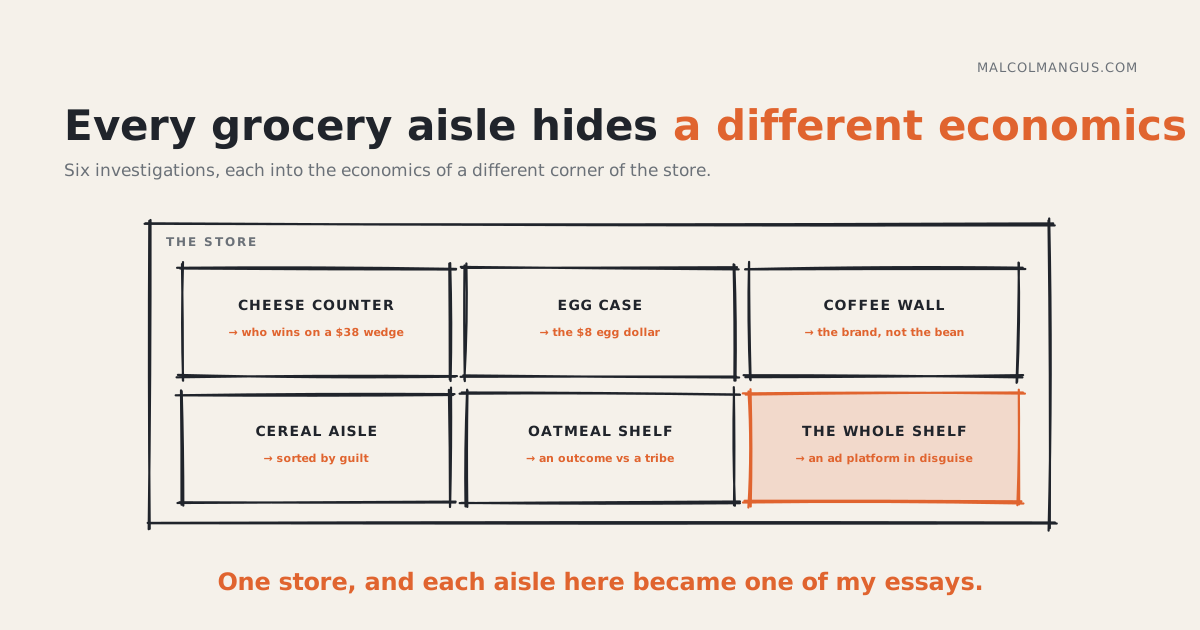
Put simply: I keep coming back to the grocery store because it is where the whole economy turns legible: strangers spending real money to reveal who they are, and a wall of bets trying to read them. Every piece I write is one more probe into the same honest, ordinary room.

Malcolm Angus
I'm an analytics engineer, data product manager, and forward-deployed engineer. I write about data products, moats, flywheels, and business strategy, the loops that make companies harder to catch.

The charts in this essay are free to reuse with credit.