← All essays·July 26, 2026·16 min read
The oatmeal wall sells an outcome. The coffee wall sells a tribe.
Two shelves in one supermarket, both starting from a commodity, both fanning into dozens of SKUs. But the oatmeal wall proliferates along the function axis (protein, clean, keto) while the coffee wall proliferates along identity (veteran, local, values). A SKU is a persona hypothesis, and the two aisles bet on different ones.
Listen to this page
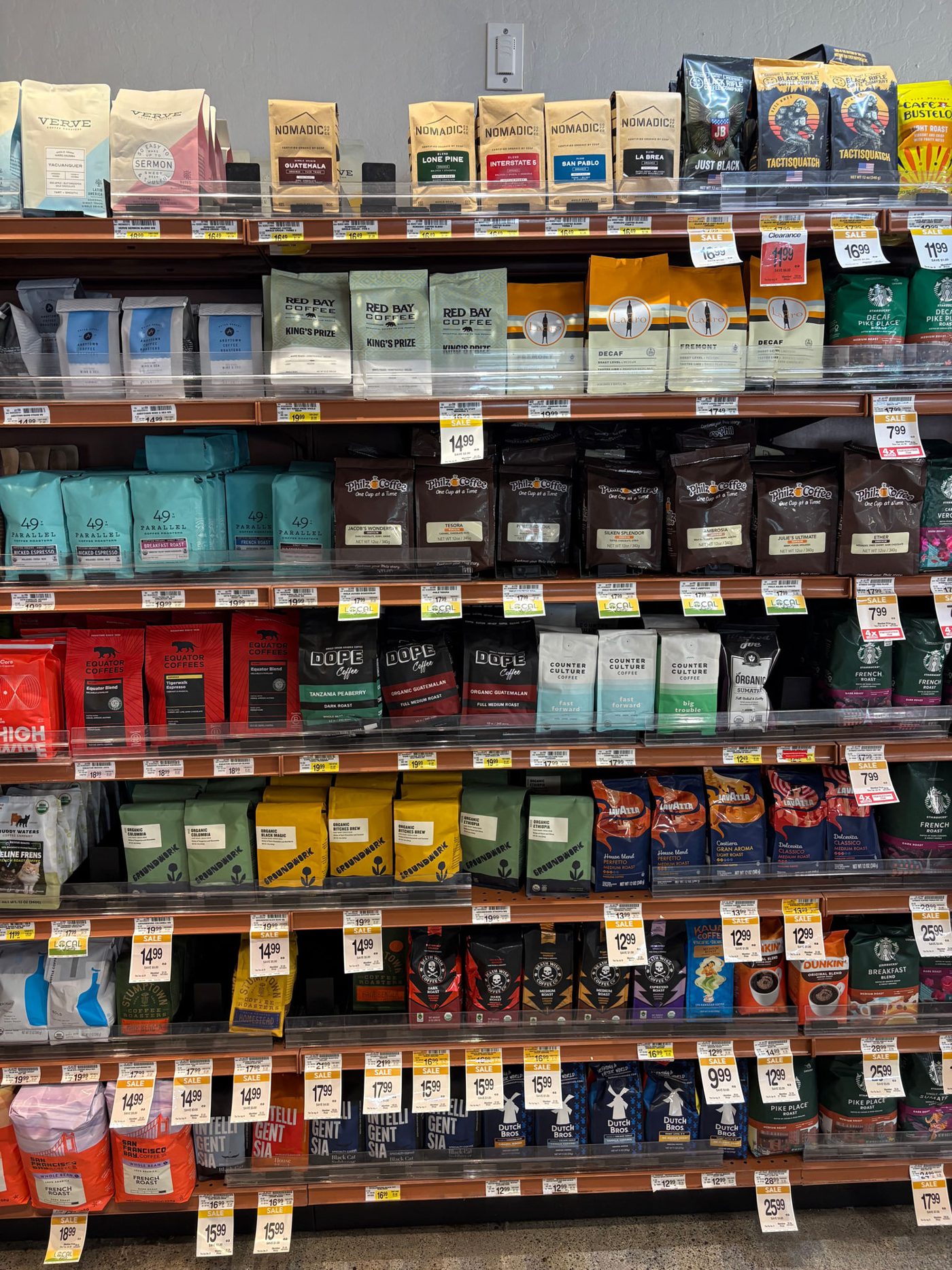
I went to my supermarket to buy oatmeal and coffee and came home with a market-structure problem. Two aisles over from each other, both start from a commodity a farmer sells by the ton: oats, and green coffee beans. Both explode on the shelf into dozens of choices. The oatmeal wall carries about 14 brands across dozens of SKUs; the coffee wall carries about 25 brands. Same four feet of steel shelving, same job, wildly different answers.
The interesting question is not why there are so many. It is what each shelf is spreading along. Because when you place every product by what its package actually leads with, the two aisles turn out to be climbing completely different ladders.
A SKU is a persona hypothesis
Start with the problem the shelf is solving, which I traced in a companion piece on the grocery store as a search engine: a results page re-ranks for every query, but the aisle is one fixed ranking that has to serve every shopper in the neighborhood at once. The rushed parent, the gym rat, the price-first pensioner, the clean-eating wellness shopper, the traditionalist: all of them walk the same shelf, and each wants a different number one.
The industry has a formal name for how manufacturers answer that. It is the consumer decision tree, and the software that builds it states the goal plainly: an assortment must "contain at least one product representing each necessary attribute combination to cover a category's relevant consumer need states" (RELEX Solutions). Read that again. Every need state must have at least one SKU standing in for it. A SKU is a persona hypothesis. The shelf is a portfolio of those hypotheses, capped by linear feet and recompiled a few times a year when the planogram resets.
That is why an average US supermarket carries around 33,000 SKUs (FMI, 2019). It is not clutter. It is coverage. And it runs straight into the most famous finding in choice research: at an upscale California grocery, a tasting table with 24 jams drew more crowds than one with 6, but the small display converted browsers to buyers at roughly ten times the rate, about 30% against 3% (Iyengar and Lepper, 2000). More options, fewer sales. To be honest about it, a later meta-analysis of 50 experiments found the average choice-overload effect is close to zero, and that it only bites when the options feel interchangeable (Scheibehenne, Greifeneder and Todd, 2010). Which is exactly the escape hatch the shelf uses: if every SKU stands for a genuinely different persona, the choice stops feeling like 24 identical jams and starts feeling like a directory. The whole game is to make each hypothesis distinct enough to earn its slot.
Put simply: Variety on a shelf is not indulgence, it is persona coverage. Each SKU is a bet that some shopper's specific need has no other home. The bet only pays if that SKU is clearly different from the one beside it, which is why the smart question is never how many, but along what axis.
The oatmeal wall: buying an outcome
Stand in front of the hot-cereal shelf and read what the boxes shout. Kodiak: "protein-packed," roughly 14 grams. Purely Elizabeth: "10g protein," ancient grains. Quaker's newer boxes: "Protein," and next to them "35% daily fiber." Birch Benders on the adjacent pancake shelf: "keto," "carb-friendly." What every insurgent leads with is a claim about your body. The incumbents, meanwhile, lead with comfort: "maple and brown sugar," "sweet cream." The category's proliferation axis is function.
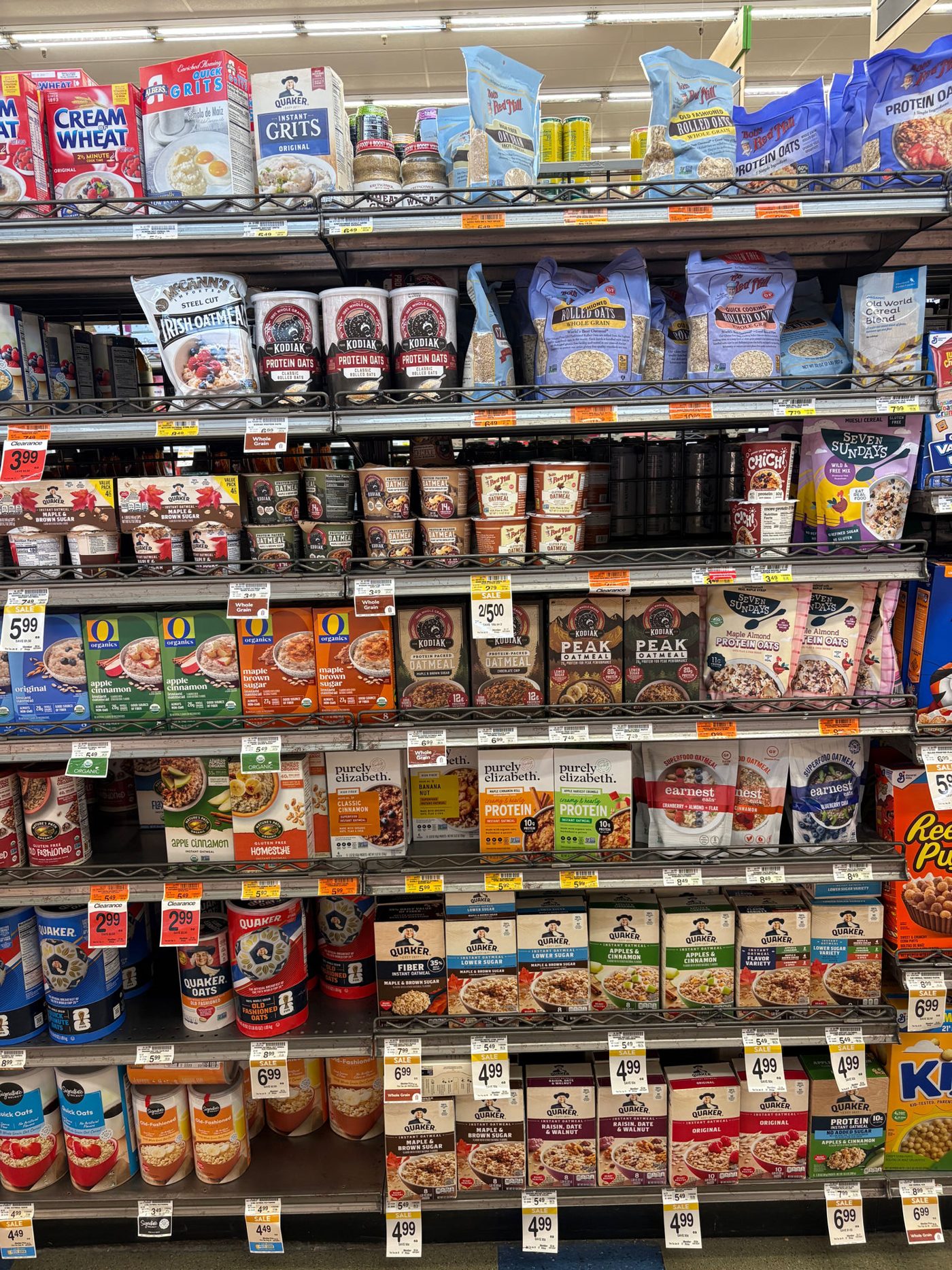
Plot every box by two things the shelf itself encodes: how much work it asks of you (an instant packet you just add water to, versus steel-cut oats that take 25 minutes) on one axis, and what it promises on the other (cheap comfort at the bottom, a body outcome at the top). The wall fills a clear 2D space.
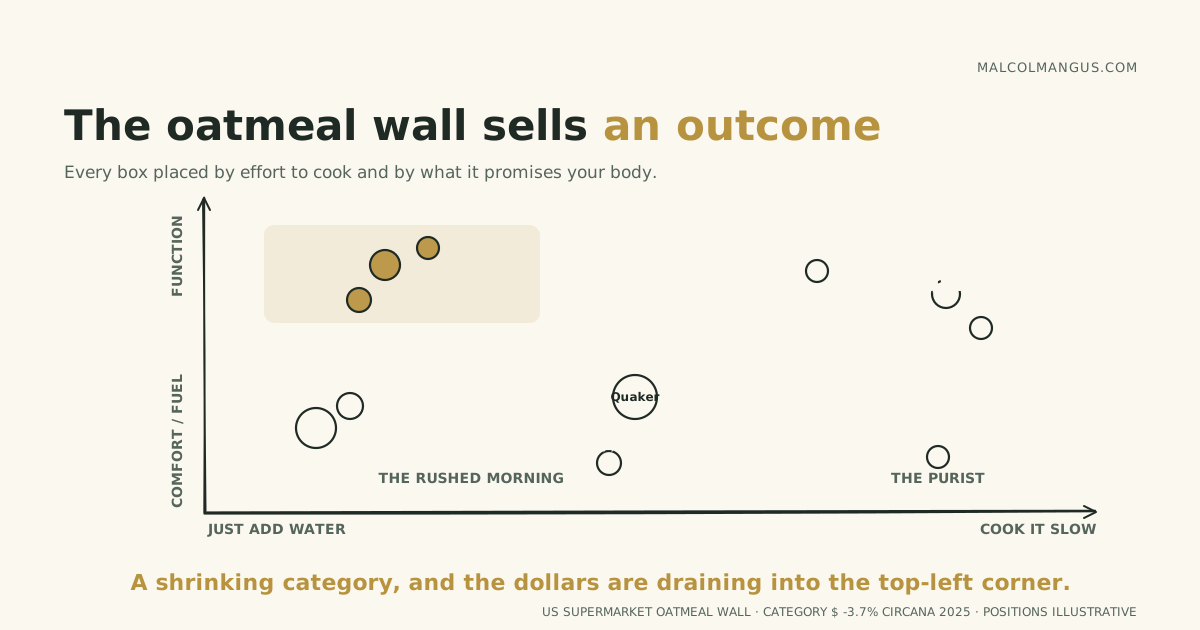
Two things jump out of that map. First, the hot corner is the top left: high function, low effort. Protein you do not have to cook. That zone barely existed fifteen years ago, and it is where the money went. Kodiak grew from about $800,000 in revenue in 2010 to roughly $200 million by 2021, almost entirely on the move of adding whey protein to a pancake mix, and L Catterton bought a majority stake at the top of that curve (PR Newswire, 2021). Purely Elizabeth is on track to pass $300 million in sales in 2026 (PR Newswire, 2026). Meanwhile the category as a whole is shrinking: US hot cereal was $1.93 billion in 2025, down 3.7%, and Quaker, still the leader at roughly 54% of the category, is sliding with it (Circana, reported by Baking Business, 2026). The niche brands multiply into a declining pie. That is the signature of persona warfare, not growth: nobody is winning new oat eaters, so everyone is subdividing the ones who remain. Circana even named the framework, sorting breakfast into "Function, Fuel, and Fun," and found 41% of adults actively trying to eat more protein (Circana, 2026).
Second, look at the right edge, the "I will do the work" pole. It splits in two. Bob's Red Mill and McCann's steel-cut oats sit high: authenticity, whole grain, the long cook as a feature. The identical effort at the bottom right is a plain store-brand steel-cut, which is the same twenty-five minutes bought by a shopper optimizing for price, not virtue. Same behavior, opposite persona. The price span across the whole wall runs about 25 to 30 times, from private-label oats near 14 cents a serving to a Purely Elizabeth single-serve cup around $4 (retailer listings, 2026).
Put simply: On the oatmeal wall you are buying an outcome for your body, and the brands compete by out-functioning each other. The category is shrinking while the niche brands multiply, because proliferation here is a fight to re-slice a declining base of eaters into ever-finer need states: more protein, less sugar, more fiber, faster.
The coffee wall: buying a tribe
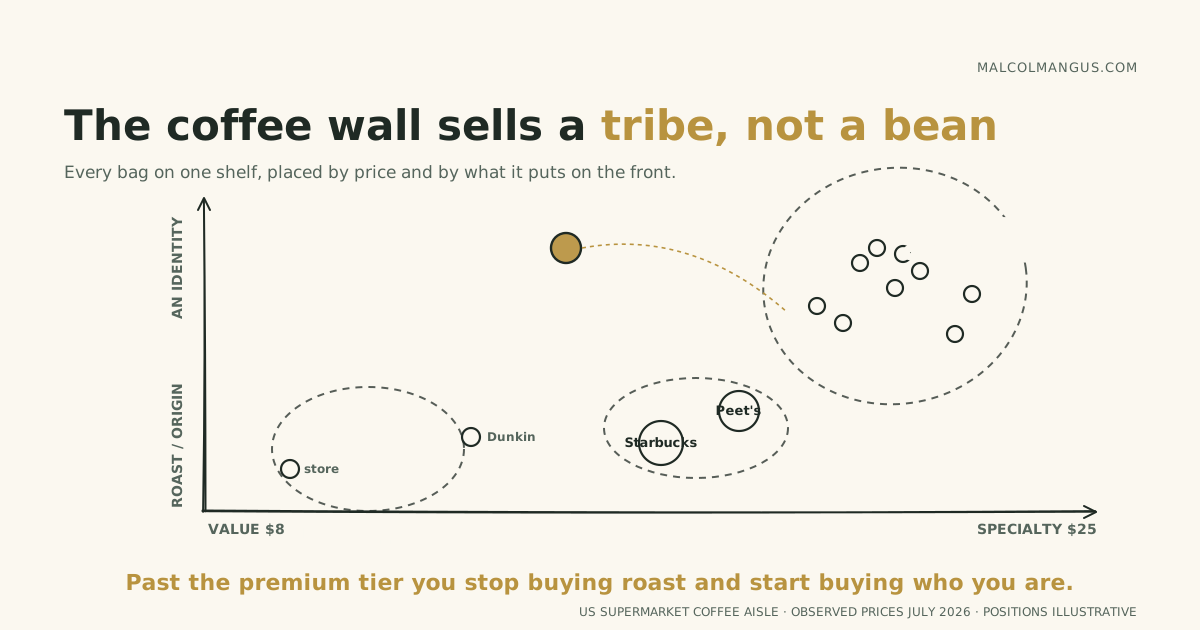
Now walk to the coffee aisle and read those bags. At the value end, Café Bustelo and Dunkin lead with price and habit. In the middle, Starbucks and Peet's lead with roast and origin: Pike Place, Veranda, Major Dickason's, Sumatra. But climb into the specialty tail and the front of the bag stops describing the coffee at all. Black Rifle: "veteran founded." Red Bay: Black-owned, Oakland. Equator: a Certified B Corp, LGBTQ-owned. Groundwork: organic, Los Angeles. Verve, Philz, Nomadic: a city or a lifestyle as the brand. Past a point, you are not buying roast. You are buying membership.
Map it the same way: price and craft tier on one axis, and what the bag leads with on the other, from the bean itself up to an identity.
The gold dot is the whole argument. Black Rifle Coffee is a publicly traded company that did $398 million in revenue in fiscal 2025 (BRC Inc., 2026), built entirely on veteran and patriot identity, with no cupping-score claim anywhere on the bag. On my shelf it was on clearance at $11.99 and sale at $16.99, while the third-wave roasters beside it, Verve, Red Bay, Dope, Equator, sat at $17.99 to $24.99. That is identity fully decoupled from craft: maximum tribe, mid-tier price, priced to move. The specialty benchmark for reference is stark, with the SCA retail index averaging $32.35 a pound in late 2024 (Specialty Coffee Transaction Guide, 2024). Black Rifle is not trying to win that game. It is winning a different one.
This is what the "third wave" of coffee actually unleashed. The term, coined around 1999 and popularized soon after, meant treating coffee like wine: single origin, farm-level, light roast to show the bean (Wikipedia, third-wave coffee). But the deeper effect on the shelf was that it made a roaster's story the product. Once the story is the product, every community can mint its own brand: Red Bay for Oakland and social justice, Dope for Black culture and hip-hop out of Atlanta (Daily Coffee News, 2020), Equator women- and LGBTQ-owned (NBC News, 2018), Black Rifle for the flag. Note who owns the trusted middle, by the way: Peet's, Stumptown and Intelligentsia all roll up to JDE Peet's, which Keurig Dr Pepper absorbed in an $18 billion deal that closed in April 2026 (Keurig Dr Pepper, 2026), and Starbucks bagged coffee is licensed to Nestlé under a $7.15 billion deal (Starbucks, 2018). The giants sell reliability and own the facings. The tail sells belonging.
Put simply: On the coffee wall, past the premium tier, you stop buying a bean and start buying a flag. Identity can decouple from quality entirely, which is why a $398 million company can sell veteran-branded coffee at a clearance price and never mention how it tastes.
The tribes turn political
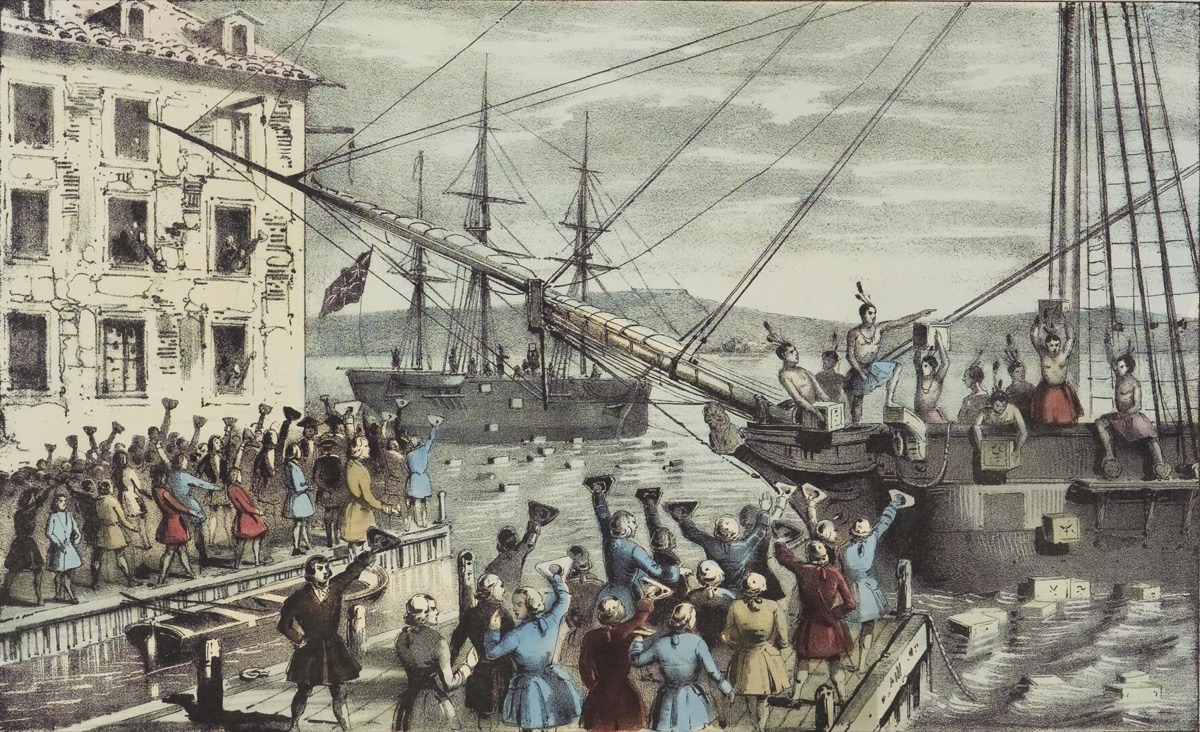
Coffee turning political is not a 2021 invention; it is founding-era. After colonists dumped the East India Company's tea into Boston Harbor in December 1773, drinking British tea read as loyalism and coffee became the patriot's cup. Told at a lodging house that "we have renounced all Tea in this Place," John Adams took coffee instead, and wrote to Abigail in July 1774: "Tea must be universally renounced, and I must be weaned, and the sooner the better" (Massachusetts Historical Society). Two and a half centuries later the same instinct runs down the specialty aisle, only finer now than empire versus colony.
The identity axis has a harder edge than local pride, and you can watch it split the shelf. On one side sits a cluster that wears its values on the label: Equator's B Corp and fair-trade badges, Red Bay's social-justice mission, Dope's hip-hop branding, and the whole specialty-cafe aesthetic that Starbucks came to symbolize. Starbucks earned that coding the hard way, through a race-relations campaign and a 2017 pledge to hire ten thousand refugees that drew conservative boycotts (Fortune, 2017). A segment of shoppers reads every one of those signals as not-for-them.
On the other side, one brand built an entire company as the answer. Black Rifle Coffee is veteran-founded, pro-firearm, pro-military and self-consciously anti-hipster, and the New York Times asked the quiet part out loud in a 2021 profile titled "Can the Black Rifle Coffee Company Become the Starbucks of the Right?" It doubled sales leaning into the culture war, then had to publicly denounce the extremists who had adopted its logo, which angered part of its own base (Salon, 2021). The commodity middle stays out of it. Nobody pledges allegiance to Folgers.
One local detail sharpens all of it: these shelves are in San Francisco. In one of the most progressive cities in the country, the veteran-branded counter-coffee still earns its facings, which is the surest sign that the tribe it sells to is a national market, not a fringe.
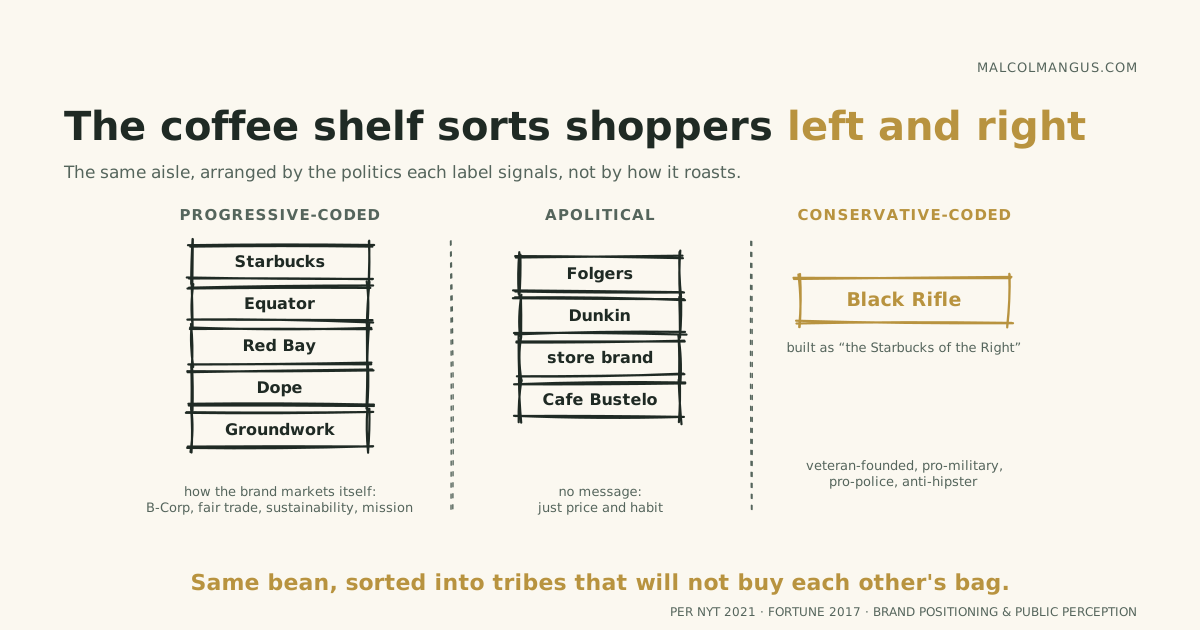
So the coffee aisle does something the oatmeal aisle never could. It sorts shoppers by politics, and the two ends will not touch each other's bag. This is identity proliferation reaching its logical end, where the label has stopped being about the coffee at all.
Put simply: Once a product signals identity, identity hardens into politics. The coffee shelf now has a progressive pole that wears its values on the label, a conservative counter-brand built expressly to oppose it, and an apolitical commodity middle between them. You are not choosing a roast. You are picking a side.
Same commodity, two different ladders
Both aisles do the same job from the same raw material. Both use price and effort as the horizontal axis. But the vertical axis, the one each category climbs to escape being a commodity, is different, and the difference is not an accident.
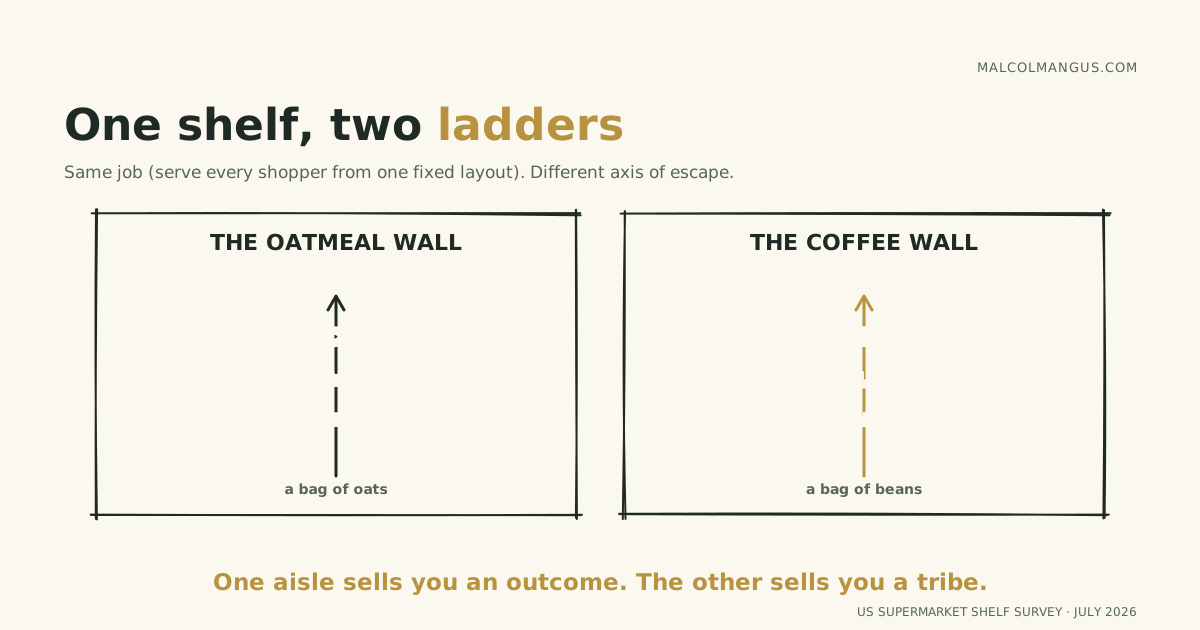
Oatmeal escapes upward into function because breakfast is a thing you do to yourself: it has a measurable job, and the winning claim is a number, grams of protein or of fiber. Coffee escapes upward into identity because coffee is a thing you do around other people: it sits on your desk, rides in your hand, signals your allegiance. When the product is worn in public, the story travels, and identity becomes the differentiator that pays.
The mechanics differ too. The oatmeal wall proliferates mostly by line extension inside a few brands. Quaker alone spans half its map, from cheap flavored packets to old-fashioned canisters to a protein line to a fiber line to grits. The coffee wall proliferates by spawning whole new brands, one per identity, which is why it carries nearly twice the brand count. And the identity strategy is portable across the whole store: the same parent, Hometown Food Company, owns both value-tier Hungry Jack and better-for-you Birch Benders (Food Dive, 2023), running two personas against each other on purpose.
I want to be fair to the messy truth: neither axis is pure. The oatmeal wall has real identity plays, Seven Sundays waving its B Corp status, Purely Elizabeth selling a whole wellness self-image. And the coffee wall has real function, since a single-origin light roast is a genuine sensory claim the connoisseur pays up for. Both axes exist in both aisles. What differs is the center of gravity, and how far each category has pushed. Coffee has pushed identity all the way to decoupling: there is a $398 million brand that sells only the flag. Breakfast has not. There is no veteran-founded oatmeal empire, because a bowl of oats you eat alone at 6am cannot carry a flag. The identity plays on the oatmeal wall still have to ride on a function claim to work.
Put simply: A category escapes commodity along whichever axis its product naturally signals. Eaten alone and judged by its effect, it climbs function. Carried in public and judged by its story, it climbs identity. Coffee, worn like a badge, has gone furthest of all, far enough that the story fully replaced the taste.
The shelf fragments faster than it grows
If a SKU is a persona hypothesis, the obvious next question is whether the shelf keeps placing more of those bets over time. The obvious answer is wrong. The average US supermarket carried about 14,000 items in 1980, climbed to a peak of roughly 51,000 by 2008, and then went into reverse, falling to around 33,000 by 2018 as retailers rationalized assortments and hard discounters like Aldi proved you could win with a tenth of the range (FMI). By the crude measure of how much stuff is on the shelf, the aisle stopped growing fifteen years ago.
What kept growing is the fragmentation underneath the count. Even as retailers cut duplicative SKUs, the persona space splintered. Small and emerging brands lifted their share of US food and beverage dollars from about 20% in 2018 to nearly 25% by 2022, while the largest brands lost close to four points (IRI and BCG). By 2025 those small independents, barely 13% of the market, were driving roughly 35% of all category growth, and they win on exactly the thing these plates keep surfacing: a sharp, specific persona, protein or keto or veteran or local, that a mass brand cannot serve without diluting itself (McKinsey).
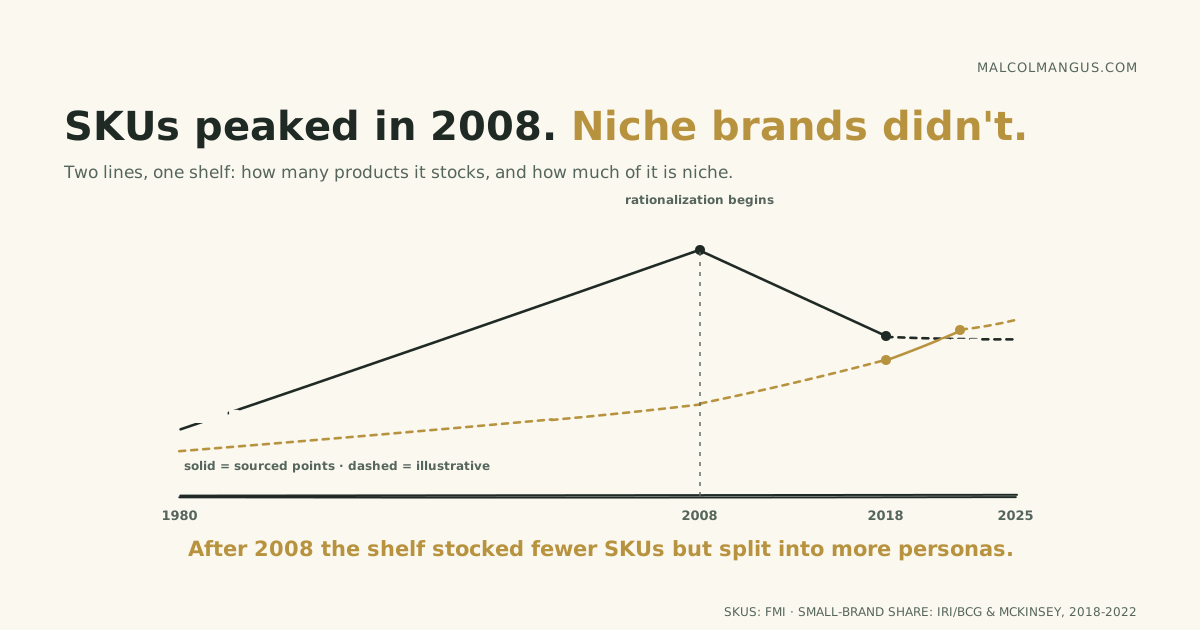
So the shelf is doing something harder than a rising SKU count would suggest. It is covering more personas with fewer, better-aimed products, and the growth flows to whoever owns a specific one. The oatmeal wall was the proof in miniature: a shrinking category where the dollars drain out of the mass-market center and into the sharp-persona insurgents. Fragmentation is not slowing. It just stopped showing up as a bigger pile.
Put simply: More choice does not mean more SKUs. Per-store counts peaked in 2008 and fell, but the persona space kept splintering, so the shelf now covers more distinct shoppers with tighter assortments. The aisle feels more fragmented even as it holds less, because the fragmentation moved from the count to the personas.
What the shelf knows
Step back and the two scatter plots are the same object drawn twice: a consumer decision tree, compiled onto steel. Every dot is a hypothesis about a person, placed exactly where some shopper's specific want lives, and priced to what that want will bear. The oatmeal wall bets that you want a better outcome. The coffee wall bets that you want to belong. Both are right often enough to keep every slot filled.
This is the same lesson I keep finding at every altitude, from where whole industries' profits pool to the one hand-cut counter a grocer refuses to optimize: the visible product is rarely the real one. You think you are choosing breakfast, or choosing coffee. The shelf has already decided that what you are really choosing is a version of yourself, and it has stocked one of you per slot. The next time an aisle feels absurdly crowded, do not ask why there are so many. Ask what they think they know about who you are.
Put simply: A crowded shelf is a map of personas, not products, and reading the axis it spreads along tells you what the category believes it is really selling. Find the axis, and you find the bet.

Malcolm Angus
I'm an analytics engineer, data product manager, and forward-deployed engineer. I write about data products, moats, flywheels, and business strategy, the loops that make companies harder to catch.

The charts in this essay are free to reuse with credit.