Essays
Writing
I uncover the hidden shape behind a business you think you understand: where the money actually pools, who quietly keeps it, and the strategy that put it there. Airlines and insurance, hotels and credit scores, the AI stack, and a few things you eat and drink. Each one is built around hand-drawn maps and charts that stand on their own.
August 20, 2026 · 10 min read
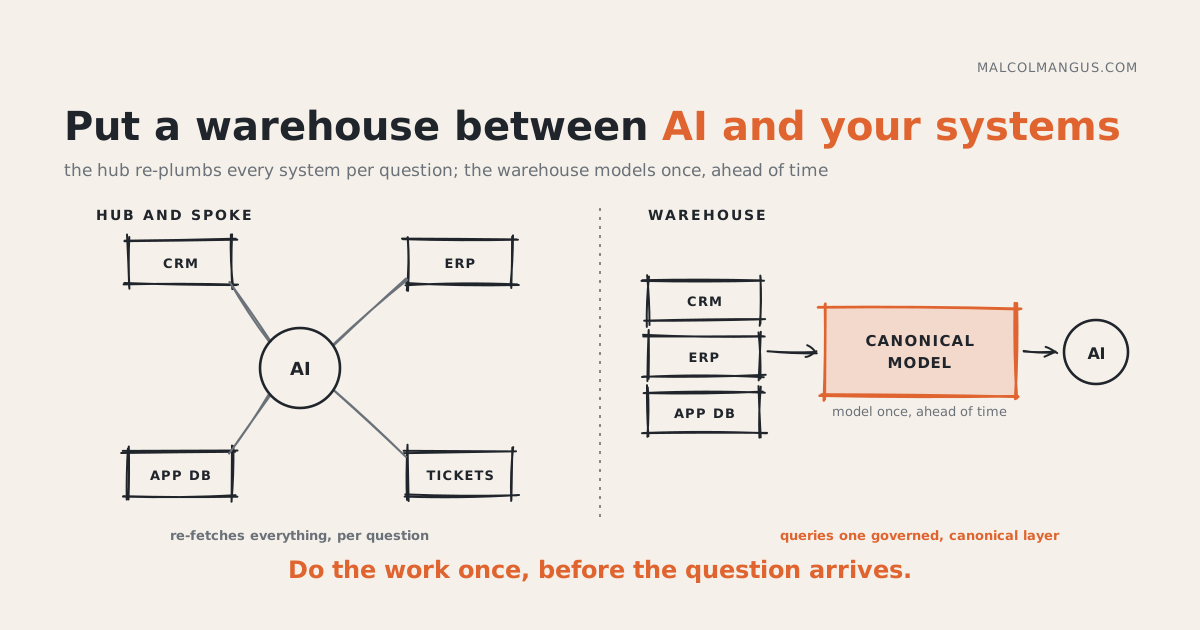
AI transformation runs at the speed of data readiness
The person hired to lead AI transformation can design a workflow in a week. Then they wait on the data. Two scoreboards, a stakes ladder, one architecture change, and a process where building is one step of six.
August 13, 2026 · 9 min read
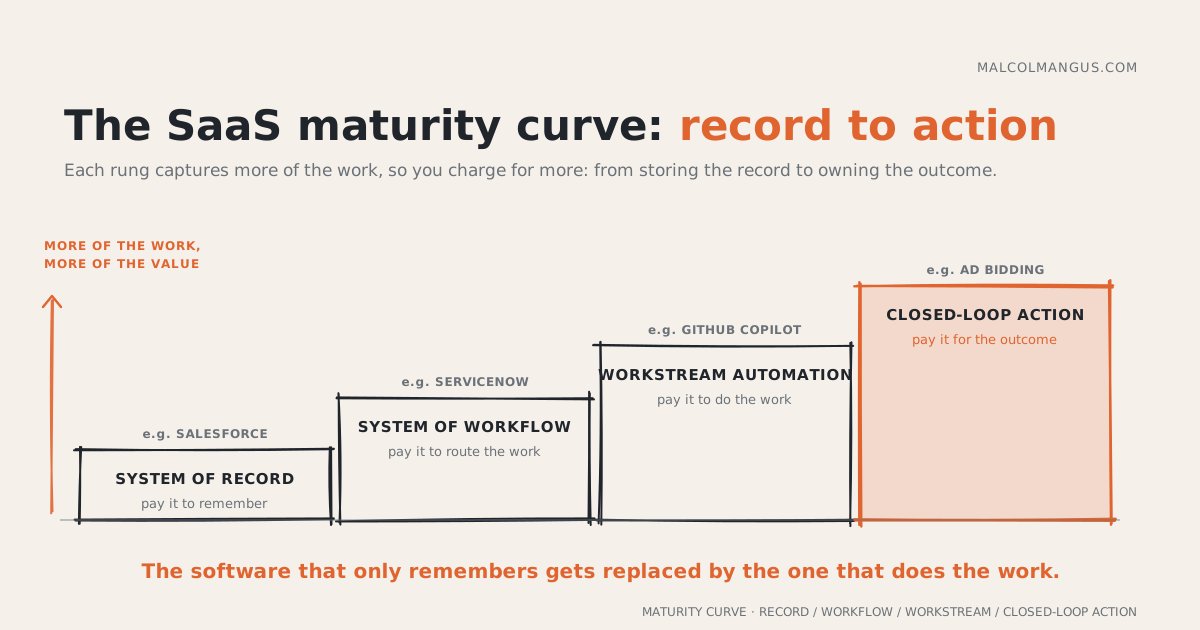
The SaaS maturity curve
Software sits on a ladder from system of record to closed-loop action, and the rung it occupies decides whether AI is its tailwind or its executioner. This is the curve, the mechanism that moves a product up it (progressive crystallization, where tacit work becomes captured data becomes executable software), and why climbing is the whole game: each rung captures more of the customer's work, so you stop pricing the seat and start pricing the labor you replace.
August 7, 2026 · 10 min read
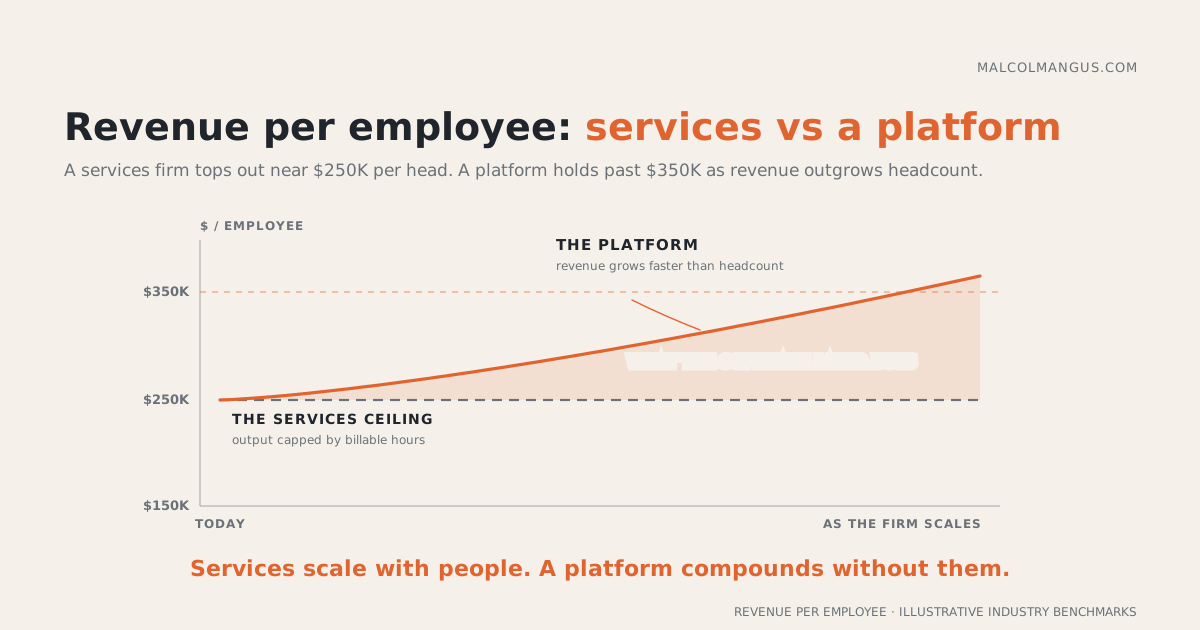
How a services business achieves software margins
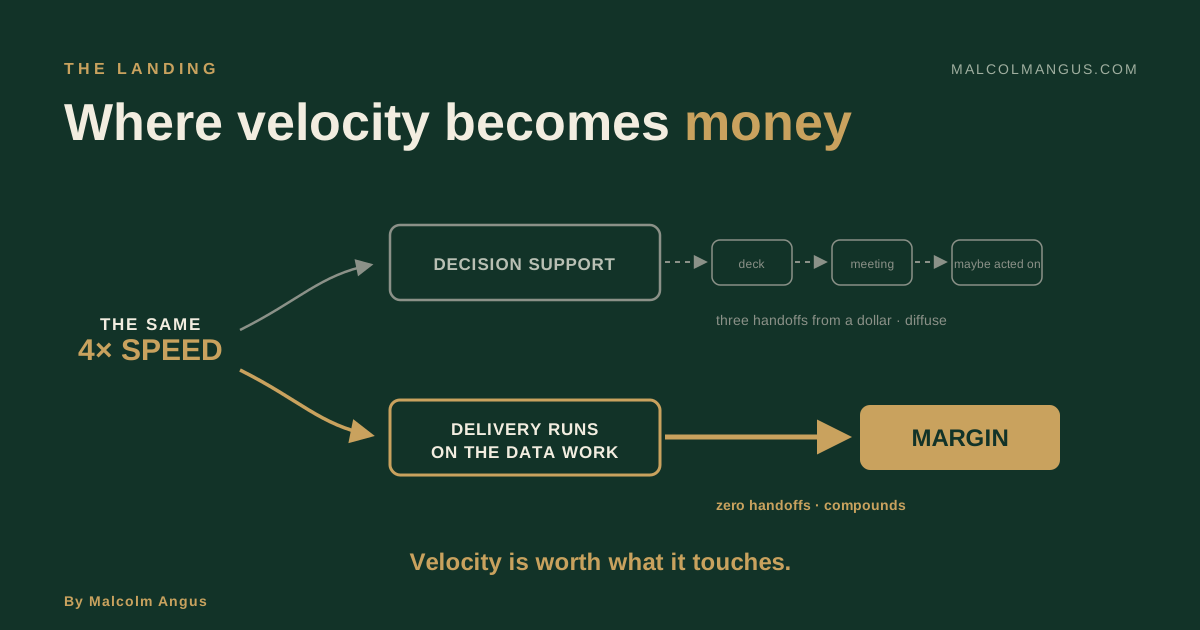
AI made every technical team three to four times faster. In a services business that runs on data, that velocity does not just ship the same work faster, it funds a software layer underneath the work. That layer is what lets a headcount-bound services firm break the revenue-per-employee ceiling and start compounding like a platform. Here is the operating thesis: why the ROI math flipped, what the hybrid model actually is, why the platform is the one growth lever worth its own budget, and the scoreboard that tells you it is working.
August 5, 2026 · 14 min read
Instacart makes its money on the back margin
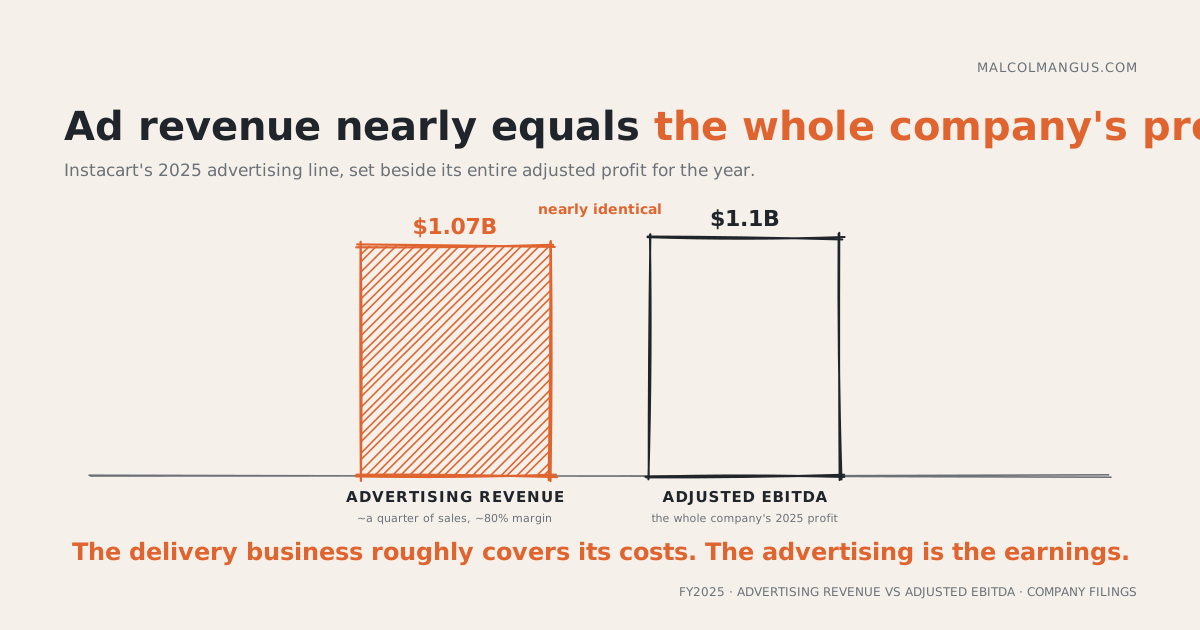
Instacart looks like a grocery delivery company, and its own numbers say it is something else: an advertising and data business wrapped around a break-even delivery service. On $37 billion of groceries the delivery roughly covers itself, while a $1.07 billion advertising line at ~80% margin is essentially the entire profit. This is a tour of its actual revenue lines, its expanding surface area, the data flywheel underneath, and why the moat is hard to copy.
August 4, 2026 · 7 min read
Forward deployed engineering is a bet on the adoption gap
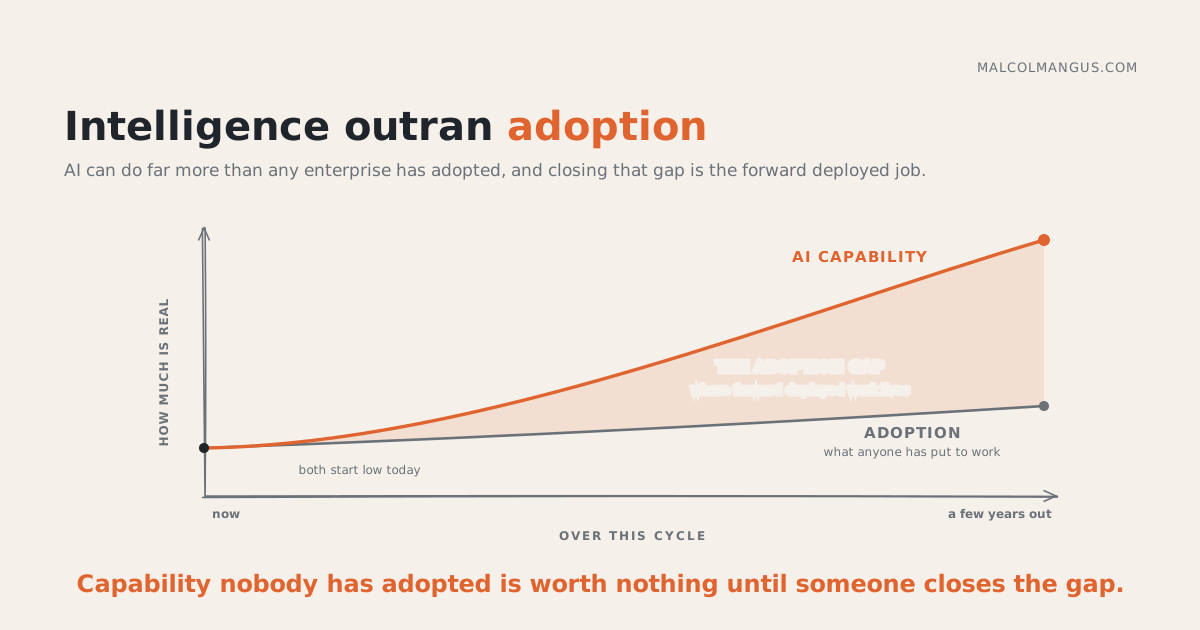
The forward deployed engineer is the fastest-growing title in enterprise AI, and most of the coverage argues about what to call it. Here is the informed version instead: why the role is emerging now, the one condition where it actually fits, what the work is when it does, and the single thing that survives every rename. The short answer is that adoption, not intelligence, is the 2026 bottleneck, and this is the role that closes it.
August 2, 2026 · 7 min read
The cereal wall sells a clear conscience
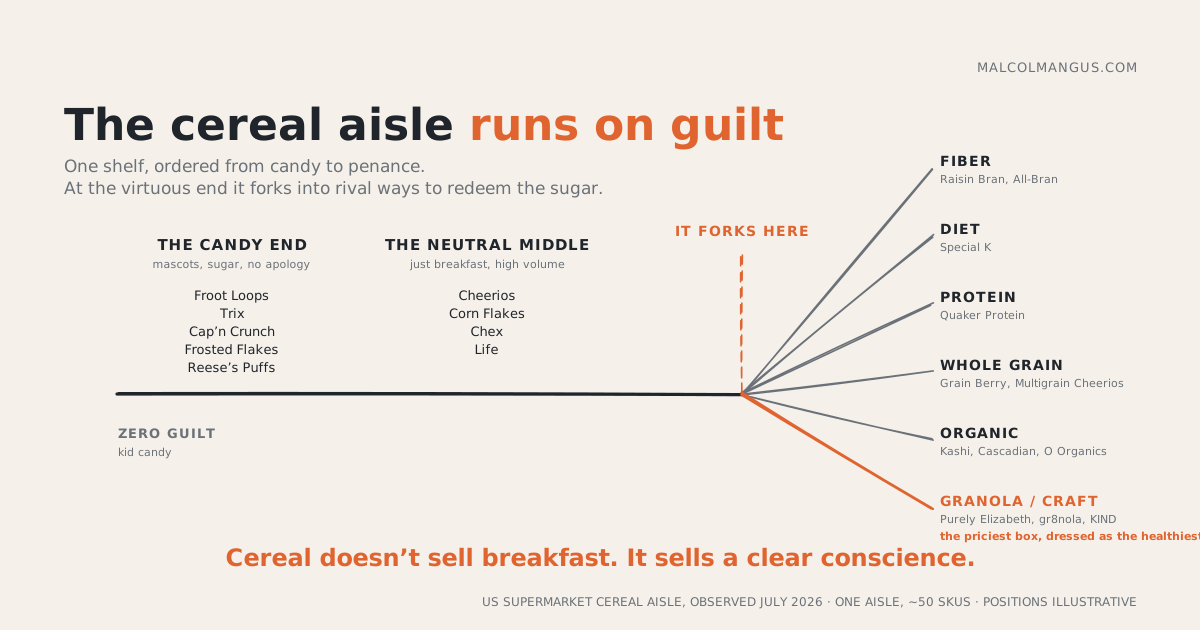
A grocery cereal aisle does not sort by grain, price, or brand. It sorts by guilt: one gradient from kid candy to adult apology, and at the virtuous end it forks into rival ways to redeem the sugar. Oatmeal sells an outcome, coffee sells a tribe, cereal sells a clear conscience.
August 1, 2026 · 9 min read
Choosing your data pipeline tools for a lean team
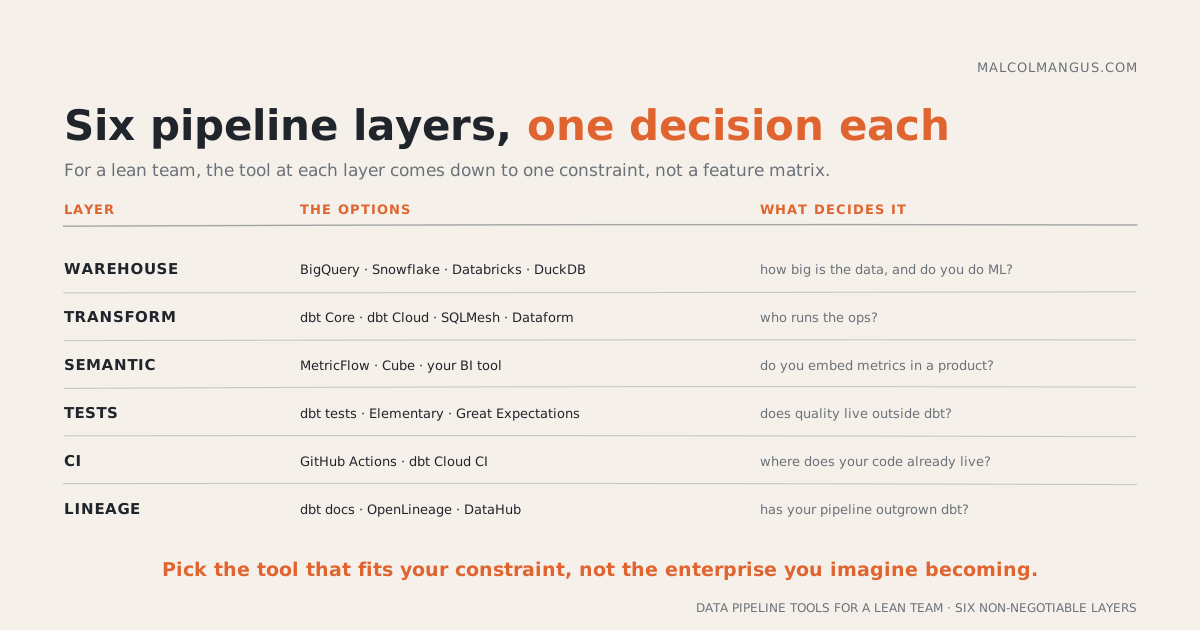
The floor under data readiness is fixed, but the tools that satisfy it are a choice, and the right choice depends on your constraints, not the feature matrix. This is a neutral buyer's guide to the six non-negotiable layers of a data pipeline stack, scoped to a lean data team: an early-stage, growth, or lower-middle-market company with real revenue, a data team of one to a handful, a finite budget, and no platform team to run infrastructure. For each layer, the real options, the tradeoff that actually decides, and when each one fits a company your size.
July 31, 2026 · 5 min read
The data-platform scorecard
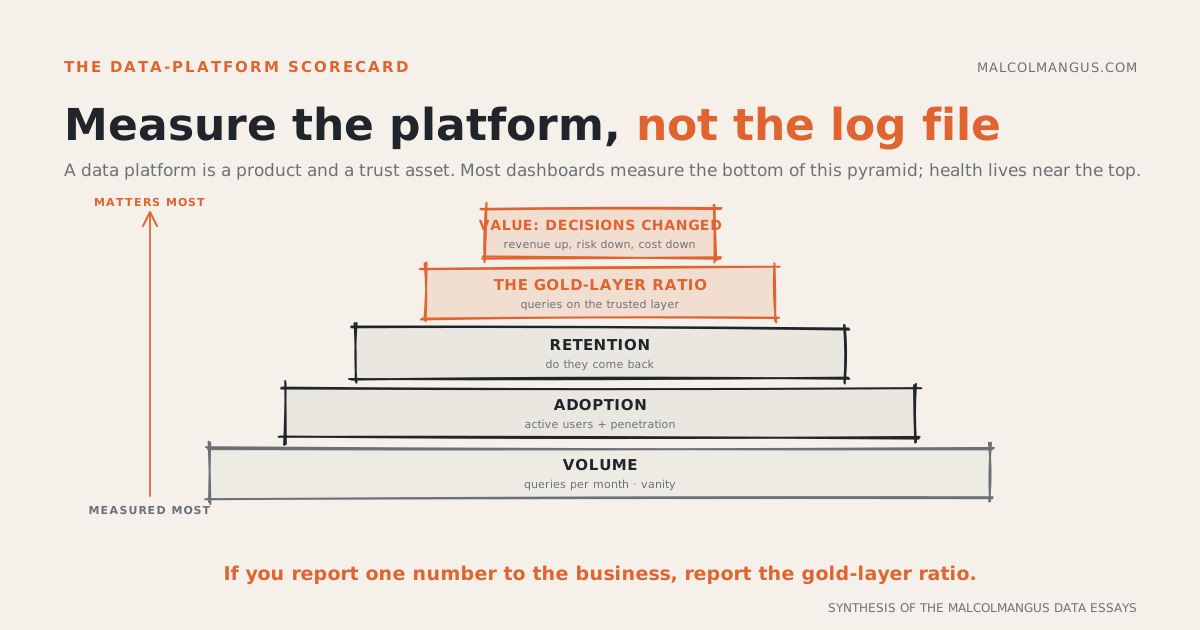
You built the stack and a practitioner owns it. Now, how do you know it is working? Most dashboards answer with query volume, which is a vanity metric. This is the scorecard that actually matters: adoption and reach, retention as the real adoption signal, the gold-layer query ratio as the trust metric to put on the wall, and decisions changed as the North Star. Measure the platform like a product and a trust asset, not a log file.
July 30, 2026 · 11 min read
What ready data actually looks like
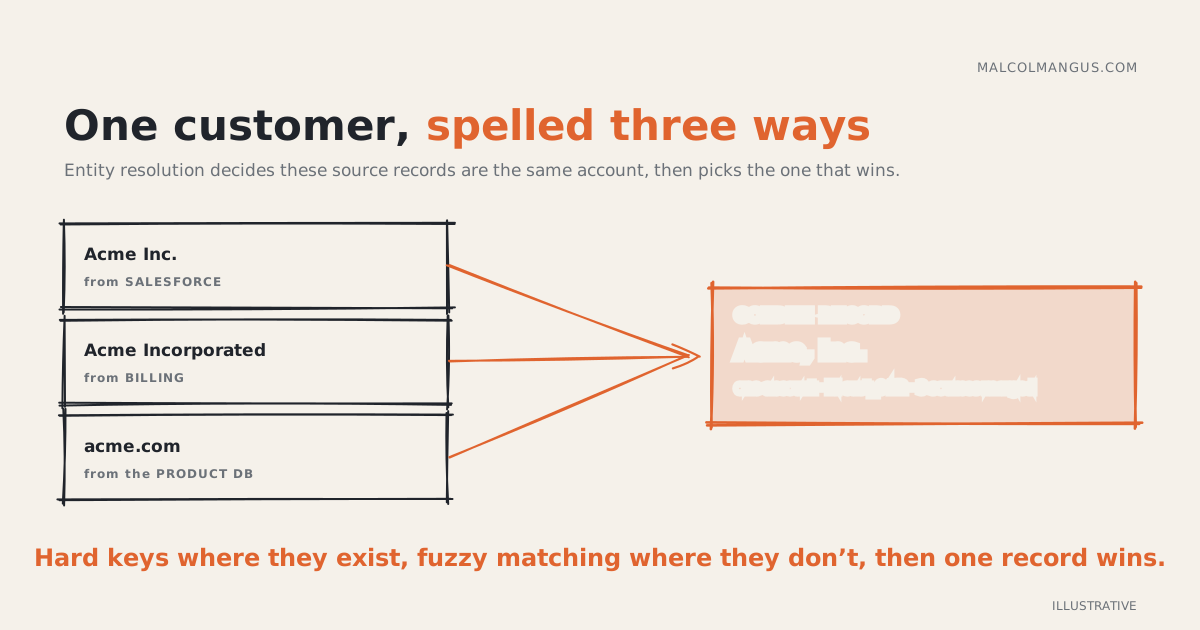
Part two of two. The first post argued that data readiness is the ceiling on any data agent; this one is the field guide to what ready data actually is. Seven disciplines in a dependency chain, from the shape of a table to the catalog that makes meaning findable: dimensional modeling, entity resolution, master data, the semantic layer, quality and evals, lineage and governance, and the catalog. None of them is an AI problem, and no model does any of them for you.
July 29, 2026 · 11 min read
What a data agent is, and what makes one good
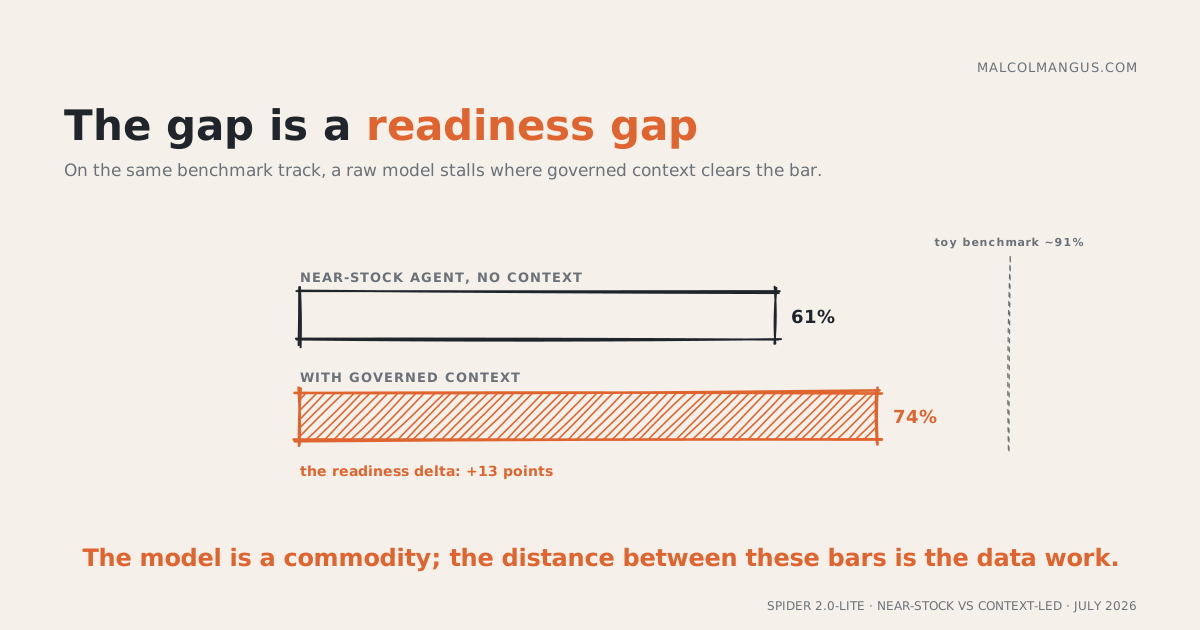
Before the stack and the vendors: what a data agent actually is, how it differs from a standard agent, why it is worth building, the handful of properties that separate a good one from a demo, and how those requirements change from one company to the next. The concept half, kept deliberately vendor-free, so the build has a bar to clear.
July 29, 2026 · 7 min read
You can't hand off data readiness
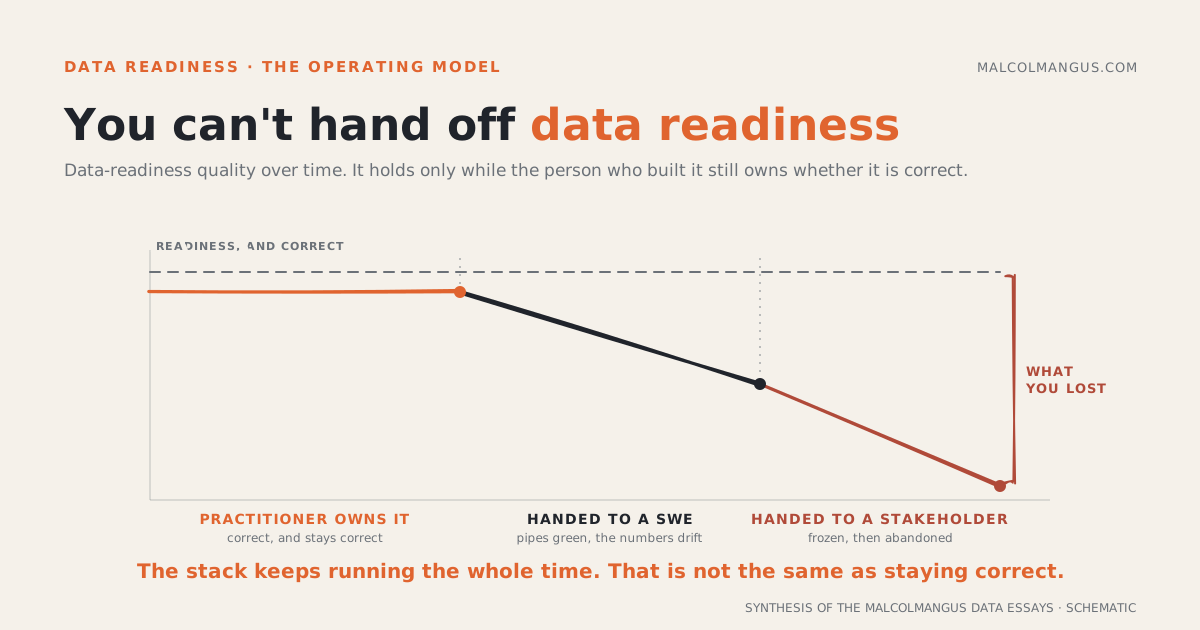
Every data-readiness project I have seen die, died the same way: not at the build, at the handoff. A practitioner sets the stack up correctly, then it gets handed to a general software engineer, or worse a business stakeholder, to maintain. This is the tech stack, its non-negotiables, and the roles and responsibilities to actually run it, because correctness is judgment and judgment does not ship with the repo.
July 28, 2026 · 10 min read
What deserves AI, and what doesn't
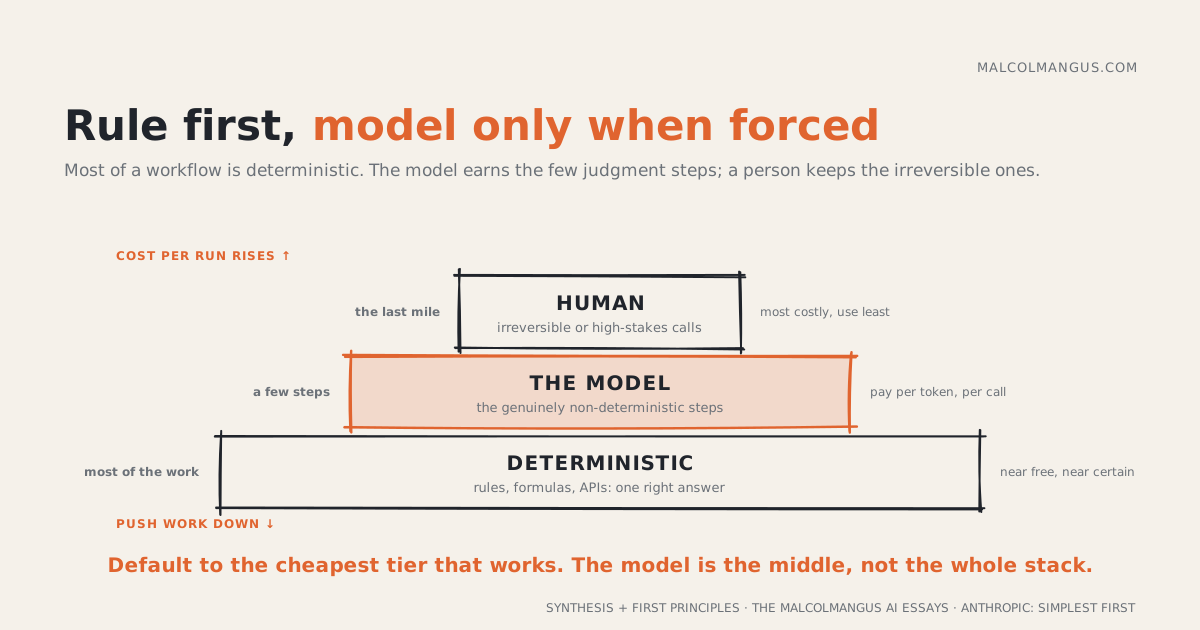
Everyone asks where to use AI. The more useful question is where not to, because most of any workflow should stay deterministic and a model earns only a few steps. This is the decision framework I could not find written down cleanly: seven checks a use case has to clear before it deserves a model, run cheapest first, where every rejection names the cheaper move. It blends operator judgment, a three-tier rule-model-human routing pattern, and Anthropic's own simplest-first guidance into one filter you can run in a meeting.
July 27, 2026 · 5 min read
The non-negotiable data stack
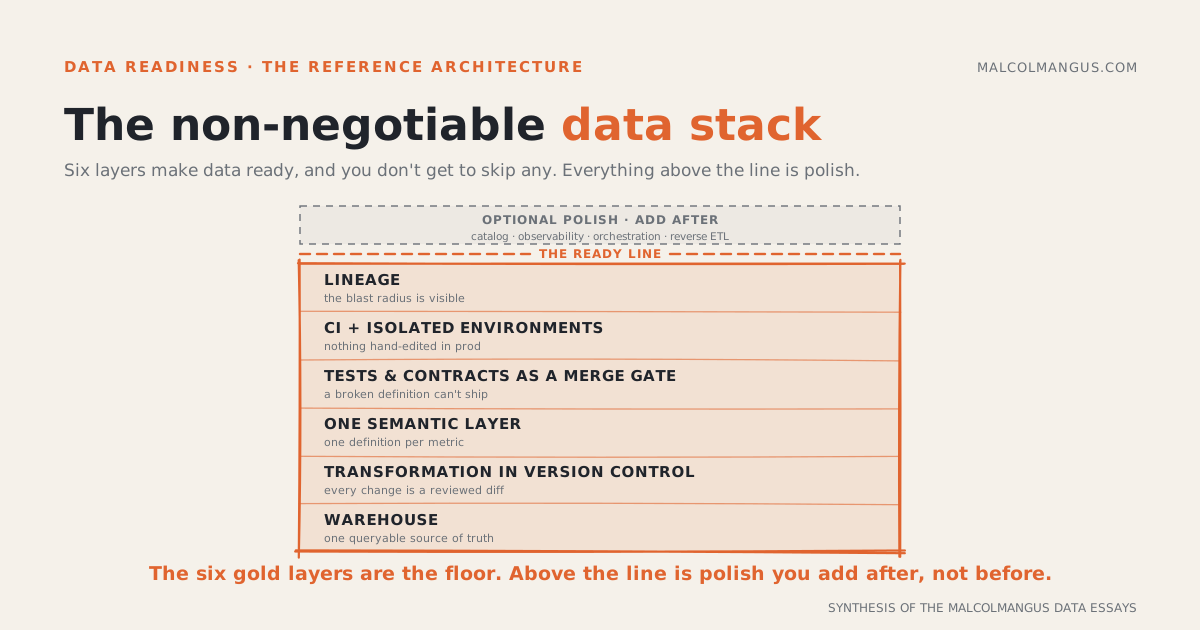
There is a floor under data readiness, and it is made of software engineering, not data science. This is the reference architecture that produces ready data, layer by layer, with the non-negotiable floor separated from the optional gold-plating: version-controlled transforms, one semantic layer, tests as a merge gate, isolated environments, and lineage. Below the floor you do not have a cheaper version of ready data. You have data that is not ready.
July 26, 2026 · 16 min read
The oatmeal wall sells an outcome. The coffee wall sells a tribe.
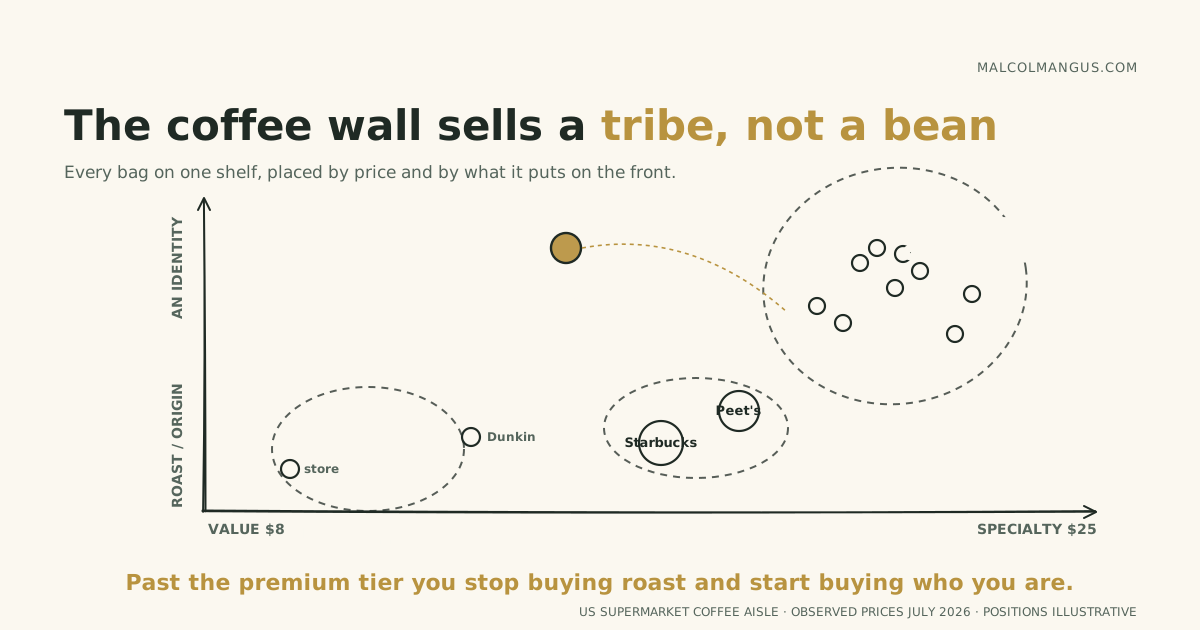
Two shelves in one supermarket, both starting from a commodity, both fanning into dozens of SKUs. But the oatmeal wall proliferates along the function axis (protein, clean, keto) while the coffee wall proliferates along identity (veteran, local, values). A SKU is a persona hypothesis, and the two aisles bet on different ones.
July 26, 2026 · 8 min read
Who actually makes money on your coffee: the brand, not the bean
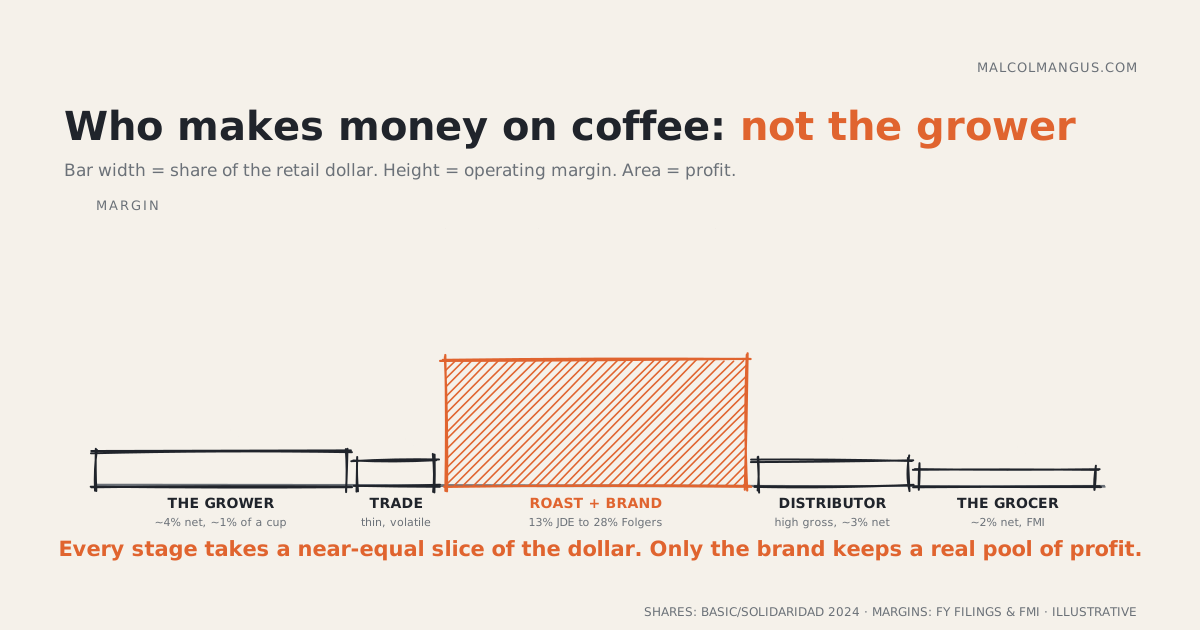
A grower keeps about a nickel of your $5 latte. Every stage of the coffee chain, farm, trade, roasting, retail, takes a near-equal slice of the retail dollar, but the profit pools downstream: a commodity roaster nets almost nothing while pods, branded shelf coffee, and cafes run 20 to 57% margins. The money was never in the bean. It is in the package and the cup.
July 25, 2026 · 9 min read
It wasn't the tequila: why American wine is losing drinkers
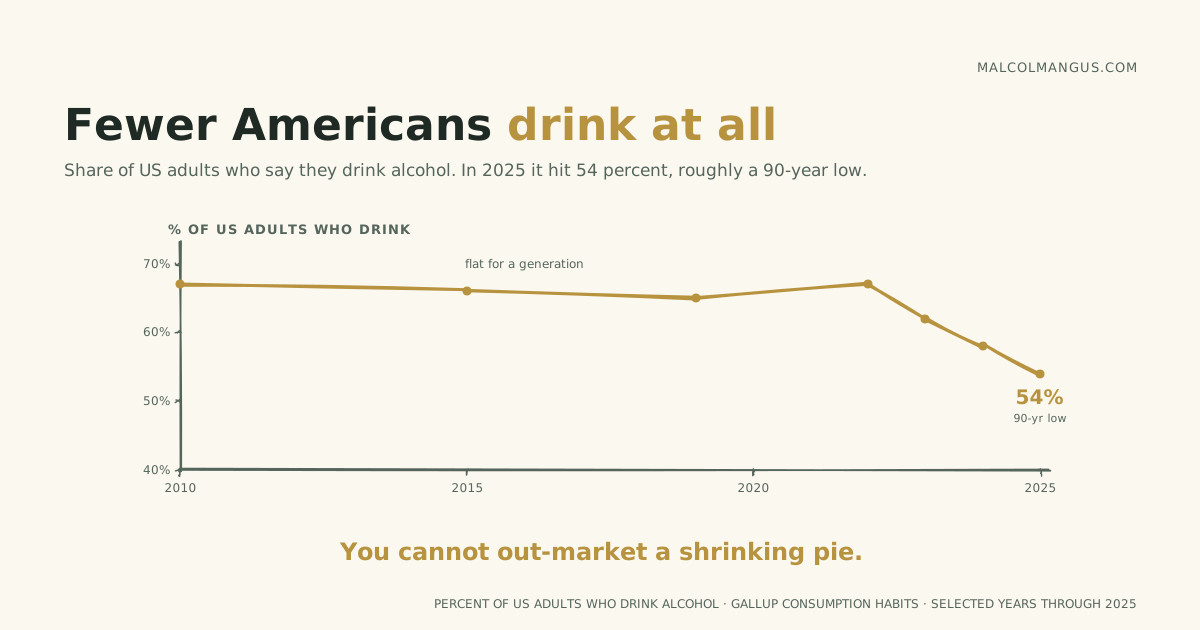
American wine is falling, and the easy story blames tequila. The data says something less flattering and more permanent: the drinking pie itself is shrinking, and wine is stuck on the oldest, most loyal customers in the bar.
July 24, 2026 · 15 min read
The wine toll: who actually wins on a $100 bottle
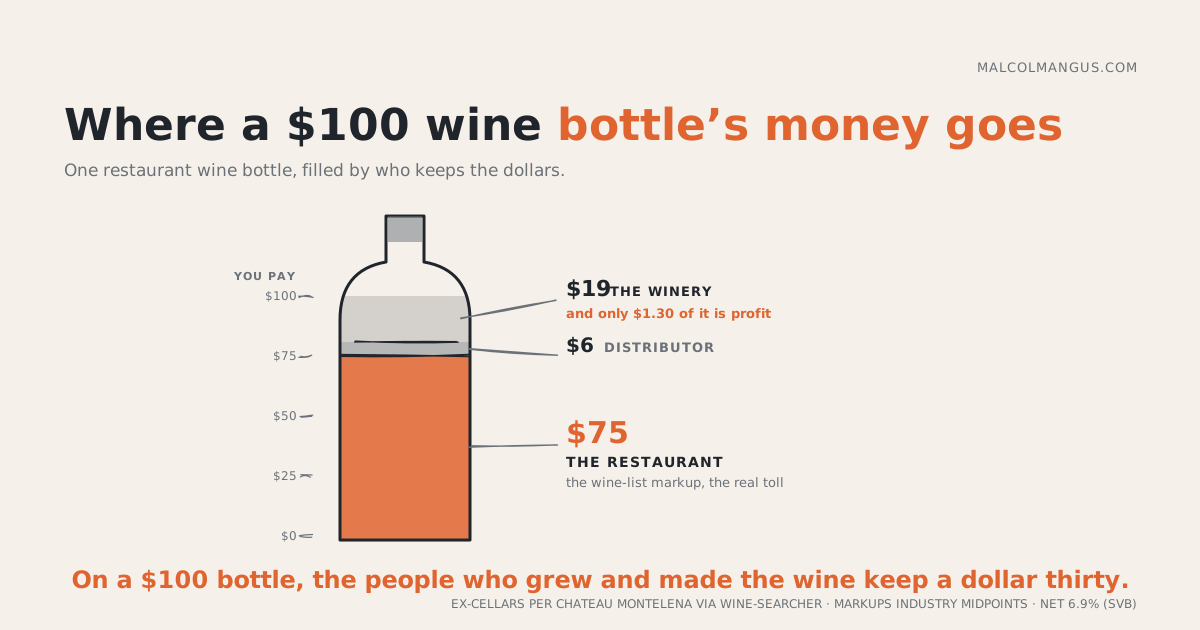
A $100 bottle leaves the winery at $19 and nets the people who grew and made it about $1.30. The reliable money in wine sits where you cannot see it: a distribution tier the government mandates, and a room that marks the bottle up in plain sight.
July 23, 2026 · 13 min read
The Gong transcript is not the insight
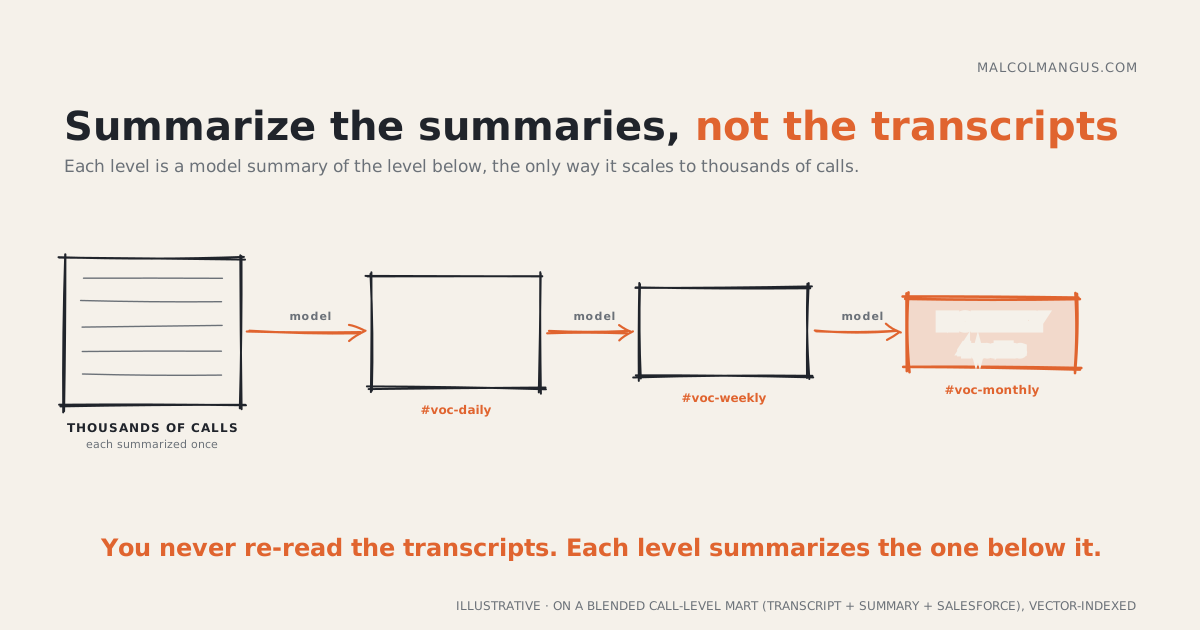
Every sales call is recorded now, and your product team still cannot say what customers asked for last week. The reason is not the model. Turning a Gong transcript into a decision is a data job: reassemble the sentences, key every line to the account and the dollars, and historize it so you can see what moved.
July 14, 2026 · 15 min read
The famous AI failure rates are fake. The data problem is real.
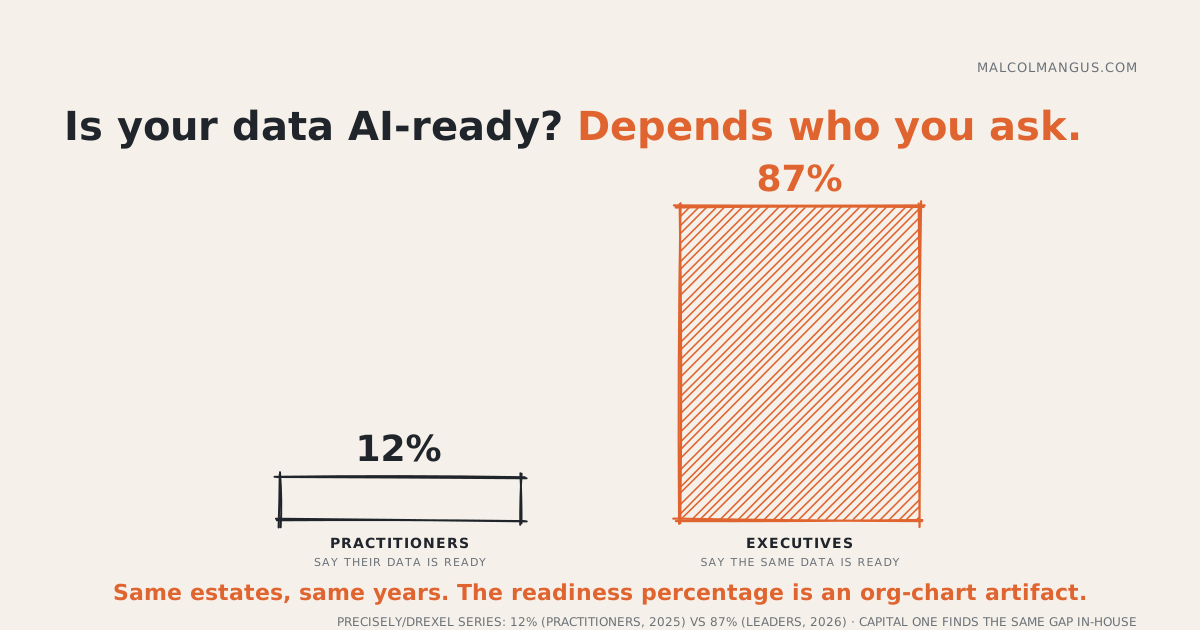
The 95% stat traces to 52 interviews and a denominator switch. The honest number is 40 to 50% attrition, and when you read the actual postmortems, one word keeps appearing: data. What AI-ready means, why your data isn't, and why the fix is smaller than you think.
July 12, 2026 · 11 min read
Your grocery store was running Google's business model before Google existed
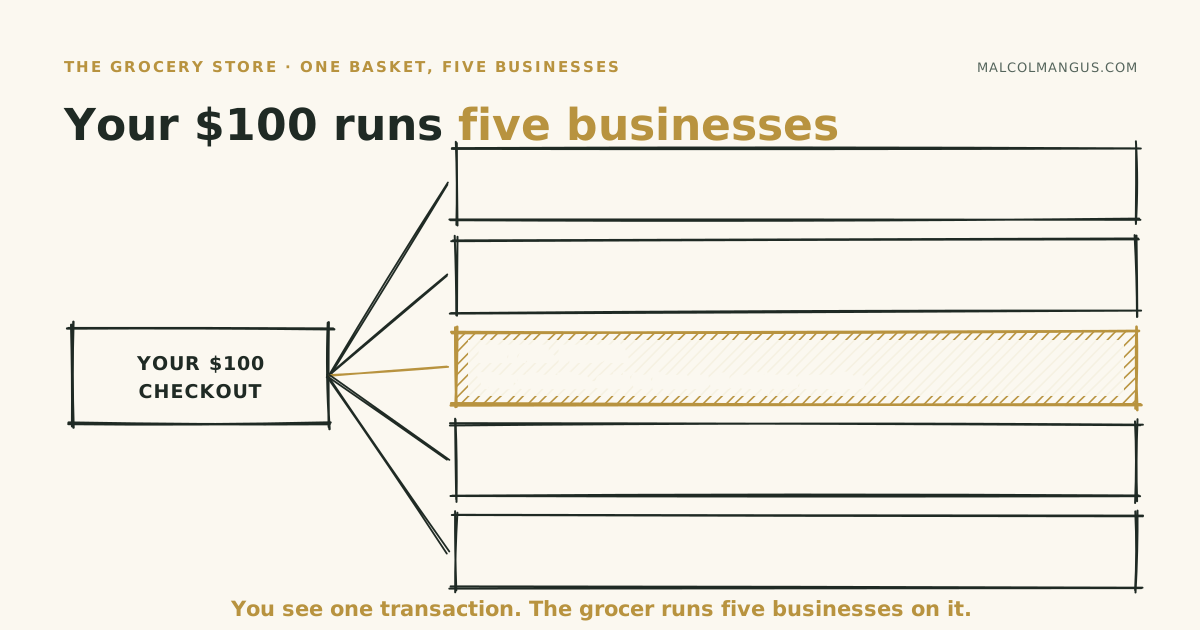
Paid placement on a trusted index, an auction for position, and a data business behind the free product: the supermarket had all of it decades before paid search. Retail media did not turn the grocer into an ad platform. It turned the shelf's oldest business model digital, and finally disclosed it.
July 10, 2026 · 10 min read
The cheese cartel: who actually wins at $38 a pound
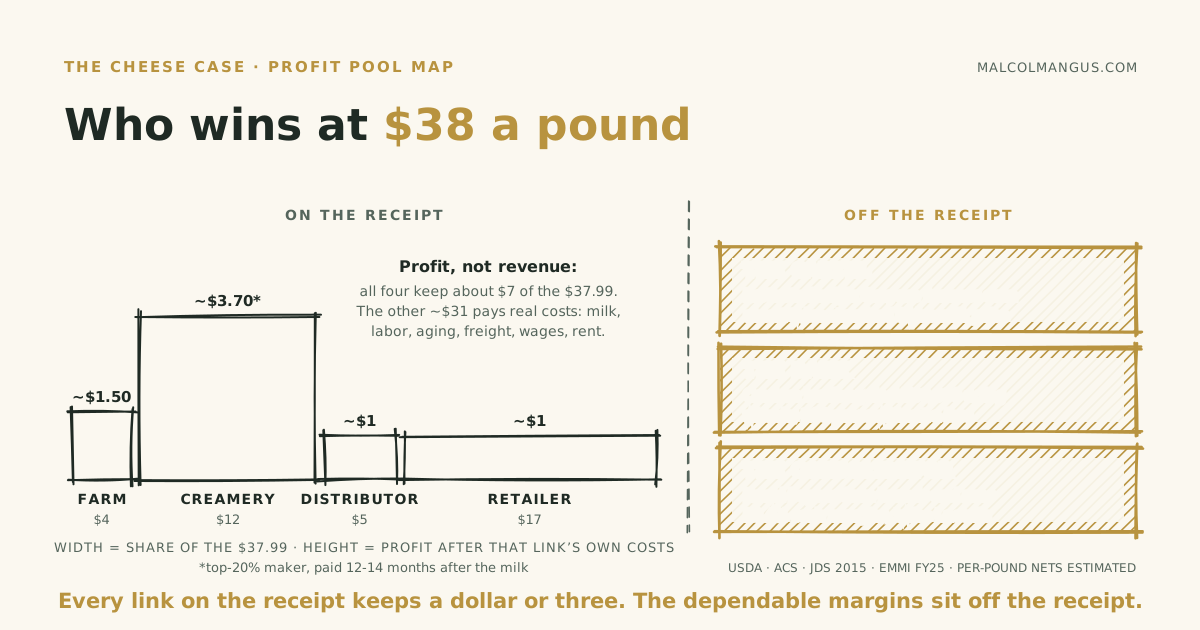
I bought a $10.64 wedge of alpine cheese and traced the money. Nobody on the receipt wins big: the farm needs a side deal, the maker waits 14 months to be paid, and the counter breaks even. The reliable margins belong to a cartel, a bank, and a consolidator you will never see on the label.
July 8, 2026 · 11 min read
Revenue is wide, profit is tall
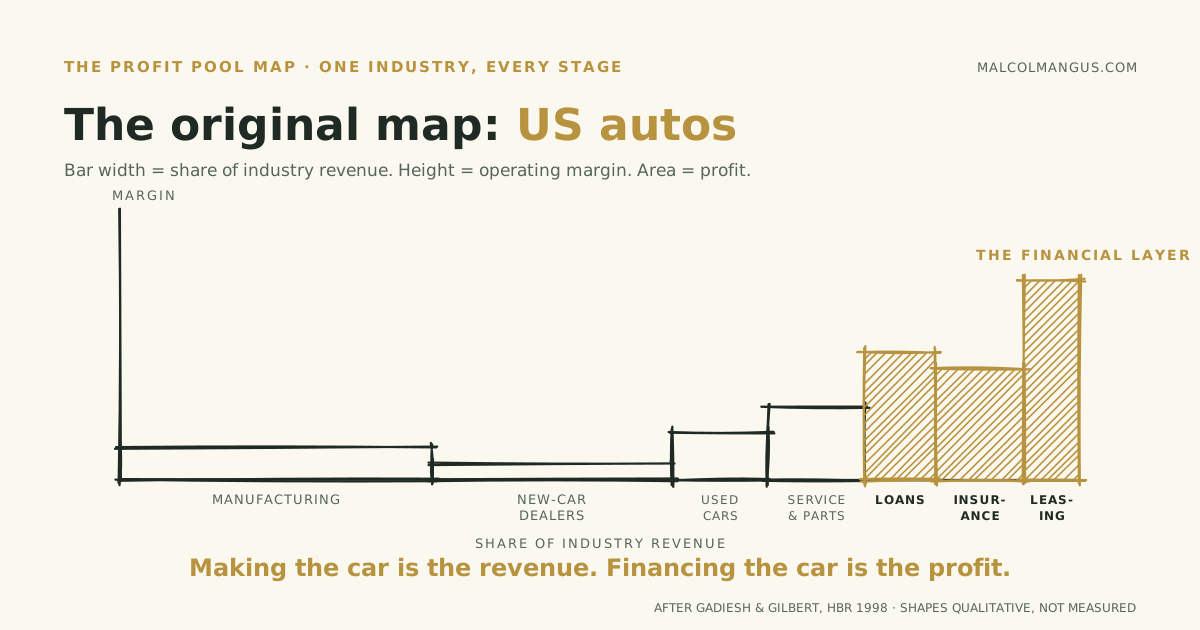
U-Haul rents trucks near cost and banks the margin on boxes. Carmaking earns scraps while car lending prints. A field guide to profit pools: mapping where an industry's money settles across the value chain, and why the revenue map misleads.
July 6, 2026 · 22 min read
Why over 10% of Delta's revenue comes from Amex, and why OpenAI would acquire Ramp
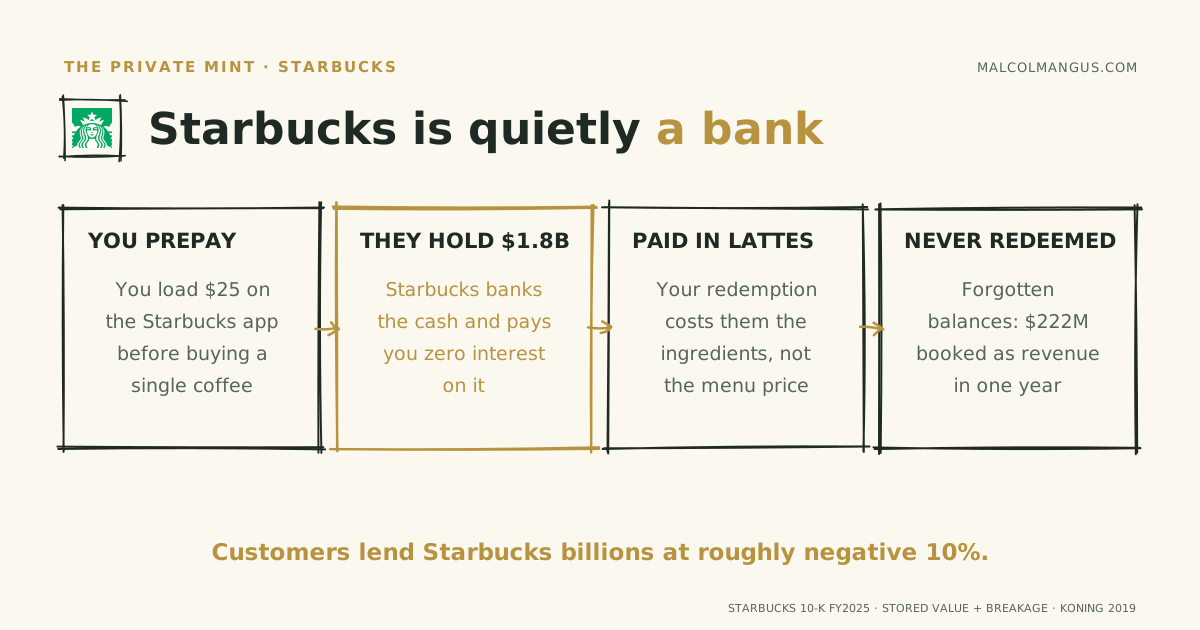
Amex pays Delta $8 billion a year for a currency Delta invents. Trace the same machine through Starbucks balances, Robux, and your expiring API credits, and OpenAI buying Ramp starts to make complete sense.
June 23, 2026 · 3 min read
Where velocity becomes money
AI made every data team faster. Whether that shows up in profit depends on the distance between the team's output and the work that earns revenue.
June 19, 2026 · 3 min read
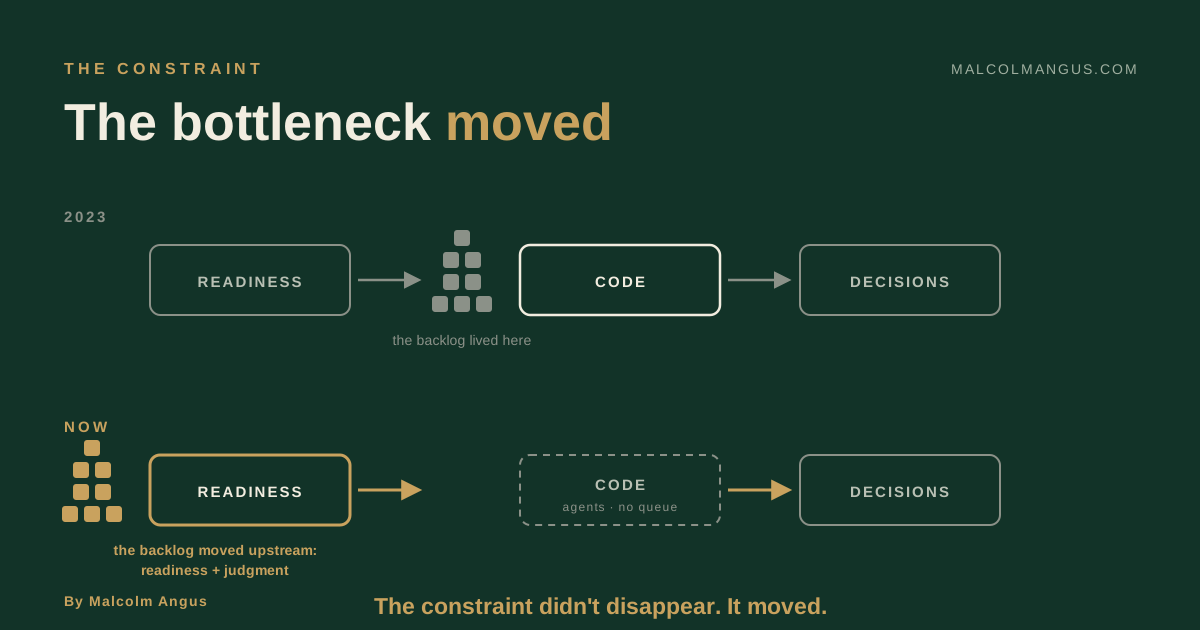
The bottleneck is not the code anymore
Agentic tooling commoditized the work data teams spent a decade being hired for. The constraint didn't disappear. It moved upstream, to data readiness and product judgment.
June 14, 2026 · 3 min read
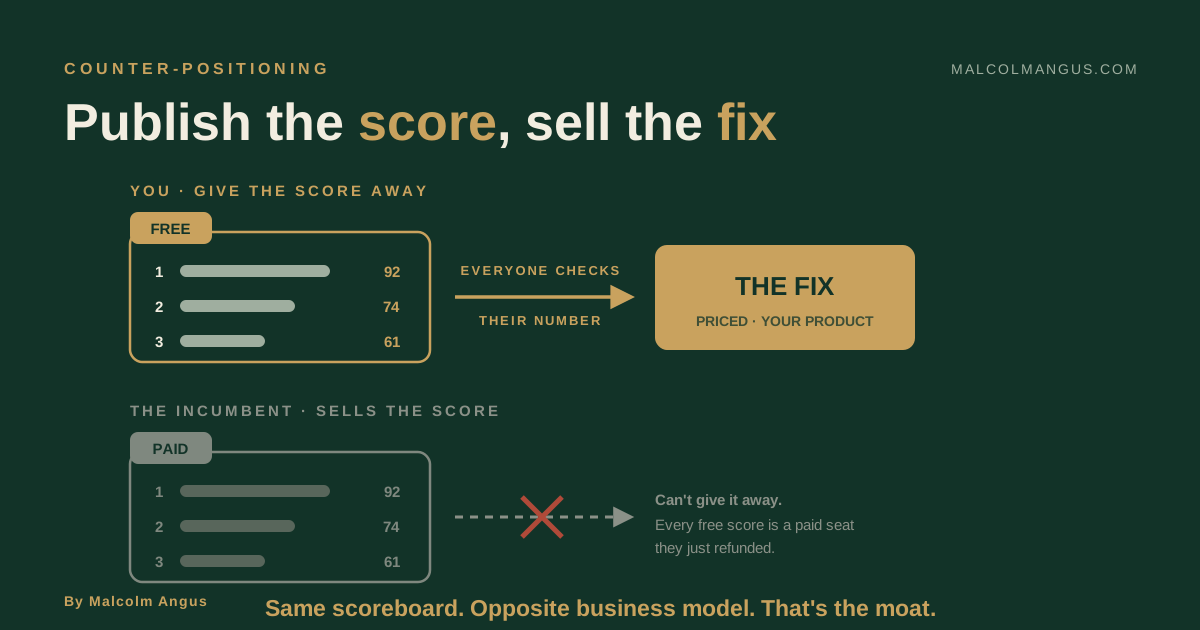
Give away the scoreboard, sell the fix
The strongest distribution move in data products is publishing the measurement your incumbents charge for. If you sell the fix, the score is marketing. If you sell the score, you're stuck.