← All essays·July 7, 2026·5 min read
Your pricing page is a menu
Restaurant menus are the most heavily engineered offer surfaces in the world, graded nightly by revenue. What B2B pricing and packaging should steal from them, and where the translation breaks.
A restaurant menu is the most heavily engineered offer surface most people will ever hold. Every element (the order of items, the typography of the prices, the naming, the boxes, the bundle math) has been tuned by someone, and the tuning is graded nightly, in cash, across thousands of orders. No SaaS pricing page on earth gets feedback that fast.
Which is exactly why menus are worth studying if you price and package anything. I built Menuomics to break down chain menus the way an analyst breaks down a balance sheet, and the same handful of moves shows up everywhere once you know how to look. Rory Sutherland's framing sits underneath all of it: it is far cheaper to change how an offer is read than to change the offer itself.
The moves, translated
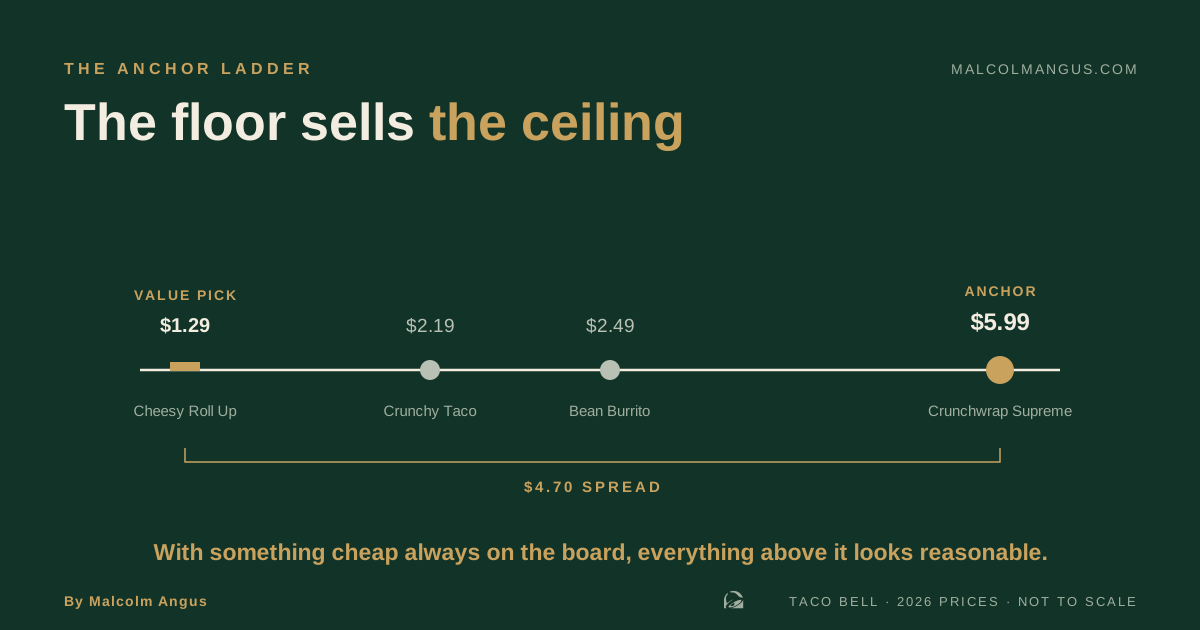
The anchor ladder. Taco Bell keeps a $1.29 item permanently in view, so the climb to a $5.99 Crunchwrap reads as a treat rather than an expense. The low anchor is the point: with something cheap always on the board, everything above it looks reasonable. Your pricing page runs the same physics. The starter tier isn't there to be bought. It's there to make the plan you actually sell read as the sensible middle, which is also why three tiers beat two: extremeness aversion pushes buyers toward the compromise option, and you get to decide what the compromise is.
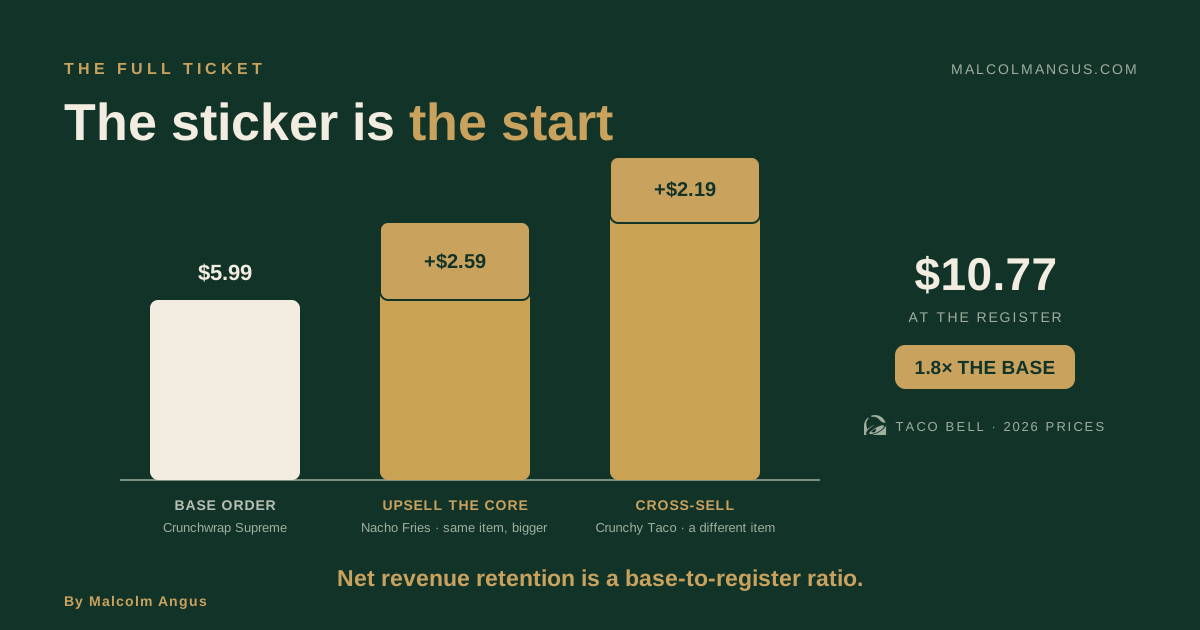
The sticker is the start. A $5.99 base order at Taco Bell rings up at $10.77 once the easy yeses are added: a size-up of the same item, then a cheap adjacent item at the register. That's 1.8x base to register, and it decomposes into the two motions every revenue team knows: upsell the core (a bigger version of the same thing) and cross-sell the adjacent (a different thing that rides along). In B2B those are seats and usage on one side, add-on modules on the other, and net revenue retention is your base-to-register ratio. If you only engineer the sticker, you've engineered half the ticket.
Whispered or shouted. Menus choose how loudly to show their prices: dollar signs dropped, digits shrunk, or value screamed in red. Cornell found that simply removing the dollar sign lifted spend roughly 8 percent. B2B makes the same choice on a different axis: published pricing shouts, "contact sales" whispers. Neither is wrong. Value brands shout because the price is the message; premium and enterprise whisper because the conversation is. The failure mode is not choosing: a page that whispers to enterprise buyers while screaming discounts at them in the same viewport.
Name the bundle after the price. Taco Bell's $5, $7, and $9 Cravings Boxes make the price the product name. Zero evaluation cost, instant good-better-best ladder. The B2B translation isn't literal (few enterprise buyers want the $50k Box), but the principle is legibility: a plan name should tell the buyer who it's for or what it does. Clever names are a tax on comprehension, and comprehension is conversion.
The drumbeat. A constant limited-time calendar gives customers a reason to come back and manufactures urgency without discounting the core. B2B's closest honest equivalent is the launch calendar: new capabilities on a rhythm that gives account teams a reason to call. The dishonest equivalent is the end-of-quarter discount, which trains buyers to wait and is the opposite of the menu move: it discounts the core on a schedule the customer learns better than your reps do.
Where the translation breaks
Steal the psychology, but respect the differences. Four of them are structural.
The chooser isn't the payer. A menu persuades one hungry person with the authority to say yes. A B2B offer persuades a committee: a champion, a budget owner, procurement, sometimes security. That changes the job of the artifact. A menu only has to work in the hand; a pricing page has to work when your champion screenshots it into a Slack thread you'll never see. B2B packaging is menu design for a document that gets forwarded, which is why legibility beats cleverness even more brutally there.
List price is a move, not a price. The menu price is the transaction price. In enterprise B2B, the list price is the opening anchor of a negotiation, and everyone at the table knows it. That doesn't weaken anchoring; it changes what you're anchoring: not the final number, but the zone the negotiation happens in, and the size of the discount procurement gets to report as a win. Menus don't have to budget for the buyer's need to feel like they won. Enterprise pricing does.
You choose the meter. A restaurant charges per dish; the unit was decided centuries ago. B2B gets to choose what a unit even is: per seat, per usage, per workflow, per outcome. That choice, the price metric, is the single biggest packaging lever and it has no menu equivalent at all. Get the metric right and price becomes self-adjusting: customers who get more value pay more without a negotiation. Get it wrong and every renewal is a fight the menu never has to have.
The feedback loop is a thousand times slower. A menu change is graded by tomorrow night's covers. A B2B pricing change is graded by next quarter's renewals, polluted by a dozen confounds, and politically expensive to reverse. This is the deepest difference and the real reason to study menus at all: restaurants can afford to run the experiments, so their converged playbook is the closest thing to a free lookup table of what works on human buyers. B2B can't cheaply rediscover these effects. It can borrow them.
The takeaway
Someone engineered every menu you've ever ordered from. The anchor was placed, the bundle was named, the easy yeses were sequenced, and it was all tested against real orders before you sat down.
Now look at your own pricing page and ask the uncomfortable question: was it engineered, or did it just accumulate? The buyers are running the same wetware either way.
And if the measurement side of this interests you, the distribution strategy behind Menuomics is its own essay: give away the scoreboard, sell the fix.

Malcolm Angus
I write about data products, moats, flywheels, and business strategy, and I advise companies on all four. Follow on LinkedIn or work with me.