← All essays·June 29, 2026·4 min read
Data moats and flywheels: the field guide
Everyone claims a data moat. Almost no one has one. Five tests, five red flags, and a map for telling compounding intelligence from a big pile of data.
Everyone claims a data moat. Almost no one has one. The gap between those two sentences is where venture returns are made, and lost.
This is the full field guide: the vocabulary, the tests, the red flags, and the map. It should let you tell the difference in under a minute.
Three words people confuse
Data. A lot of it. Worth nothing alone; rivals can get it too.
Moat. A wall. Hard to copy, protects you, doesn't improve.
Flywheel. An engine. Usage generates data, data makes the product better, a better product generates more usage. It compounds.
A wall gets tunneled under. An engine already spinning can't be bought past.
The finance version of the same distinction: a moat is a stock, a flywheel is a rate. A moat tells you how far ahead you are today. A flywheel tells you whether the gap is growing or shrinking. Moats without flywheels erode, and every moat is being drained by someone: a new entrant, a platform shift, a model release.
The number one fallacy
"We have a growing proprietary corpus."
That's not a moat. A corpus is necessary but not sufficient. Without a loop that makes the product better, and data a rival can't just go collect, it stays inventory.
The tell: when five startups pitch the same sentence, distrust the sentence.
Bigger, smarter, stickier
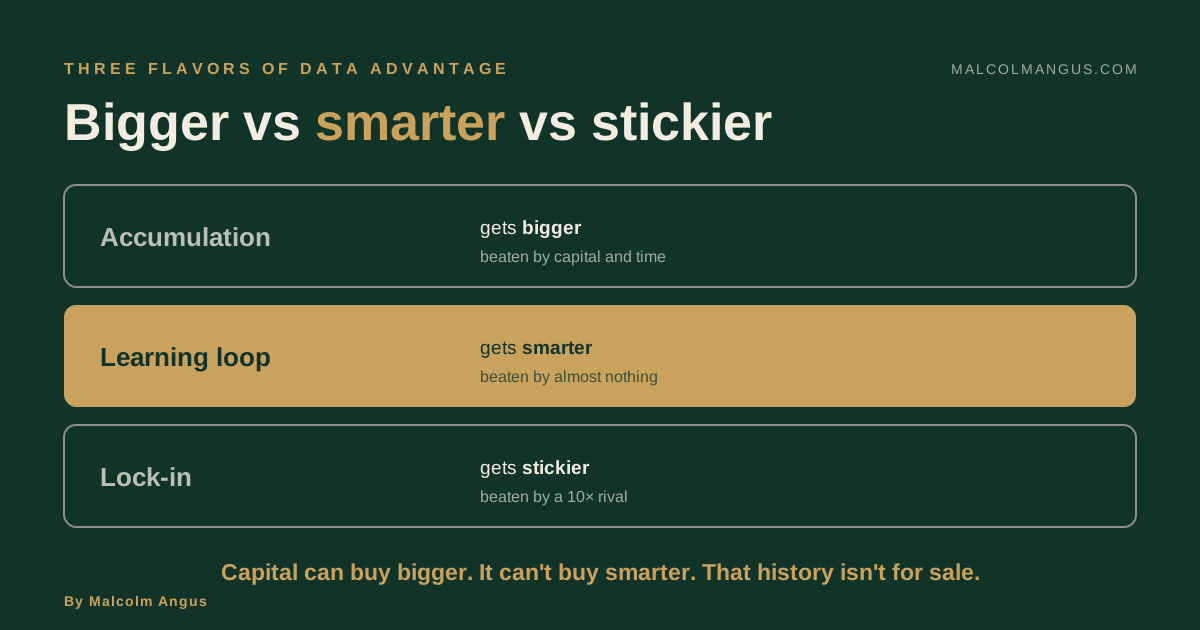
Data advantage comes in three flavors, and they are not equal.
Accumulation gets bigger. Beaten by capital and time: anyone with funding can go collect a pile.
Learning loop gets smarter. Beaten by almost nothing, because the loop's history of what worked isn't for sale at any price.
Lock-in gets stickier. Beaten by a 10x better rival, because switching costs delay defeat; they don't prevent it.
Capital can buy bigger. It can't buy smarter.
The five tests of a real data flywheel
- Proprietary. Could a rival easily obtain this data? If yes, you have a head start, not a moat.
- Outcome-labeled. Does it learn what actually worked, or only what happened? Event data describes the past. Outcome data improves the future. This is the dividing line.
- Label integrity. Is the "win" causal, or just correlated? A loop trained on coincidences gets confidently worse. This is where most that pass test two fail.
- Usage-driven. Does customer usage generate the data, or do you have to go get it? Usage-driven data compounds with every customer. Scraped data grows only as fast as your headcount.
- Cross-customer. Does each customer's data improve the product for all of them, and are your contracts and privacy law actually written to allow it? Siloed data is retention. Pooled data is a network effect.
Pass all five. Two is the dividing line; three is where most fail.
The hidden variable: half-life
Every dataset has a half-life, and almost nobody prices it in.
Spoilage destroys piles but rewards pipelines. When data rots fast, a big historical corpus isn't an asset, it's a liability: a hazard for any model trained on it. The win condition is owning the live pipeline plus a durable learning layer on top.
Counter-intuitive but true: perishable inventory nobody can hoard, plus durable learning, is the strongest structure there is. The raw data expires before a rival can stockpile it, while your record of what worked never stops compounding.
The map
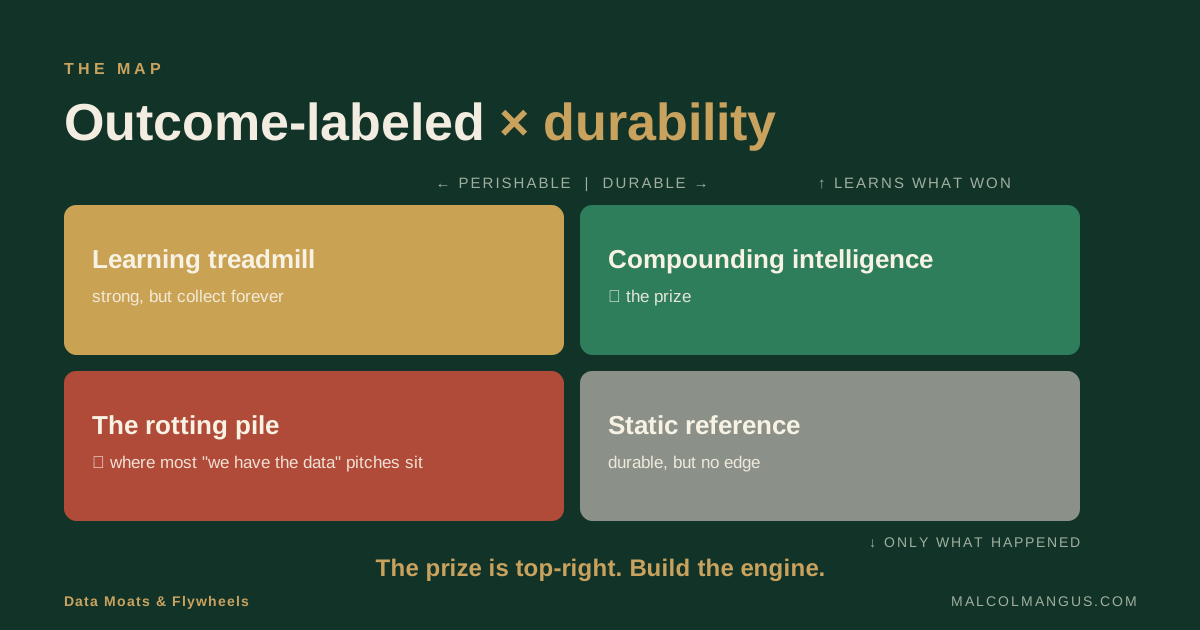
Plot any "data moat" claim on two axes: does the data learn what won, and how durable is it?
- The rotting pile. Perishable and outcome-blind. Where most "we have the data" pitches sit.
- Static reference. Durable but outcome-blind. Useful, licensable, no edge.
- Learning treadmill. Outcome-labeled but perishable. Strong, but you collect forever to stand still.
- Compounding intelligence. Outcome-labeled and durable. The prize.
Five red flags of a fake data moat
- "We have more data than anyone." Bigger is not smarter.
- The data is scraped or public. A head start, not a moat.
- No record of what worked, only what happened.
- Each customer's data stays siloed. No network effect.
- The data rots fast, but they're hoarding history.
The Moat Test
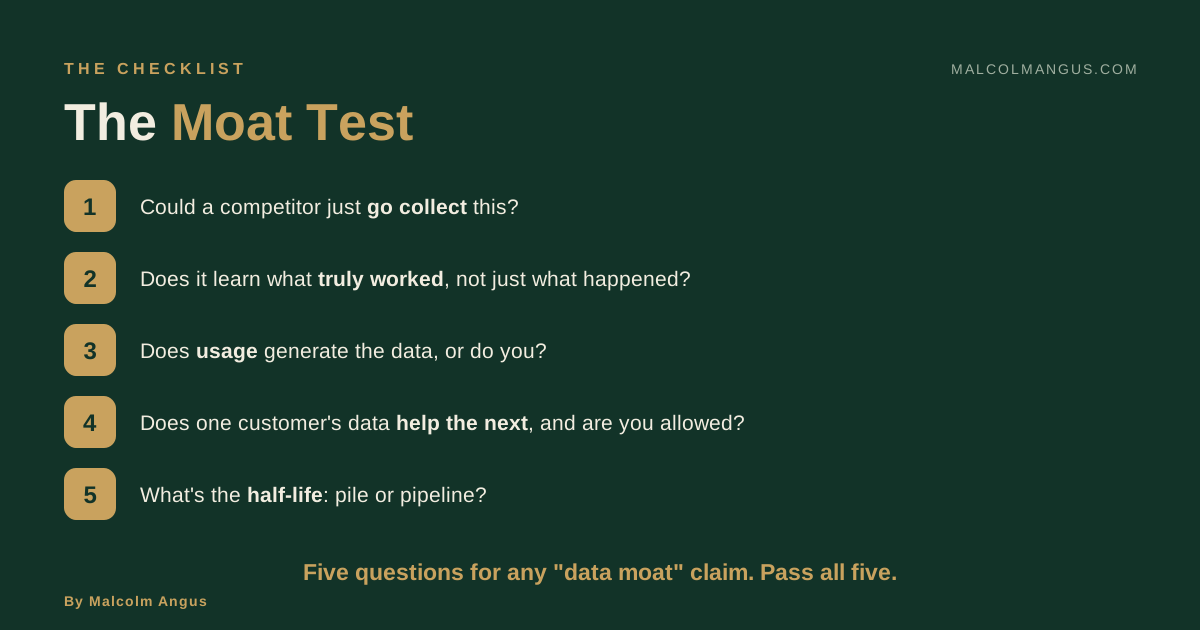
Five questions, under a minute, for any data moat claim, including your own:
- Could a competitor just go collect this?
- Does it learn what truly worked, not just what happened?
- Does usage generate the data, or do you?
- Does one customer's data help the next, and are you allowed to use it?
- What's the half-life: pile or pipeline?
The takeaway
A corpus that gets bigger is a wall that gets longer. A loop that learns what worked is an engine that accelerates.
Build the engine. And if you're starting from zero inside a company, the 0 to 1 data product playbook is how the first loop gets built.

Malcolm Angus
I write about data products, moats, flywheels, and business strategy, and I advise companies on all four. Follow on LinkedIn or work with me.