← All essays·July 10, 2026·10 min read
The cheese cartel: who actually wins at $38 a pound
I bought a $10.64 wedge of alpine cheese and traced the money. Nobody on the receipt wins big: the farm needs a side deal, the maker waits 14 months to be paid, and the counter breaks even. The reliable margins belong to a cartel, a bank, and a consolidator you will never see on the label.
Listen to this page
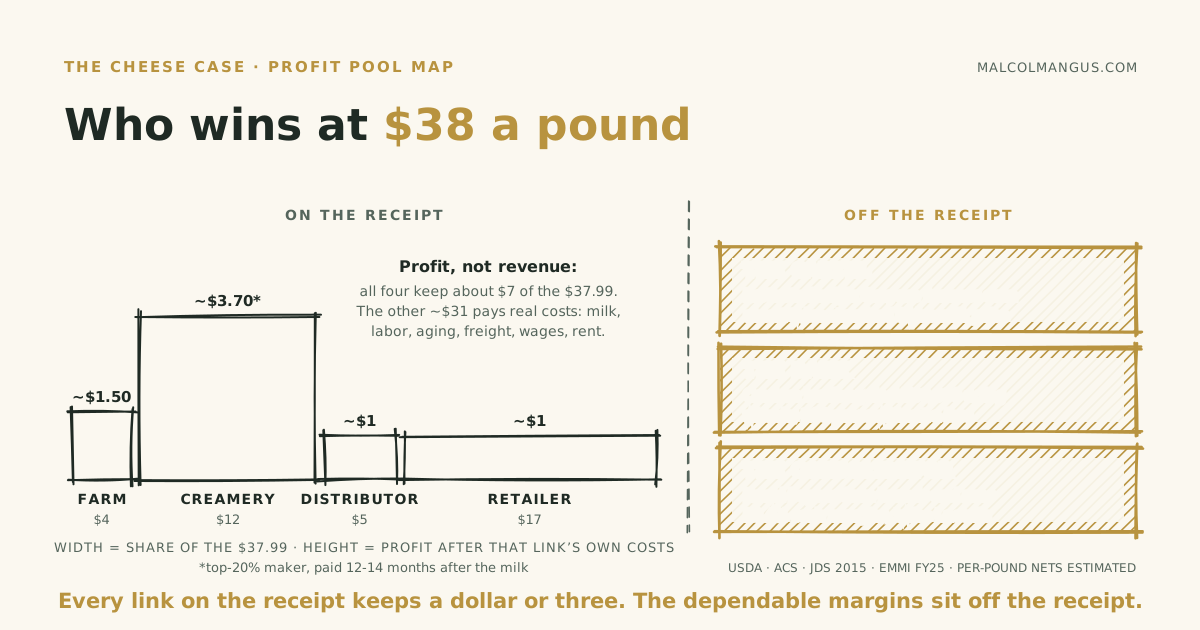
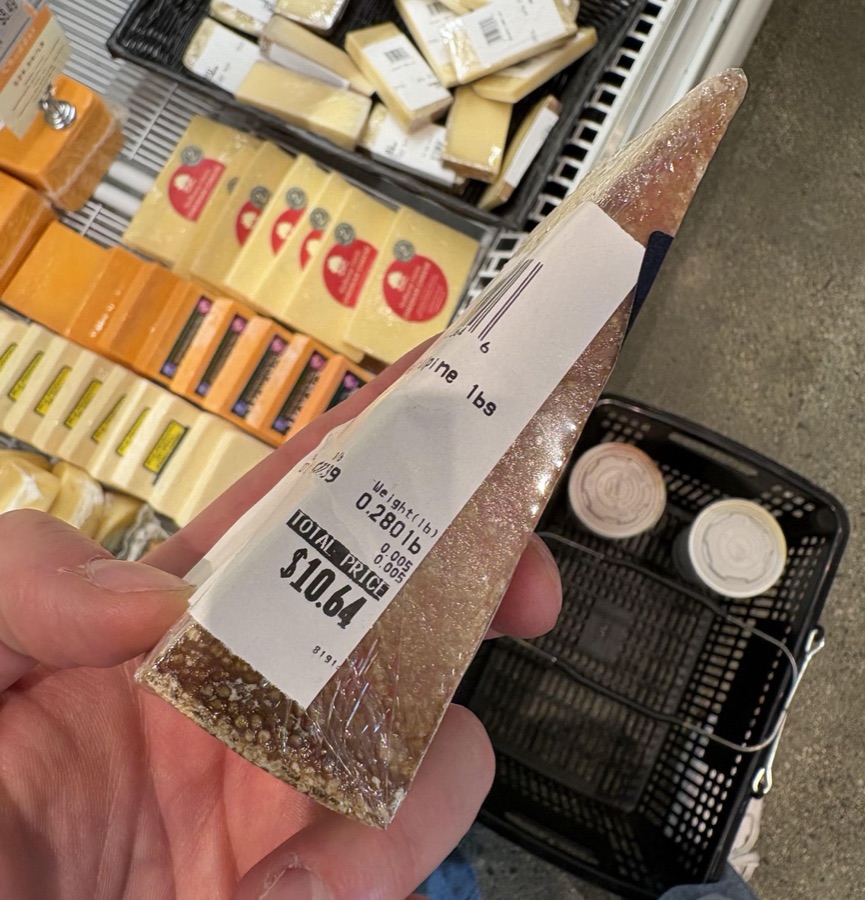
I bought 0.28 pounds of alpine cheese for $10.64. That is $37.99 a pound, and it is the top of the observed range for this class of cheese: Uplands sells its Pleasant Ridge Reserve for $30 direct, Central Market lists the same wheel at $32.99, and whole wheels of Alpha Tolman run about $39 online. So the question writes itself: at these prices, somebody must be getting rich.
I traced the money, and the answer is stranger than gouging: almost nobody on the receipt is getting rich. Every business my $10.64 touched clears its costs and keeps a dollar or three, and the actor with the biggest slice keeps the least. The winners have better seats, none of them visible from the cheese case: a cartel with the force of law, a bank with a vault full of cheese, and a quiet Swiss consolidator buying the artisans. This is profit pools applied to a single receipt, and it is also the mirror image of the private mint: same grammar, opposite cash flow.
The receipt, decomposed
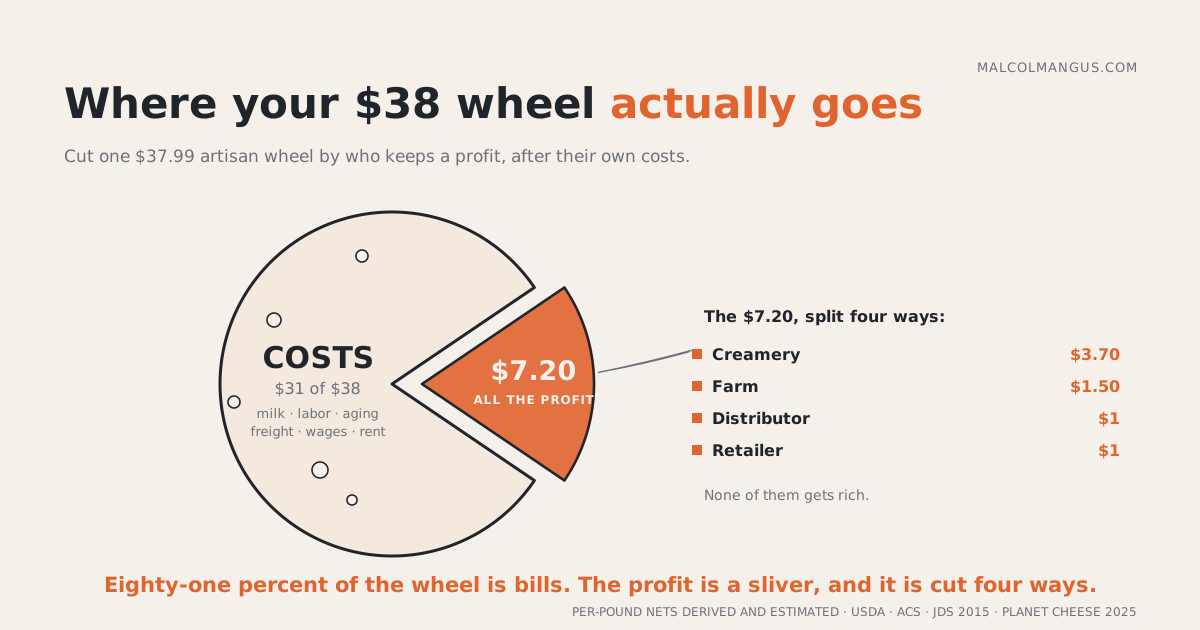
For an American artisan alpine at $37.99, the chain splits roughly like this. The structure is solid, the midpoints are estimates, and the keeps column is profit after each actor's own costs; the rest of every slice pays for milk, labor, aging, freight, wages, and rent.
| Actor | Gets | Share | Keeps, after costs |
|---|---|---|---|
| Dairy farm | ~$4 | 11% | ~$1.50, and only because of the specialty contract |
| Creamery | ~$12 | 32% | ~$3.70 in a top-20% year |
| Distributor | ~$5 | 13% | ~$1 |
| Retailer | ~$17 | 45% | ~$1 |
Almost none of that $38 is anyone's profit. Cut the wheel by who keeps what after their own costs, and the whole margin, split across four businesses, is one thin slice:
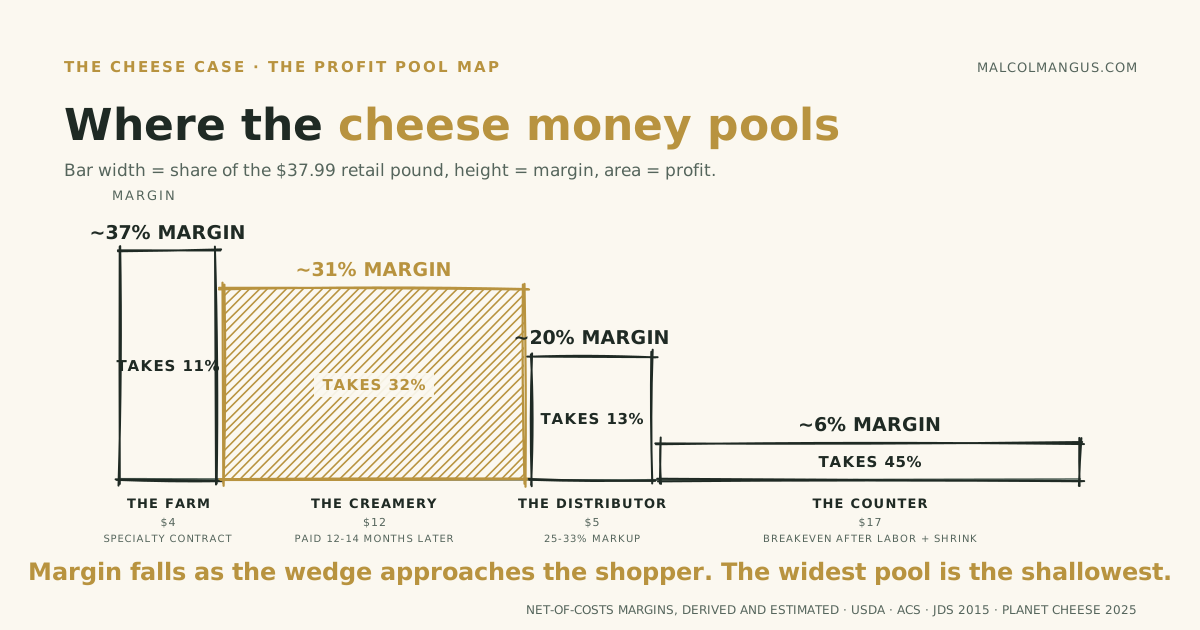
And the same chain in dollars instead of percents, with the winners who never appear on the receipt:
The imported version of the same shelf price adds a 15% tariff, about $1.40 a pound at the rates settled in 2025 (European cheese since August; Swiss cheese after a bruising detour through 39%), plus an importer layer; ocean freight is a rounding error at about 20 cents a pound. Between them, the producer of an imported Gruyere keeps roughly a quarter of the shelf price.
Put simply: A $38 price tag is four businesses' bills stapled together: the farm's, the creamery's, the truck's, and the counter's. Most of what you pay is their costs, not anyone's profit.
On the receipt, nobody wins big
The farm
Commodity dairying loses money on a full-cost basis right now: Illinois dairies received $21.63 per hundred pounds of milk against $23.56 of total cost in 2024, per farmdoc. The farm behind a $38 cheese only earns because somebody upstream volunteers to pay roughly double the commodity milk price, the way Jasper Hill does for its supplying farms in Vermont. Take away the specialty contract and the farm's slice of my wedge is a loss.
The creamery
The American Cheese Society's industry study found only 80% of US artisan cheesemakers operate profitably at all, the profitable ones average a 23% margin, and margins declined across every milk type from 2017 to 2021. And the alpine maker carries a burden nobody else in the chain shares: it is the only actor who waits. The milk is paid for today; the wheel sells in 12 to 24 months. Aging finance alone runs maybe a dollar a pound. The creamery keeps the most per pound of anyone on the receipt, and it earns that by financing a cave.
The distributor
A safe 25 to 33% markup with no aging risk. Fine business, small slice.
The retailer
The biggest slice and the emptiest one. The 45% gross margin funds cheesemonger labor near 30% of department sales, 4 to 8% shrink (spoilage, trim, and theft), cutting loss, and the free samples that drive purchases. Fully loaded, the staffed cheese counter is roughly a breakeven operation. The proof is the control group: independent cheese shops, the same counter without a grocery store around it, keep closing. Bedford Cheese Shop in New York, The Cheese Shop of Salem, Curds & Co in Brookline, Cowgirl Creamery's last retail shop. The Salem owner's exit note said it plainly: they could have kept going only by cutting wages and benefits.
So why does the counter exist at all? Baskets. Nielsen Perishables Group data presented at IDDBA in 2015 measured it: baskets containing specialty cheese average $92 against a $48 store average. Kroger bought Murray's Cheese in 2017 and tripled it to about 1,200 shop-in-shops (Murray's own count; Kroger celebrated the 1,000th opening in 2022) while only ever talking about differentiation and discovery, never department margin. The counter is a halo engine that happens to sell cheese: one deliberately unoptimized, human corner inside a store that optimizes everything else, kept that way because the inefficiency is the differentiator.
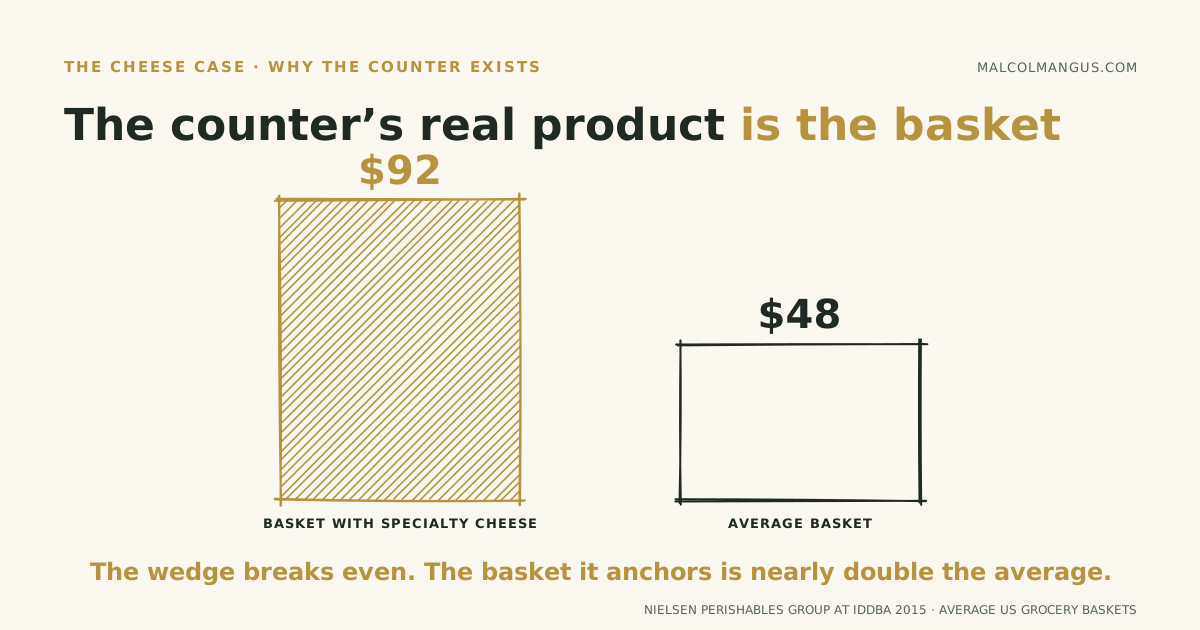
Put simply: Every link on the receipt is one bad year from breakeven, and the counter itself survives for a different reason: it doubles the basket of everyone it pulls into the store. When a money-losing department lasts decades, somebody upstream is counting a bigger number.
Off the receipt: the cartel, the bank, the consolidator
The cartel
Europe protects cheese names by law: a wheel may call itself Parmigiano-Reggiano or Gruyere only if it comes from the named region and is made the prescribed way. The EU's label for this is the Protected Designation of Origin, PDO; French-language labels and Switzerland's parallel scheme both render it AOP. The interesting part is who enforces it: a consortium of the region's own producers, with legal power over production volumes. Name protection plus quota power is a supply cartel wearing a certificate, and it works for exactly the people the rest of this chain shortchanges. Parmigiano-Reggiano wholesale rose 20 to 25% in 2025 to record levels, per Parma Chamber of Commerce price data. Farmers in the Gruyere system earn nearly one Swiss franc per liter of milk, roughly double the standard Swiss industrial price, and when exports wobbled the consortium simply cut production quotas 3% to defend it. Supply control is the product, and the cartel is the only structure in this industry that reliably delivers profit to actual farmers.
The bank
Italy's Credem bank has run the strangest vault in finance for a century: about 500,000 wheels of Parmigiano aging in its warehouses as loan collateral. A producer delivers young wheels, borrows 60 to 80% of their value at 3 to 5% interest plus a custody fee, and redeems them as they mature and sell. The bank has not lost money on cheese in a hundred years. Now look at what the loan is actually for. The cheesemaker's structural burden is the aging float: milk must be paid for today, and a wheel cannot be sold for 14 months. Credem did not fix that problem; it priced it. The gap that crushes the cheesemaker's cash flow is, to the bank, a product with an interest rate and a storage fee attached. The industry's biggest structural problem is somebody else's fee income.
The consolidator
Emmi, the Swiss dairy group that owns Cypress Grove and Cowgirl Creamery, runs a 10.4% cash operating margin (EBITDA), about double diversified giants like Lactalis (1.2% net) and Savencia (3.3% operating). The playbook is patient: let founders spend decades building a brand and exhausting themselves against the economics above, then buy the brand and run it at portfolio scale. The exit for the artisan middle is selling to Emmi, or to each other. And the biggest absolute pool in American cheese is not upscale at all: it is Leprino, quietly making the mozzarella for every major pizza chain, with billionaire heirs and a billion-dollar plant funded from cash flow.
Put simply: The dependable money in cheese belongs to whoever controls supply, finances the waiting, or owns a portfolio of brands. If your industry has a link everyone romanticizes and a link that quietly compounds, invest your career or your capital in the quiet one.
The cash flow arbitrage, reversed
In the private mint essay the winning pattern is collect first, deliver later: Starbucks holds your balance before pouring anything, software vendors sell prepaid credits, and customers end up financing the company at zero interest. The cheesemaker runs the same timing in reverse. It pays for milk today and collects for the wheel 12 to 24 months from now, so it finances its customers instead of the other way around. Same cash flow arbitrage, wrong side of it. The one party that profits from the timing gap is a literal bank, charging 3 to 5% plus custody to bridge exactly this window. Even the leftovers run backward. When a gift-card customer forgets a balance, the company books the forgotten money as pure profit. When a cheese counter forgets a wedge, it dries out in the case and gets thrown away. Forgetting earns the prepay business money and costs the counter money.
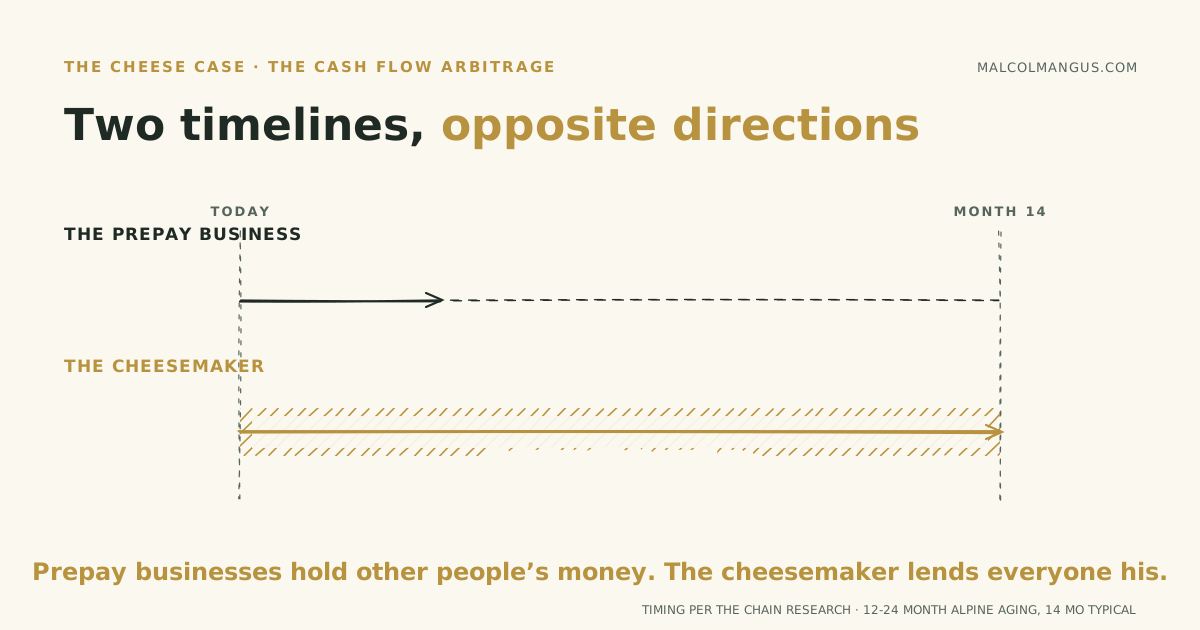
Put simply: Getting paid before you deliver is a structural advantage; paying before you collect is a structural tax. Know which side of the timing your business sits on, and price or finance accordingly.
So who is winning at the register?
Nobody at the register, structurally. The $37.99 is not gouging; it is approximately the price at which every link in the chain clears its costs. The store merchandises the wedge for the basket, not the wedge. If anyone on the receipt wins, it is a top-20% creamery in a good year, and it earns that by financing a cave. The dependable money belongs to whoever escapes the receipt: engineer the price like the consortia, finance the float like Credem, own the brands at portfolio scale like Emmi, or sell commodity volume like Leprino.
I went in expecting a story about markup. I came out with the same lesson the profit pools map teaches at industry scale, compressed into one wedge of cheese: the profit is never where the activity is, and the romantic link in the chain is usually the one paying for everyone else's business model.
Put simply: Nobody at the counter is getting rich off your $10.64. The store is buying your loyalty and your basket, the maker is financing a cave, and the reliable profits sit with cartels, banks, and consolidators you will never see on the label.

Malcolm Angus
I'm an analytics engineer, data product manager, and forward-deployed engineer. I write about data products, moats, flywheels, and business strategy, the loops that make companies harder to catch.

The charts in this essay are free to reuse with credit.