← All essays·July 26, 2026·8 min read
Who actually makes money on your coffee: the brand, not the bean
A grower keeps about a nickel of your $5 latte. Every stage of the coffee chain, farm, trade, roasting, retail, takes a near-equal slice of the retail dollar, but the profit pools downstream: a commodity roaster nets almost nothing while pods, branded shelf coffee, and cafes run 20 to 57% margins. The money was never in the bean. It is in the package and the cup.
Listen to this page
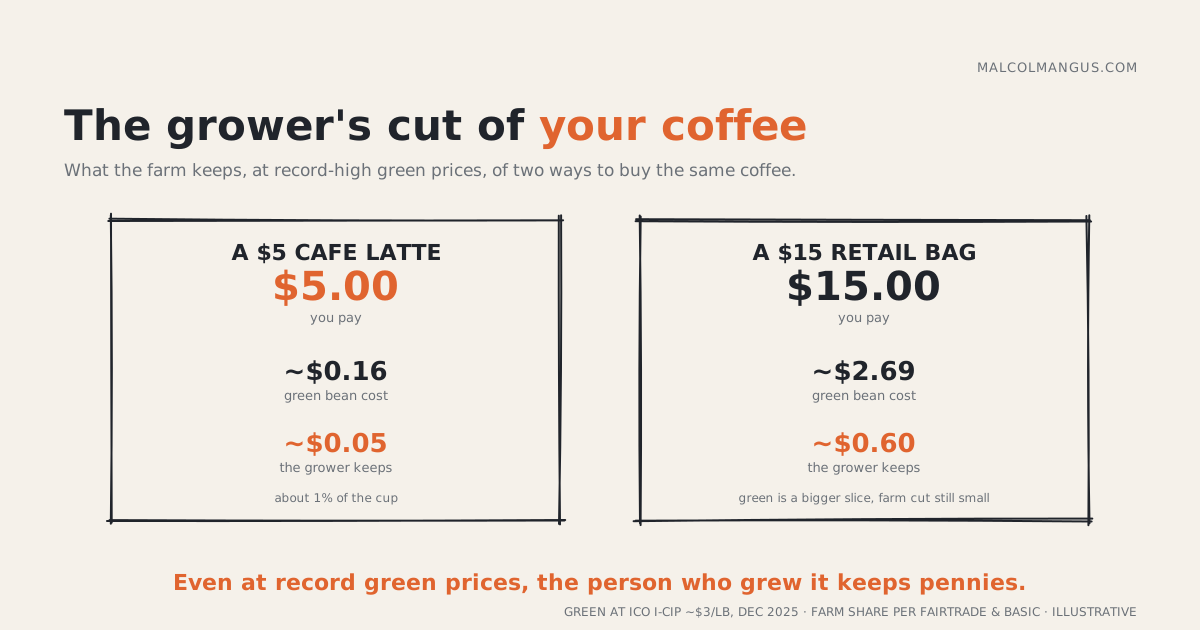
Order a $5 latte and the person who grew the coffee keeps about a nickel. Not five percent. Five cents. The bean in your cup cost the cafe roughly sixteen cents of green coffee even at 2025's record-high prices, and the farmer's share of that is smaller still, because the green price itself gets split among the mill, the exporter, and the freight forwarder before anyone in the growing country sees it. Fairtrade International puts the grower's take at around one percent of the price of a coffee-shop cup, roughly four cents on a four-dollar cup. The FAO said the same thing twenty years ago: one to two percent.
So who does make the money? Not the grower, and, it turns out, not the trader or the grocer either. The profit hides in one stage of the chain and one attribute of the product, and once you see it you cannot unsee it on a shelf.
The retail dollar splits four ways, almost evenly
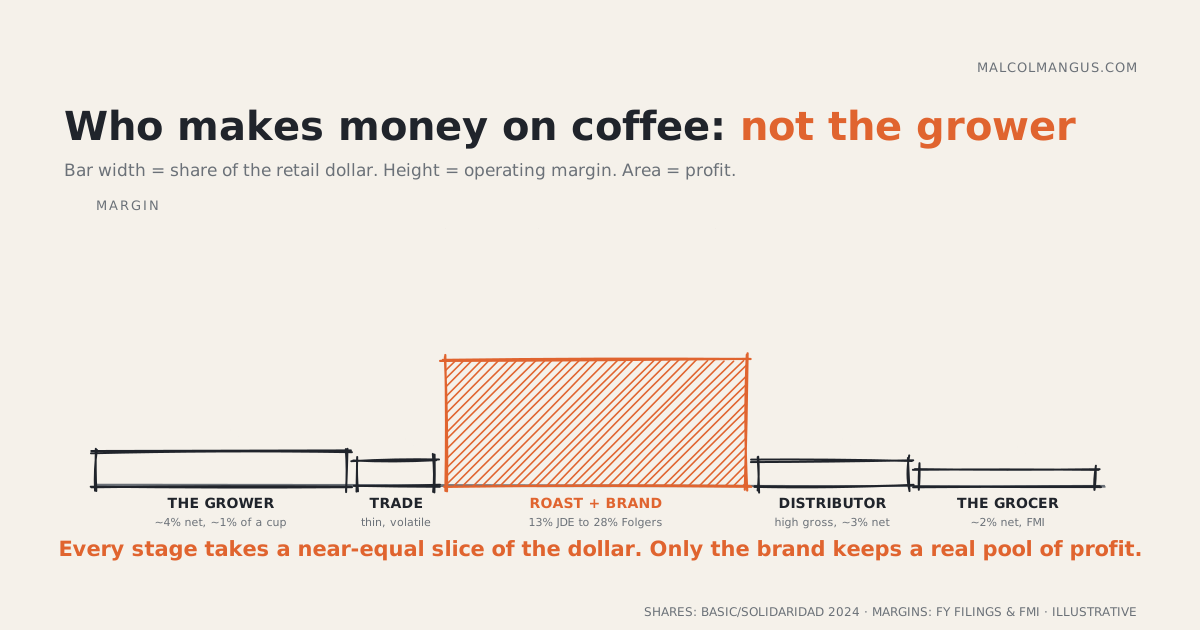
Follow a bag of supermarket coffee backward and the striking thing is how democratic the split looks. The most complete public teardown, a 2024 value-distribution study by the research group BASIC with Solidaridad, breaks a packaged-coffee retail price into gross value added at each stage: cultivation at the farm takes a bit over a fifth, collection and export and international trade another sliver, roasting and manufacturing about a fifth, and retail about a fifth, with tax on top. On a gross basis, four hands each take a roughly comparable slice of your money.
Then the study does the part nobody screenshots. It converts gross value into actual profit, and the picture inverts. Total net profit across the entire chain is only about eleven percent of the retail price, and it does not sit at the farm. The grower nets around four percent of their own sales, the roaster a bit more, and the retailer captures the largest clean margin of the group. The farm is wide and flat: a huge share of the labor and risk, almost none of the profit. Green coffee, the raw material the whole $200-billion-plus industry is built on, is less than ten percent of global retail value, down from roughly thirty percent in the early 1990s.
Put simply: The coffee dollar divides almost evenly across farm, trade, roasting, and retail on a revenue basis, but profit is not revenue. Convert to margin and the farm collapses to a sliver while the money gathers downstream. A near-equal split of the dollar hides a wildly unequal split of the profit.
The money is in the format, not the bean
Here is the mechanism. The same green bean can be sold as five different products, and the margin climbs at every step away from the commodity. A pure roast-and-ground commodity player barely clears the operating line: Farmer Brothers, a listed roaster-distributor, ran roughly break-even in fiscal 2025 per its own results. Move one shelf over to branded shelf coffee and J.M. Smucker's US Retail Coffee segment, which is Folgers and Cafe Bustelo and licensed Dunkin bags, reported a segment profit margin around 28% in fiscal 2025, per its 10-K. Package the same coffee into aluminum capsules and the economics get silly: Nestle's Nespresso runs about a 20% operating margin, Keurig Dr Pepper's US Coffee pod business about 27%, and a K-Cup works out to something like forty to fifty dollars per pound of the actual coffee inside it. Then pour it in a cafe. Starbucks nets about 15% company-wide, but its Channel Development arm, the packaged and ready-to-drink business it runs with Nestle, posted operating margins between 47 and 57% across fiscal 2024.
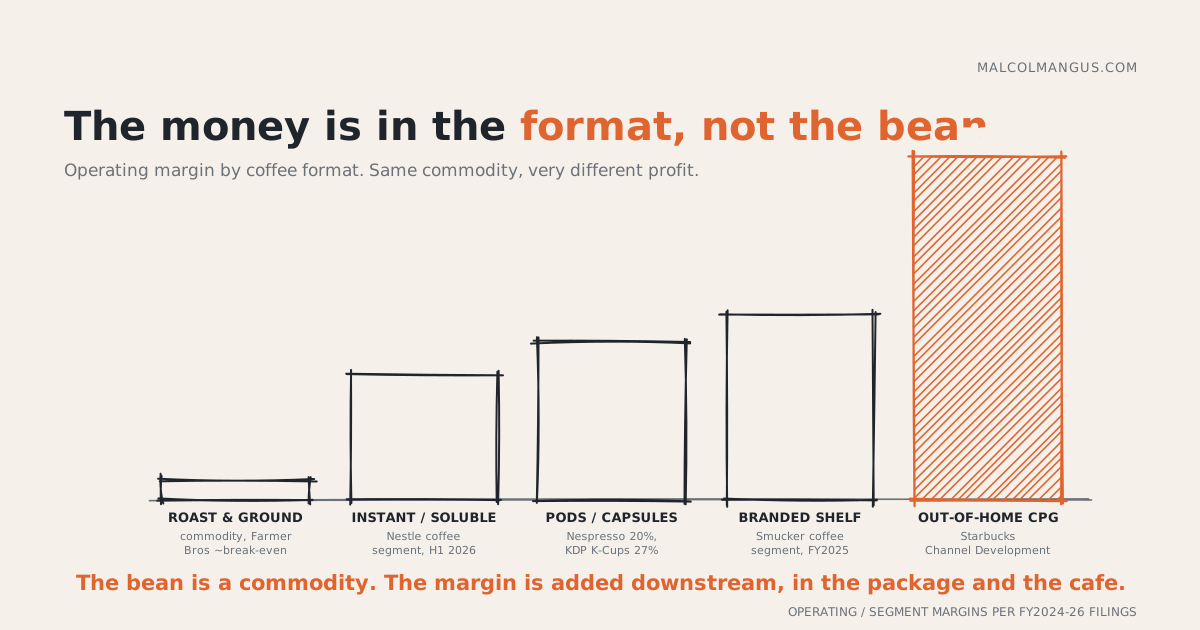
The bean is a commodity, priced on a global exchange that hit a record of about $4.30 a pound in early 2025, per the International Coffee Organization. What you actually pay for is everything wrapped around it: the roast, the brand, the convenience of a pod, the seat in the cafe. That is why a company can pay the same volatile green price as everyone else and still print money. It is not selling coffee. It is selling a format.
Put simply: One commodity, five products, five margins. The further a business sits from the raw bean, the more it keeps, because it is charging for packaging, brand, and convenience rather than for coffee. When you see a fat coffee margin, you are looking at a format, not a crop.
The middle is a toll road, not a gold mine
You might assume the giant green-coffee merchants, the ones who move most of the world's beans, are quietly coining it. They are not, at least not on coffee. The big agricultural traders run on thin, volatile margins, and the tell is where their income comes from. UNCTAD, in its 2023 Trade and Development Report, found that over 75% of the major food-trading firms' income now comes from financial operations, the hedging and financing around the commodity, rather than from moving the physical goods. Trading houses like Neumann and Volcafe do not publish coffee-only margins, but the listed diversified traders clear low single digits at the group level.
The same holds one link downstream, at the distributor, which is the part of the chain people forget entirely. Getting roasted coffee from the plant to a supermarket shelf or a restaurant kitchen is an enormous business and a thin one. The broadline foodservice distributors that haul it, Sysco and US Foods, run operating margins around 3% per their filings. Farmer Brothers, which both roasts coffee and runs its own delivery fleet to restaurants, hotels, and offices, shows the trap in miniature: its gross margin is a healthy 42%, but the trucks, the drivers, and the machine service eat almost all of it, leaving the company roughly break-even at the operating line. Distribution looks fat on the gross line and thin on the profit line, which is this whole essay compressed into a single link. The niche end of the shelf runs on exactly this plumbing. Whisha, which bills itself as the only direct-store-delivery distributor specializing in craft coffee, aggregates a long tail of small roasters onto grocery shelves, handles the reordering no supermarket wants to do for a dozen tiny brands, and feeds those roasters live inventory data, claiming that stores which switch lift coffee sales by an average of 22.4% (Whisha). It is the plumbing that lets the high-identity, high-margin specialty brands reach a shelf at all, and it earns its keep on service and logistics, not on owning the bean.
Put simply: Every middle link, green trade and distribution alike, is a toll road: high volume, real gross margin, thin net. The merchants make their money on the financing, the distributors lose theirs to the trucks, and nobody in the middle gets rich on the coffee itself.
The endgame: one champion for the whole shelf
If the profit lives in brands and formats, the logical move is to own as many of them as possible, and the industry just made it. In August 2025, Keurig Dr Pepper agreed to buy the Dutch giant JDE Peet's, the owner of Peet's, Stumptown, Intelligentsia, and dozens of grocery brands, for about 18 billion dollars. The deal closed in April 2026, and the plan is to split the combined company in two and spin out a pure-play coffee business with around sixteen billion dollars in annual sales, which the press release calls a "global coffee champion." That business will span the entire format ladder at once: commodity bags, premium roasts, pods, and ready-to-drink. It captures margin at every rung above the bean, which is exactly the point.
Put simply: When the money is in brands and formats rather than the crop, scale means owning the whole ladder. An 18-billion-dollar roll-up into a single coffee champion is the strategy stated out loud: collect the branded, packaged, high-margin rungs and let someone else grow the beans.
What to take from your next cup
None of this makes coffee a scam. The cafe seat, the pod's convenience, and the brand's consistency are real things people happily pay for, and adding value downstream is what every consumer business does. But it clarifies where the value is captured, and it should reset a few instincts. If you want the grower to get more, the lever is not tipping at the register; it is buying the formats where a larger share flows back, or paying the premium that certification schemes route to the farm, modest as it is. If you are building any commodity-based business, the coffee shelf is the whole lesson on a single aisle: never sell the raw input, sell the thing you wrap around it. And the next time a barista hands you a five-dollar cup, you will know the one person in the whole chain who is definitely not getting rich off it is the one who grew it.
Put simply: Value added downstream is legitimate, but it is where the money goes. The bean is a commodity that keeps pennies; the package, the brand, and the cup keep the rest. Sell what you wrap around the commodity, never the commodity, and know that the grower is the last one paid and the first one squeezed.

Malcolm Angus
I'm an analytics engineer, data product manager, and forward-deployed engineer. I write about data products, moats, flywheels, and business strategy, the loops that make companies harder to catch.

The charts in this essay are free to reuse with credit.