← All essays·August 7, 2026·10 min read
How a services business achieves software margins
AI made every technical team three to four times faster. In a services business that runs on data, that velocity does not just ship the same work faster, it funds a software layer underneath the work. That layer is what lets a headcount-bound services firm break the revenue-per-employee ceiling and start compounding like a platform. Here is the operating thesis: why the ROI math flipped, what the hybrid model actually is, why the platform is the one growth lever worth its own budget, and the scoreboard that tells you it is working.
Listen to this page
AI made every technical team three to four times faster. The code got cheap, the bottleneck moved upstream, and a person who shipped one pipeline a week now ships three or four. But faster has not made every business richer, and the reason is the same one I keep tracing through every profit pool: a capability that commoditizes is worth exactly what it touches. In a business whose delivery actually runs on data and software, that new velocity does something a SaaS org cannot easily replicate. It does not just ship the same work faster. It funds a software layer underneath the work, and that layer is what turns a headcount-bound services firm into something that compounds like a platform.
The operating thesis is one move: use the velocity to build the platform, not to do more of the manual work more quickly. What follows is why the math flipped, what the hybrid model actually is, why the platform is the single growth lever worth its own budget, and the scoreboard that tells you it is working.
The ROI math flipped
The change is not that the work got a little faster. It is that the constraint moved. Two or three years ago the inputs to a technical delivery role were almost entirely manual: writing the pipeline code by hand, wiring the dashboards by hand, maintaining the integrations by hand. That layer is now commoditized by agentic coding. What is left, and now scarce, is judgment: the architecture, the strategy, and the product management of deciding what to build and whether it moved a number.
That reframes the return on a technical hire. When the manual layer was the job, one more engineer bought you one more engineer's worth of throughput. When the manual layer is automated, one experienced person directing agents can carry the output of three or four, and the return on their fully loaded salary rises with the size of the estate they can now hold in their head. The scarce input is no longer typing. It is knowing what is worth typing.
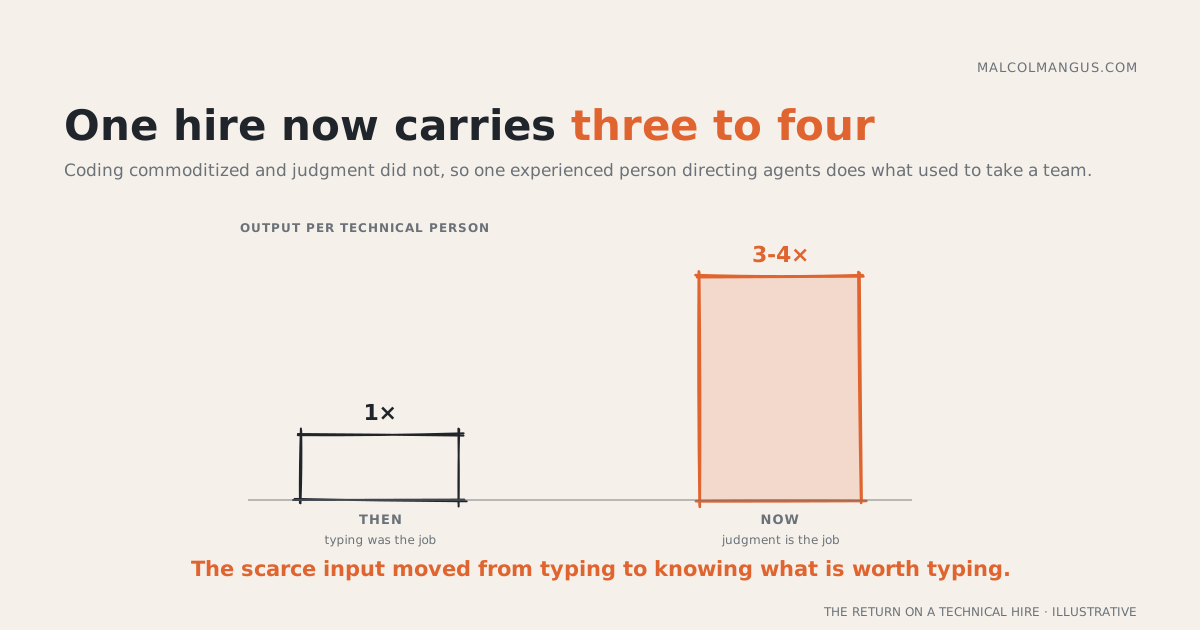
Put simply: the speedup is real, but it is not the point. The point is that coding commoditized and judgment did not, so the value of a technical team now lives in what it chooses to build, not in how fast it can build the obvious thing.
Velocity is worth what it touches
Two businesses can adopt the exact same tools, get the exact same four-times speedup, and see completely different results in profit, because velocity is worth what it touches. In many software companies the data and tooling teams produce decision support: dashboards and analyses that inform a choice someone else makes, one or two steps removed from the revenue. Speed there is genuinely useful and almost impossible to bank, because the output was never the product.
A services business is the inverse. Its delivery runs directly on its data foundation and its tooling. When the platform gets faster or better, that shows up immediately in delivery cost, in client results, and in the pipeline the results generate. There is no gap between the technical team's output and the money, which is precisely why the same velocity that dissipates inside a SaaS org can compound inside a services firm. The speedup lands on the P&L instead of beside it.
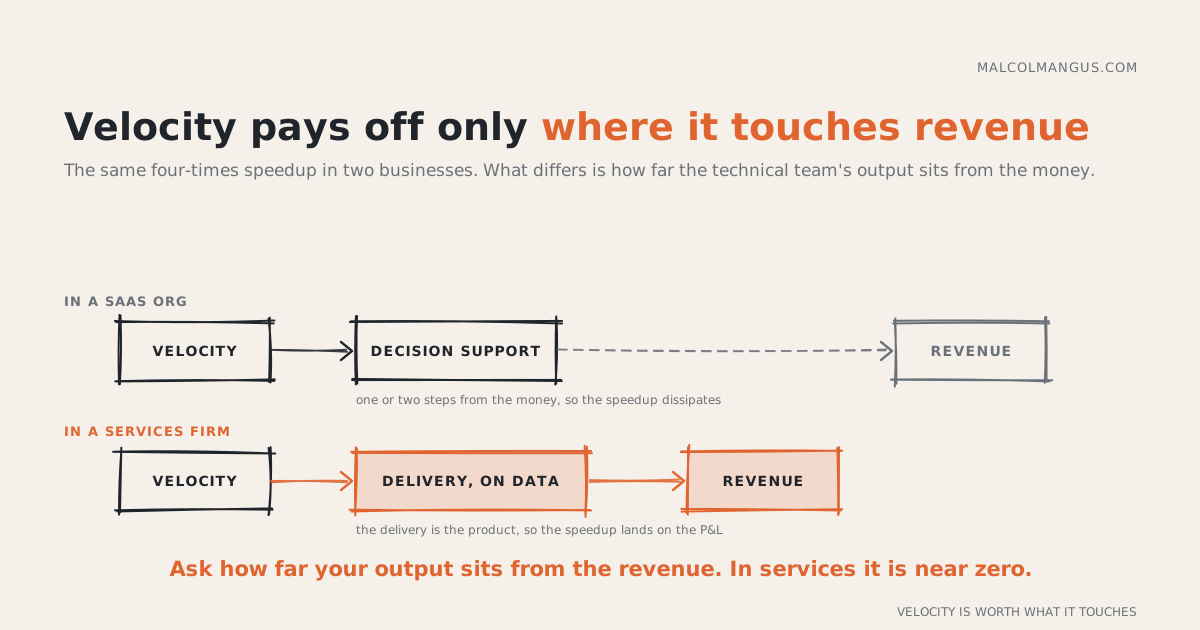
Put simply: do not ask how fast your team got. Ask how far its output sits from the work that earns revenue. In a services business that distance is close to zero, and that is the whole reason the agentic era favors it.
The hybrid firm
Put those two facts together and a specific model appears: human expertise where judgment matters, software everywhere else, and one platform underneath all of it. Call it the hybrid firm. Judgment, relationships, and account strategy stay with people, because that is where the margin and the trust actually live. Everything repeatable and non-scalable, the ingestion, the reporting, the enrichment, the routine analysis, migrates off people and into the software layer the platform ships. Staff do not get cut; they get redistributed onto the higher-order work that was always underpriced when they were buried in manual tasks.
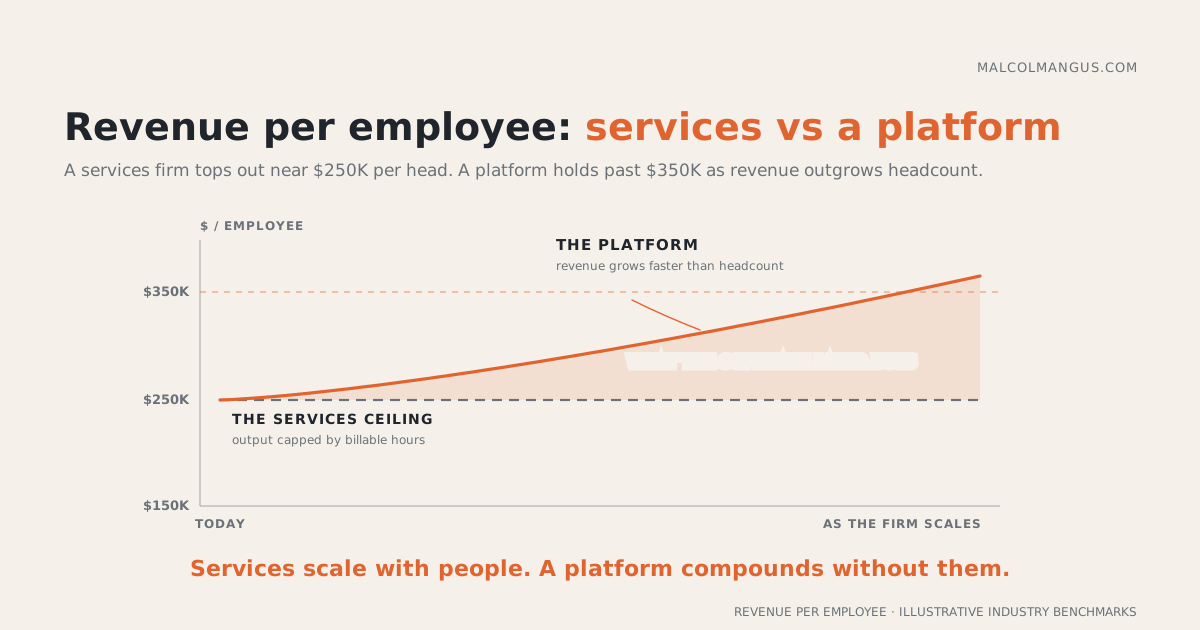
The reason this matters is valuation, not just margin. A services business and a platform business can post identical revenue and identical margins and still trade at very different multiples, because a buyer prices in how the money is made: revenue that recurs, contribution margin where each new client leverages the same platform instead of a new pile of hours, and low key-person risk. The agentic era is the first time a services firm can credibly claim all three. The one number that captures the shift is revenue per employee. A conventional services shop tops out somewhere around two hundred and fifty thousand dollars per head, because output is bounded by hours. A firm with a real software layer holds past three hundred and fifty thousand and keeps climbing as revenue grows faster than headcount. That gap is not a productivity tweak. It is the difference between a services multiple and a platform multiple.
Put simply: the hybrid firm keeps humans on judgment and pushes everything else into software, and the tell that it worked is revenue per employee climbing while the headcount barely moves. That single number is what re-rates a services business into a platform business.
The platform is the one lever
Most growth investments scale linearly with people. Hire another delivery lead, add another pod of throughput. Hire another salesperson, add another quota. The platform is the exception, and that is the entire case for funding it first: it is the only investment that moves every growth driver at once without adding a person, and it compounds instead of resetting.
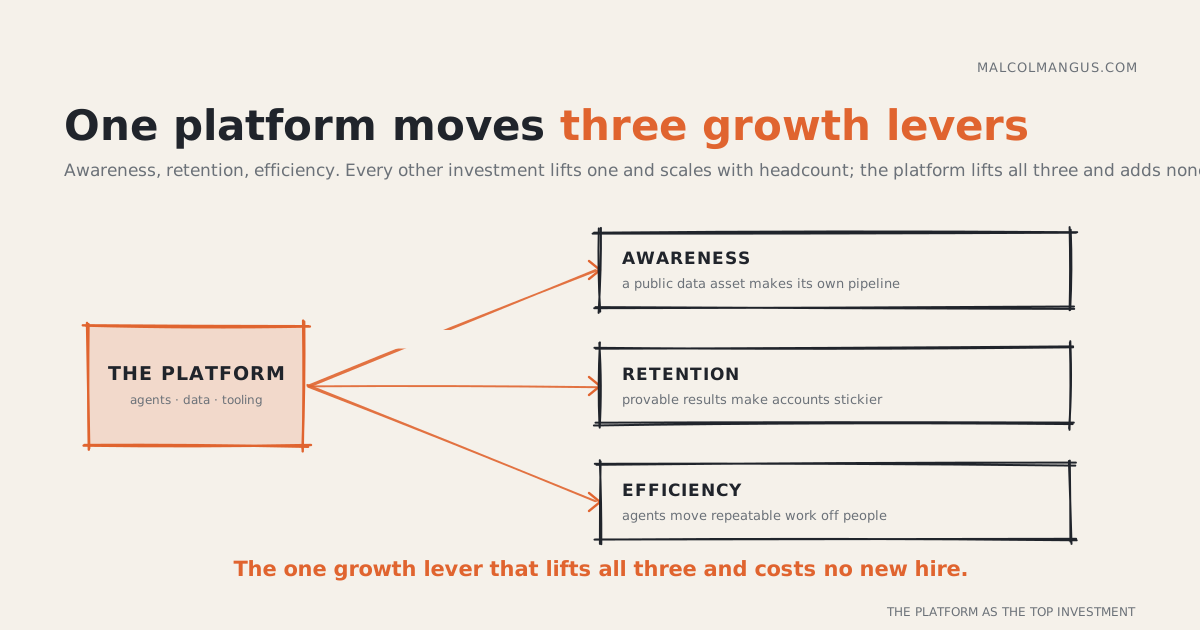
It moves awareness, because a services firm that runs on data can turn that data into a public asset that generates its own pipeline. The sharpest version of this is a counter-positioning move I have written about before: give away the scoreboard. Publish the measurement for free, the thing incumbents gate and charge for, and sell the implementation, which they cannot give away without cannibalizing themselves. The free asset becomes the first pipeline channel that does not route through your existing clients, and its natural on-ramp converts the prospects you used to turn away. It moves retention, because provable results make accounts stickier and expansions easier to justify. And it moves efficiency, because every workflow an agent absorbs is margin that no longer costs a headcount. One budget line, three growth drivers, none of them linear in people.
There is a trap inside this, and it is worth naming because it is where most firms will fail. The democratized tools, the vibe-coded apps and the out-of-the-box agents, make it look like the constraint is gone, when the constraint has simply moved to the data underneath. A dashboard or an agent is only as good as the data it stands on, and the deep advantage goes to the firm that did the work ahead of time rather than expecting the app to figure it out just in time. Answering a real question well was never a model problem; it is a readiness problem, and readiness does not democratize.
Put simply: fund the platform before you fund another hire, because it is the one lever that lifts pipeline, retention, and efficiency together and keeps lifting them. Just remember that the tools got easy and the data did not, so the ahead-of-time foundation is the moat, not the app on top of it.
The scoreboard
A thesis this clean still needs a number to run against, and the honest one is multiplicative, not additive: Volume times Durability times Efficiency. Volume is the pipeline you can manufacture instead of waiting for referrals. Durability is the revenue that survives and expands, the net retention that lets you grow even if you sign no one new. Efficiency is the leverage the platform buys, measured, in the end, as revenue per employee. The relationship is a product and not a sum for a reason: a zero in any one lever caps the other two. Pipeline without retention is a leaky bucket. Retention without leverage earns a services multiple. Leverage with no pipeline has nothing to compound. You do not average these. You multiply them, and you fix whichever one is smallest.
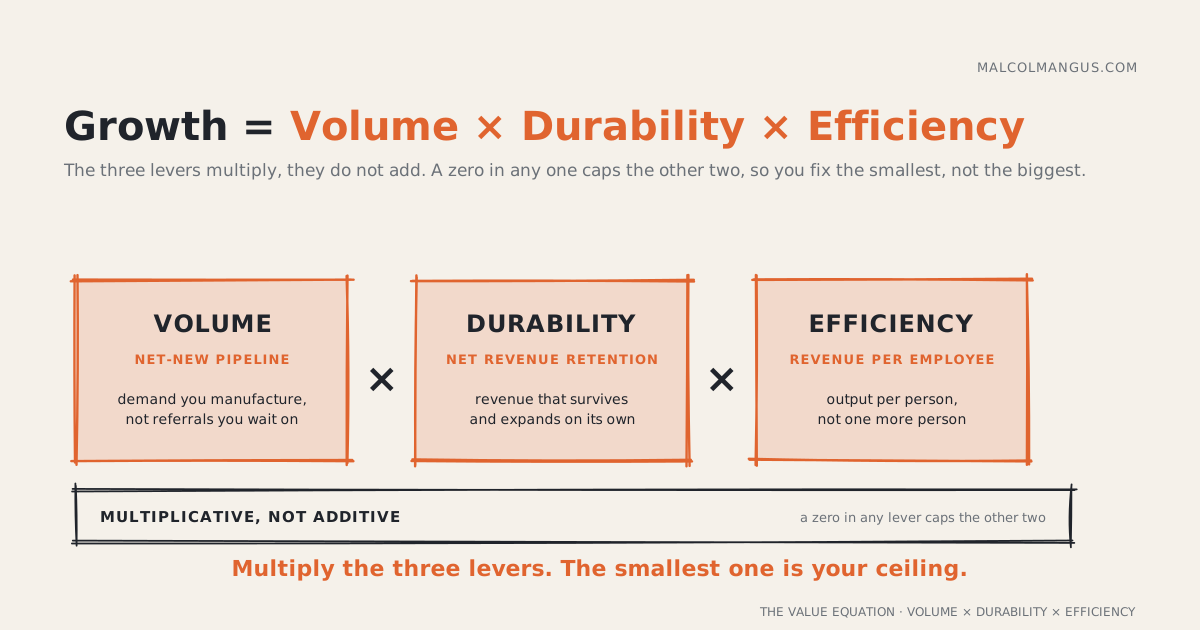
Put simply: growth is Volume times Durability times Efficiency, and because it multiplies, the job is never to optimize your best lever. It is to find the one nearest zero and pull it up, because that is the one silently capping everything else.
What kills it
Four things can kill this, and each has a cheap mitigation. The first is trust: one wrong number shipped from an automated pipeline erodes a client relationship faster than the automation built margin, so everything client-facing runs behind evaluations and a human-in-the-loop gate. The second is dependency: a platform built entirely on frontier model APIs inherits their pricing and their outages, so the scaled, repetitive workloads move onto smaller owned models the firm controls. The third is the quiet killer, adoption: a platform nobody uses is shelfware, and the whole thesis rides on the team actually using what it ships, so usage sits on the scoreboard as a leading indicator and gets watched before the financials can move. The last is key-person risk, the two-person team carrying the whole estate, which is exactly what version control, task tracking, and written standard operating procedures exist to solve. They are what make the platform survivable instead of person-shaped.
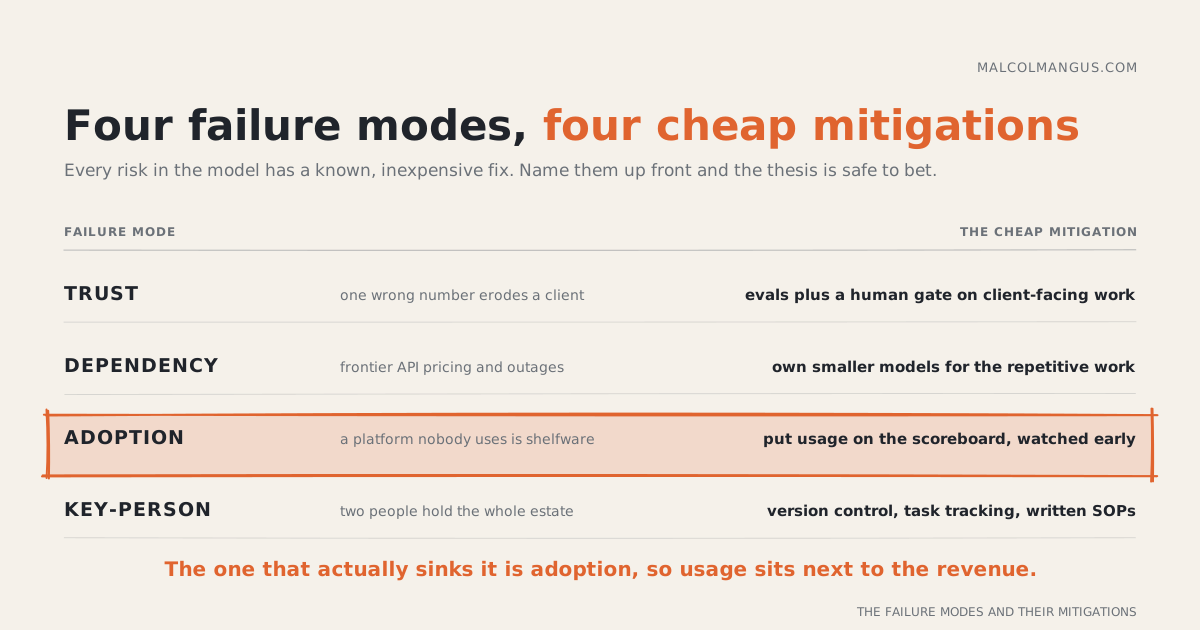
Put simply: the risks are quality, dependency, adoption, and key-person concentration, and all four are managed cheaply if you name them up front. The one that actually sinks the thesis is adoption, which is why usage belongs on the scoreboard next to the revenue.
What it adds up to
The agentic era did not just make technical teams faster. It changed what a services business can become. If the velocity lands in the work that earns revenue, and you spend it building a platform rather than doing manual work more quickly, a headcount-bound firm can hold platform-grade margins, earn a platform-grade multiple, and compound the way software does. The model is the hybrid firm: judgment with people, everything else in software, one data foundation underneath, and revenue per employee as the proof. Build that, and you have turned a business that used to scale one hire at a time into one that scales one shipped capability at a time.
Put simply: rent the speedup, spend it on the platform, keep the judgment human, and watch revenue per employee break the services ceiling. That is how a services business stops scaling with people and starts compounding like software.

Malcolm Angus
I'm an analytics engineer, data product manager, and forward-deployed engineer. I write about data products, moats, flywheels, and business strategy, the loops that make companies harder to catch.

The charts in this essay are free to reuse with credit.