← All essays·August 3, 2026·14 min read
Instacart makes its money on the back margin
Instacart looks like a grocery delivery company, and its own numbers say it is something else: an advertising and data business wrapped around a break-even delivery service. On $37 billion of groceries the delivery roughly covers itself, while a $1.07 billion advertising line at ~80% margin is essentially the entire profit. This is a tour of its actual revenue lines, its expanding surface area, the data flywheel underneath, and why the moat is hard to copy.
Listen to this page
Instacart looks like a company that delivers groceries. It is really a company that sells brands access to the people buying groceries, that owns a growing record of what those people actually buy, and that uses the delivery to build both.
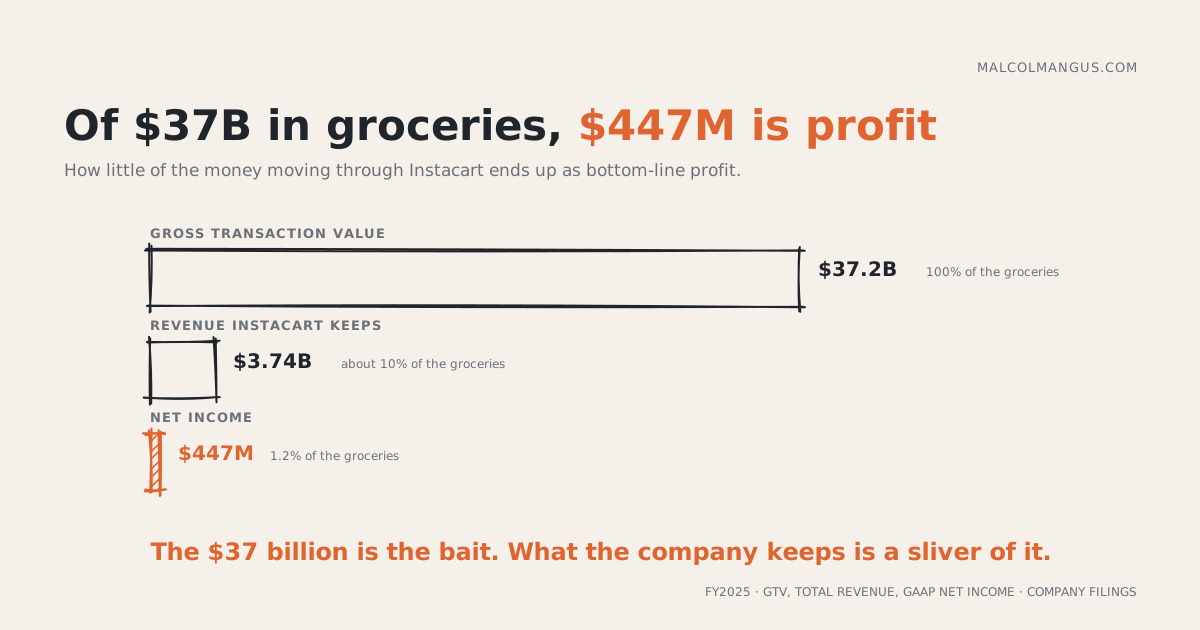
You can see the shape of it in one number. In 2025 about thirty-seven billion dollars of groceries flowed through Instacart. The company kept roughly ten percent of that as revenue, and after paying the shoppers and running the software, it netted four hundred and forty-seven million dollars. That is a real profit, and it is a rounding error against the money moving through. The interesting question is not how big the profit is. It is where it comes from, whether it can be defended, and how many new places Instacart can go to earn more of it.
It comes from the advertising. Almost none of it comes from the groceries. And the reason that will keep being true is a data flywheel that gets harder to catch every quarter.
Grocery has always had two margins
Every grocery store makes money two ways, and only one of them is on the shelf tag.
The first is the front margin. It is what the store earns on the groceries themselves: the retail price minus what the store paid for them. In grocery this is famously thin, a couple of points after the rent and the labor and the spoilage. Selling food to people is a hard, low-margin way to make a living, which is why supermarket chains run some of the slimmest net margins in retail.
The second is the back margin. It is the money the store collects not from you but from the brands: the slotting fee a cereal company pays to get on the shelf, the trade promotion that funds the endcap, the co-op advertising, the rebates, and now the retail-media dollars that light up the app. This is the money that comes from behind the store, from the suppliers, and for a lot of grocers it is where the actual profit lives. The front margin keeps the lights on. The back margin is the business. The same split runs well beyond groceries: a major airline flies you at a razor-thin margin and makes a fortune selling miles to a bank.
Instacart took that structure, deleted the store, and kept the better half.
Put simply: A grocery store earns a thin front margin selling you food and a fatter back margin selling brands access to you. Instacart is built almost entirely on the second one.
The front margin pays the shoppers
Start with the delivery, because that is what everyone thinks Instacart is.
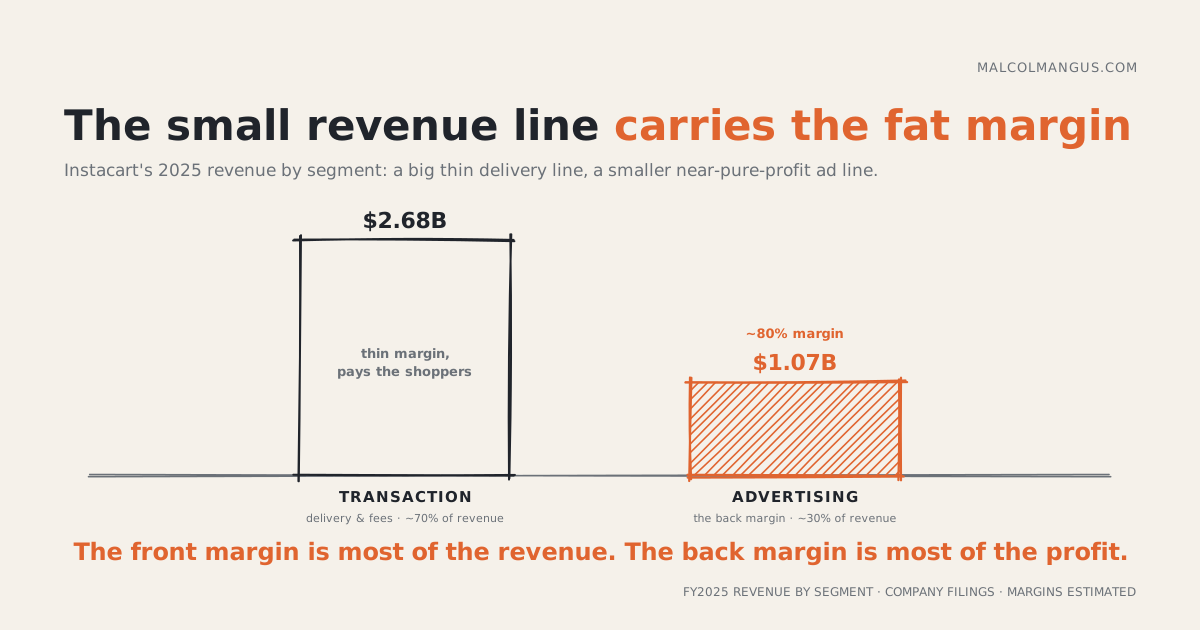
In 2025 Instacart moved about thirty-seven billion dollars of groceries and booked just over 70 percent of its revenue, about $2.7 billion, as transaction revenue: the delivery fees, the service fees, and the Instacart+ memberships. On thirty-seven billion of goods the transaction take runs around seven percent, which sounds healthy until you remember what it covers. Instacart does not own the groceries and does not mark them up like a store. What it sells is the errand, and the errand has a person attached to it. Most of that money flows straight back out to the shoppers who do the picking and the driving, plus payment processing and support and the rest of the machine.
The one part of the front that is quietly strategic is the subscription. Instacart+ costs ninety-nine dollars a year, waives the delivery fees, and mostly pays for itself for anyone who orders regularly. It barely moves the profit line. What it does is buy frequency and habit, and habit is the raw material for everything that follows, because the more often you shop, the more Instacart learns and the more often the brands can reach you. The front margin is thin on purpose. It is not trying to be the profit. It is trying to be the funnel.
Put simply: Instacart's delivery revenue is big but thin, and the Instacart+ subscription barely adds profit. Both exist to buy frequency and habit, because a shopper who comes back is the raw material for the real business.
The back margin is the whole business
Now the advertising, which is where Instacart stops looking like a delivery company.
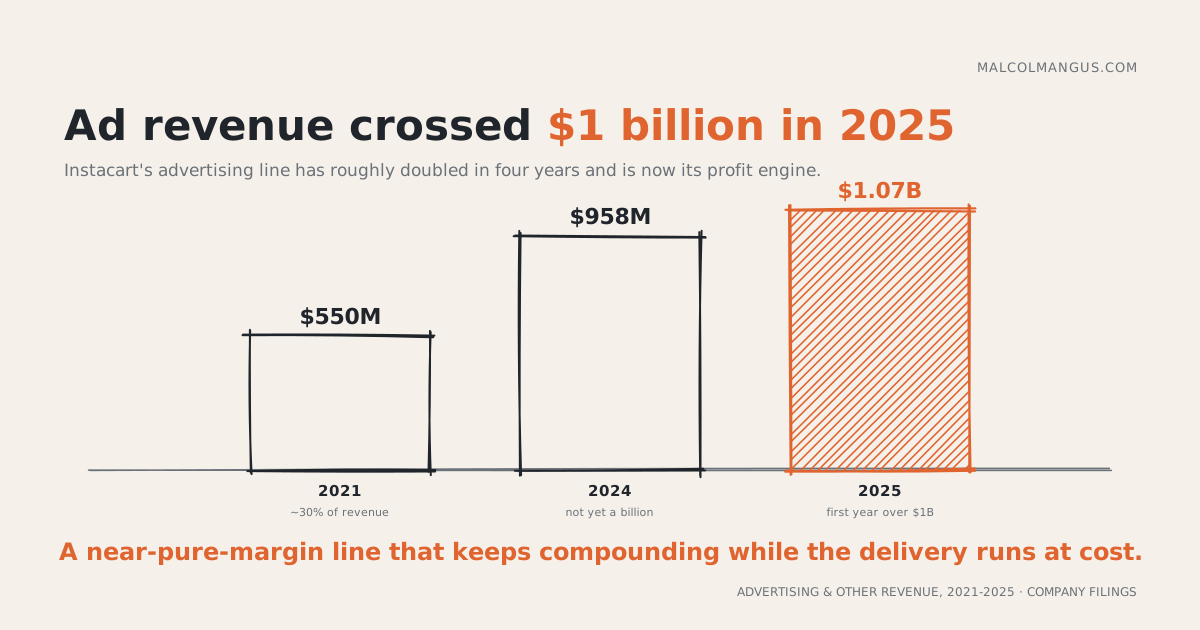
In 2025 Instacart's advertising revenue crossed a billion dollars for the first time, about $1.07 billion, more than a quarter of total revenue, and substantially all of the category is advertising. Consumer brands pay Instacart to be the sponsored result when you search "olive oil," to win the top of the cereal aisle on the app, to buy the placement that a slotting fee used to buy in the store. It is the sponsored shelf, rebuilt as software, with an auction behind every position.
The reason it matters is the margin. Delivery revenue is thin because it pays a person to move a bag. Advertising revenue is almost pure profit, because the second advertiser to buy a keyword costs Instacart almost nothing to serve. Instacart does not break the number out, but the business is widely estimated to run around eighty percent gross margin, and the company and its analysts describe it plainly as the engine of the company's profit. At that margin the billion-dollar advertising line throws off something like eight hundred and fifty million dollars of gross profit, nearly double the four hundred and forty-seven million the whole company kept as net income.
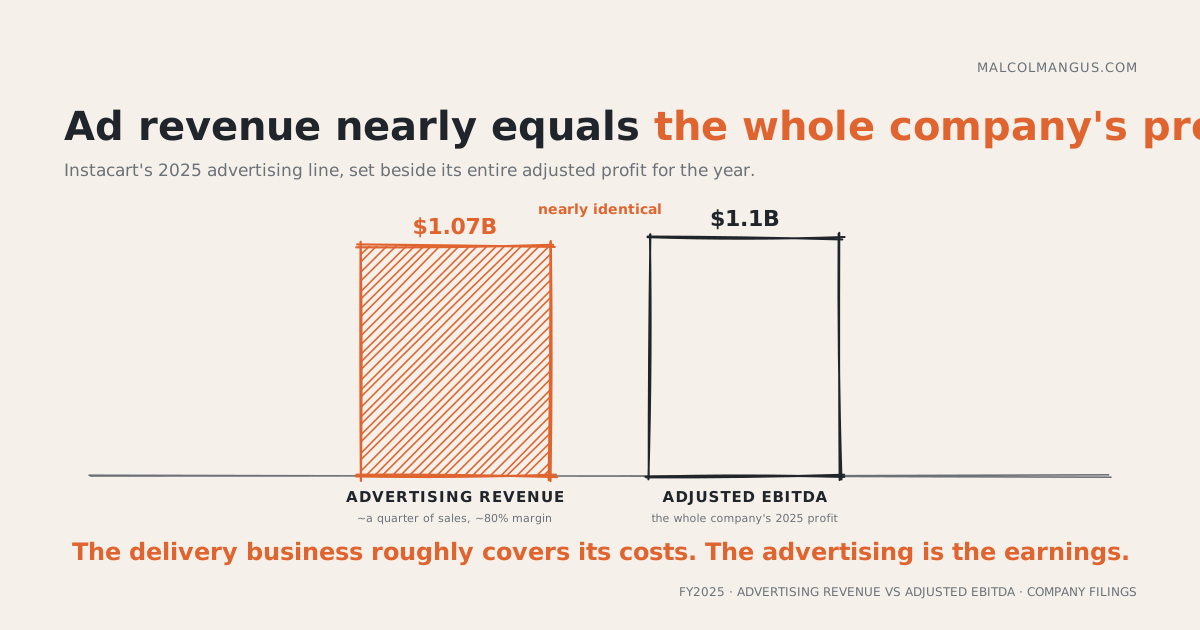
Hold two numbers next to each other. Advertising revenue in 2025 was about $1.07 billion. The company's entire adjusted profit for the year, its adjusted EBITDA, was about $1.1 billion. The advertising line is essentially the size of the whole company's profit. The thirty-seven billion in groceries and the $2.7 billion in delivery fees roughly net out to covering themselves. The back margin is not a segment of Instacart. It is Instacart. And with the advertising take rate still around three percent of the groceries sold, against a stated target of four to five, the profit engine is not close to full throttle. If anything it is speeding up: in the first quarter of 2026 the advertising line grew sixteen percent, its fastest pace since 2023, as Instacart booked its first ten-billion-dollar quarter of groceries and its first billion-dollar revenue quarter.
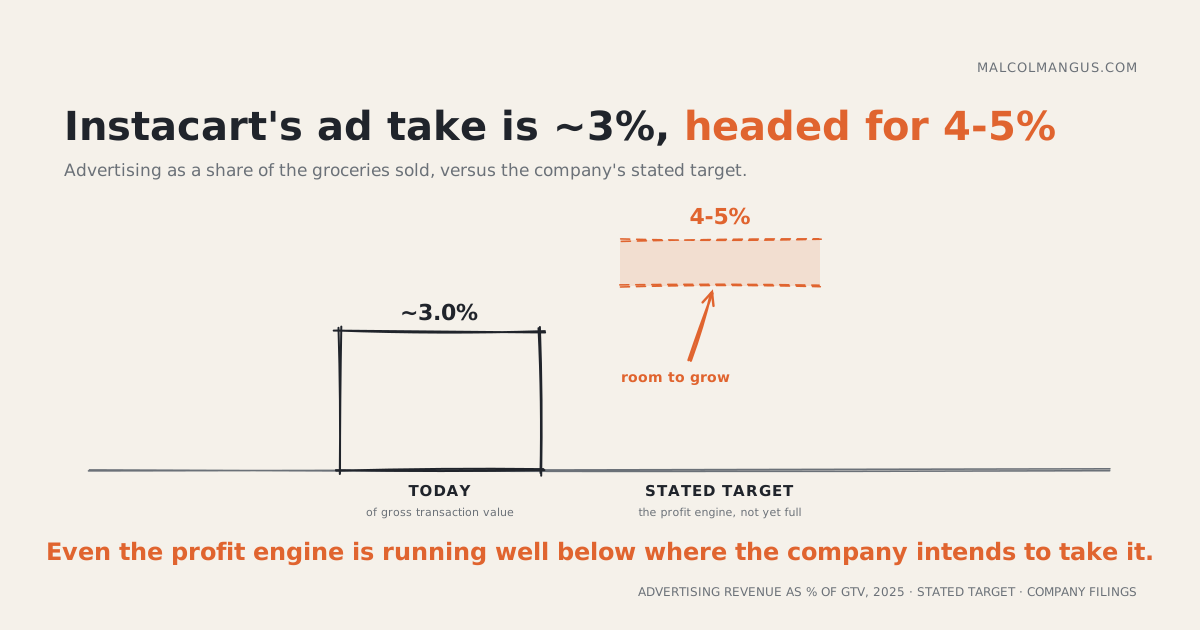
Put simply: More than a quarter of Instacart's revenue is advertising, but at roughly eighty percent margin that slice is essentially the entire profit, and the ad take rate still has room to roughly double. The delivery covers its own costs; the advertising is the earnings.
The revenue is fanning out across new surfaces
Here is the part that turns a good business into a durable one. Instacart is no longer a single app. It is becoming the plumbing for the whole grocery back margin, and every new line is another surface to run it on.
There is the marketplace and the subscription on one side, and the advertising on the other. Then there is the enterprise platform, where Instacart quietly powers other retailers' own websites and apps, and Carrot Ads, which lets those retailers build their own retail-media networks on Instacart's technology. More than two hundred and forty retail partners, including Sprouts, Thrive Market, and Schnucks, now run their ad businesses on Instacart's rails. Then there is the store itself: Caper Carts, the AI-powered smart carts that show ads and coupons while you shop, plus digital shelf tags and scan-and-go, all under a "Connected Stores" banner that drags the back margin off the phone and into the aisle. And then there is off-platform reach, where Instacart pipes its data and ad formats onto The Trade Desk and even TikTok, so a brand can target an Instacart shopper somewhere else entirely.
None of these are really separate businesses. They are the same back margin, sold in more places, feeding one shared thing underneath: a record of what households actually buy. Instacart figured out that the scarce asset was never the delivery. It was the purchase data and the ad demand, and those travel. So the strategy is to put them everywhere a grocery decision happens, on the app, on the retailer's site, on the cart handle, on someone else's platform.
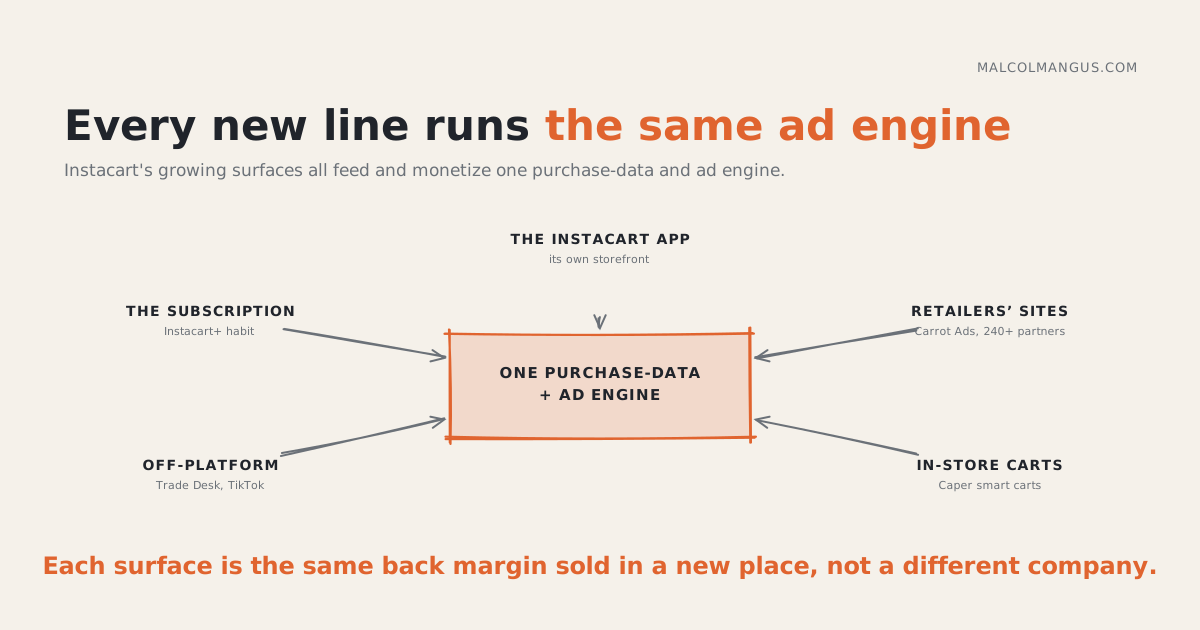
Put simply: Instacart is fanning out from one app to many surfaces, its own site, other retailers' sites, in-store carts, and outside platforms, but they are all the same back margin sold in new places, feeding one shared purchase-data engine.
The data flywheel is the engine
Underneath all of it is a loop that gets stronger the more it turns.
Every order teaches Instacart who you are: that you buy oat milk and not dairy, the diapers in a size that dates your kid, the seltzer you are loyal to and the one you will switch from for a coupon. That record does two jobs at once. It makes the advertising better, because a brand can reach the exact household deciding right now and then see whether the ad produced a purchase. And it makes the shopping better, because "Buy It Again" and smart recommendations pull you back next week. Better ads bring more advertiser money; better shopping brings more orders; more orders deepen the record; the deeper record makes the ads and the shopping better still.
Grocery is the ideal fuel for this loop because it is habitual. You do not research a cart of groceries the way you research a mattress. You buy roughly the same things every week, which means every product that enters your reorder list generates impressions and repeat purchases more or less forever. The flywheel does not reset with each transaction. It accumulates. And the profit it throws off, the fat advertising margin, is exactly what lets Instacart keep the delivery cheap and the subscription generous, which brings the shopper back to spin the loop again.
That is why the delivery can run at break-even without it being a problem. The delivery is not trying to earn. It is the intake for a machine whose output is data and ad demand, and both of those compound.
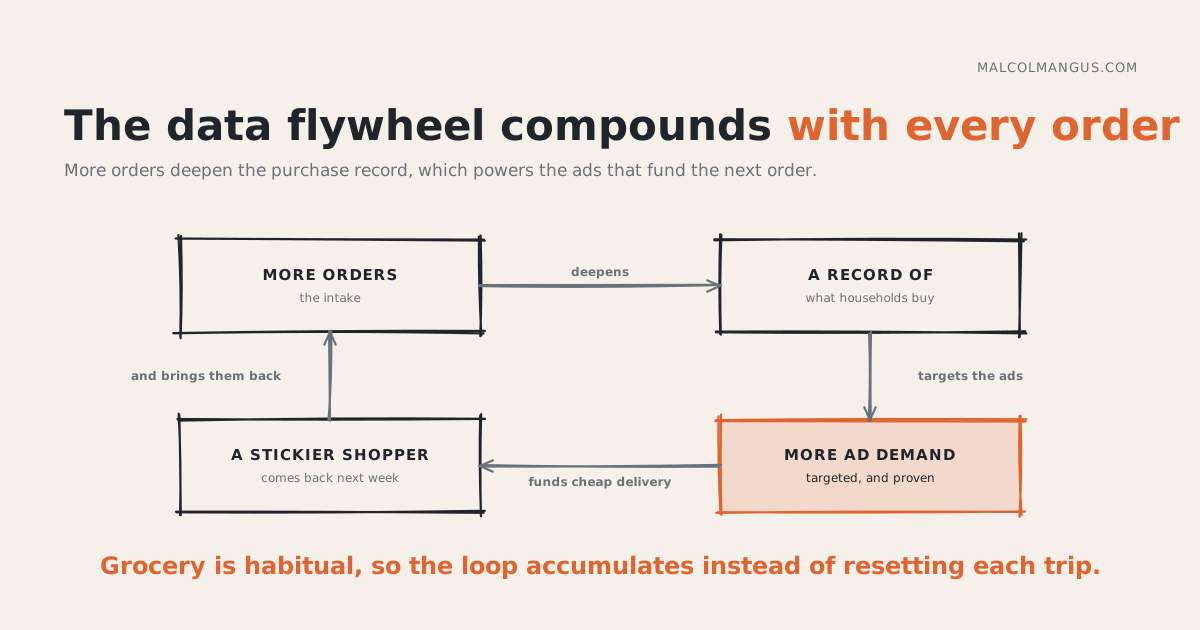
Put simply: More orders deepen Instacart's record of what households buy, which makes the ads and the recommendations better, which brings more advertiser money and more orders. Because grocery is habitual, the loop compounds instead of resetting.
Why the moat is hard to copy
Plenty of companies sell ads. The reason Instacart's version is defensible comes down to three things a competitor cannot easily assemble.
The first is first-party purchase data at the point of sale. Instacart does not infer what you might want from what you browsed; it knows what tens of millions of households actually bought, tied to a checkout, week after week. People arrive to buy, not to browse, so the intent is dense and the signal is clean. As third-party cookies disappear, that owned, consented purchase record becomes more valuable, not less, and it is the one thing the open web cannot reconstruct.
The second is closed-loop measurement. The prize a consumer brand has always chased is proof that an ad caused a sale, and on groceries the walled gardens cannot deliver it, because they see the click but not the basket. Instacart sees both. It can tell a cereal brand that the ad shown to this household turned into a box in the cart, and with its 2026 data clean room, a secure space where a brand and Instacart can match their records without either side seeing the other's, it lets brands measure a whole campaign against real purchases. That closed loop is worth a premium no amount of reach can substitute for.
The third is the two-sided lock-in. Instacart sits between the brands who buy ads and the retailers whose shelves and sites it powers, and switching costs run in both directions. A grocer that builds its retail-media business and its e-commerce on Instacart's platform does not casually rip it out, and a brand that has wired its measurement into Instacart's data does not casually leave the audience. The delivery might be commoditized. The data, the measurement, and the relationships are not.
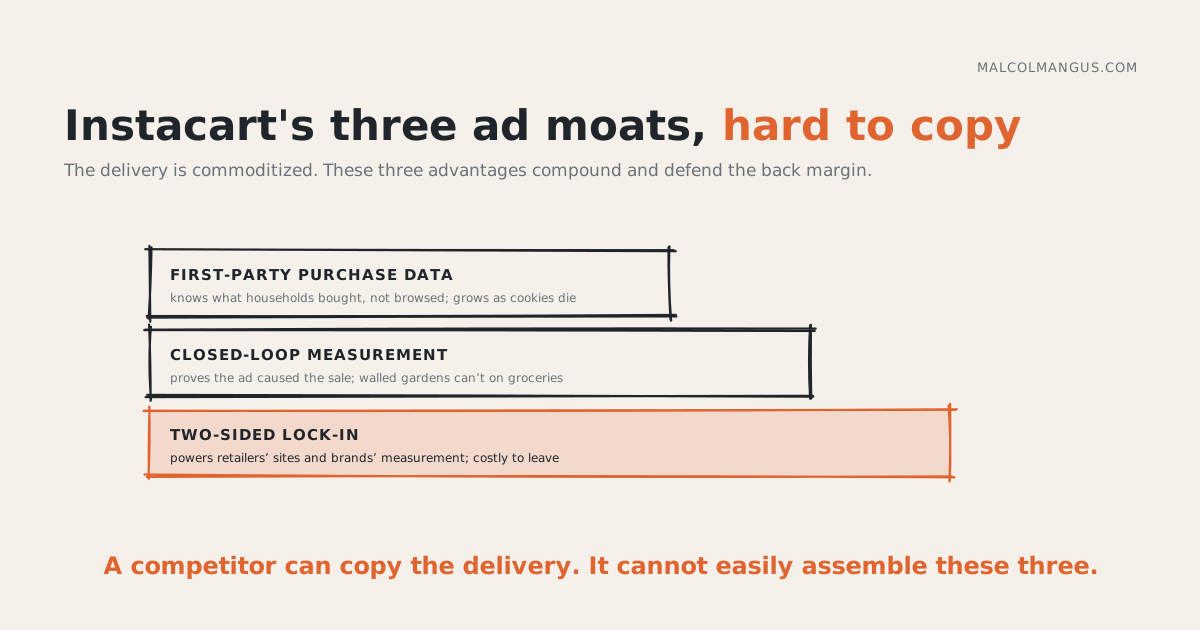
Put simply: Instacart's moat is three things a competitor can't easily copy: owned purchase data at the checkout, proof that an ad caused a sale, and a two-sided lock-in with both retailers and brands. Reach can be bought in an afternoon; these have to be earned over years.
The company the numbers describe
None of this is a criticism. Instacart built a genuinely good business, and it is more durable than the delivery story suggests. A delivery company competes on price and logistics and gets ground down. An advertising and data company that owns the purchase record of tens of millions of households, proves its ads work, and sits inside its partners' own systems competes on something much harder to copy, and earns eighty cents on the marginal dollar doing it.
So the story you tell about the company should match its ledger. Instacart runs a break-even delivery service to feed a high-margin advertising and data business, and it is spreading that model onto every surface where a grocery decision happens. The larger point is that this is not unique to Instacart. Amazon, Uber, DoorDash, and nearly every marketplace with a checkout are chasing the same back margin, because selling a brand access to a buyer turns out to be worth more than the sale itself. Instacart is just the cleanest example, the one where the delivery is so plainly the bait and the advertising so plainly the catch, with a flywheel that makes sure it keeps catching.
It is the same lesson the physical grocery store was teaching all along, that the shelf's real business was always selling brands the position, and the same one that shows up whenever you trace an industry's dollar to where the profit actually settles. Instacart just made it unmissable. Strip away the store, the trucks, and the shoppers, and what is left standing, holding almost all the profit and getting harder to copy every quarter, is the back margin. It is the one room in the economy I keep coming back to, turned inside out and rebuilt in software, still making its money the way the grocer always did.
Put simply: Instacart is a retail-media and data business with a break-even delivery service bolted on to feed it, spreading across every grocery surface and defended by a compounding data flywheel. The groceries are the bait and the advertising is the catch, which is how the grocery store always worked, minus the store.

Malcolm Angus
I'm an analytics engineer, data product manager, and forward-deployed engineer. I write about data products, moats, flywheels, and business strategy, the loops that make companies harder to catch.

The charts in this essay are free to reuse with credit.