← All essays·July 30, 2026·8 min read
The cereal wall sells a clear conscience
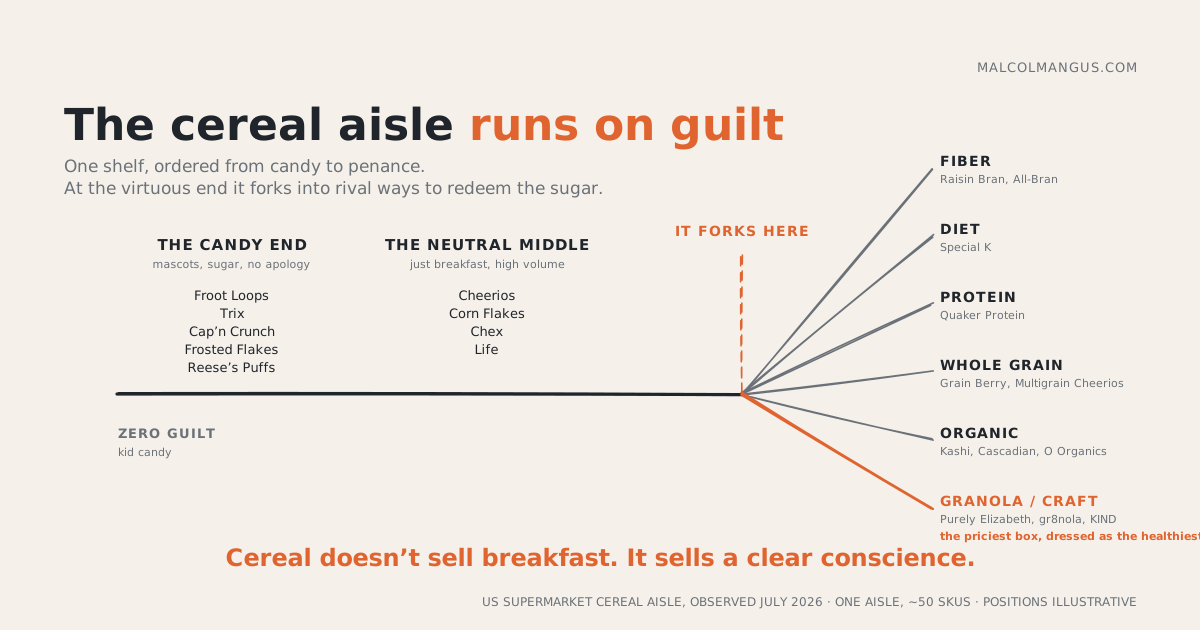
A grocery cereal aisle does not sort by grain, price, or brand. It sorts by guilt: one gradient from kid candy to adult penance, and at the virtuous end it forks into rival ways to redeem the sugar. Oatmeal sells an outcome, coffee sells a tribe, cereal sells a clear conscience.
Listen to this page
A cereal box is a bet on a person. Walk the aisle and every facing is a small hypothesis about who is standing in front of it, exactly the way an oatmeal shelf is. But cereal makes a stranger bet than any other breakfast, because it is the only aisle in the store that sells candy and medicine off the same shelf. A box of Froot Loops and a box of All-Bran are the same few cents of processed grain and added vitamins, shelved a few feet apart, separated by nothing but who is allowed to eat them and how guilty they are supposed to feel about it.
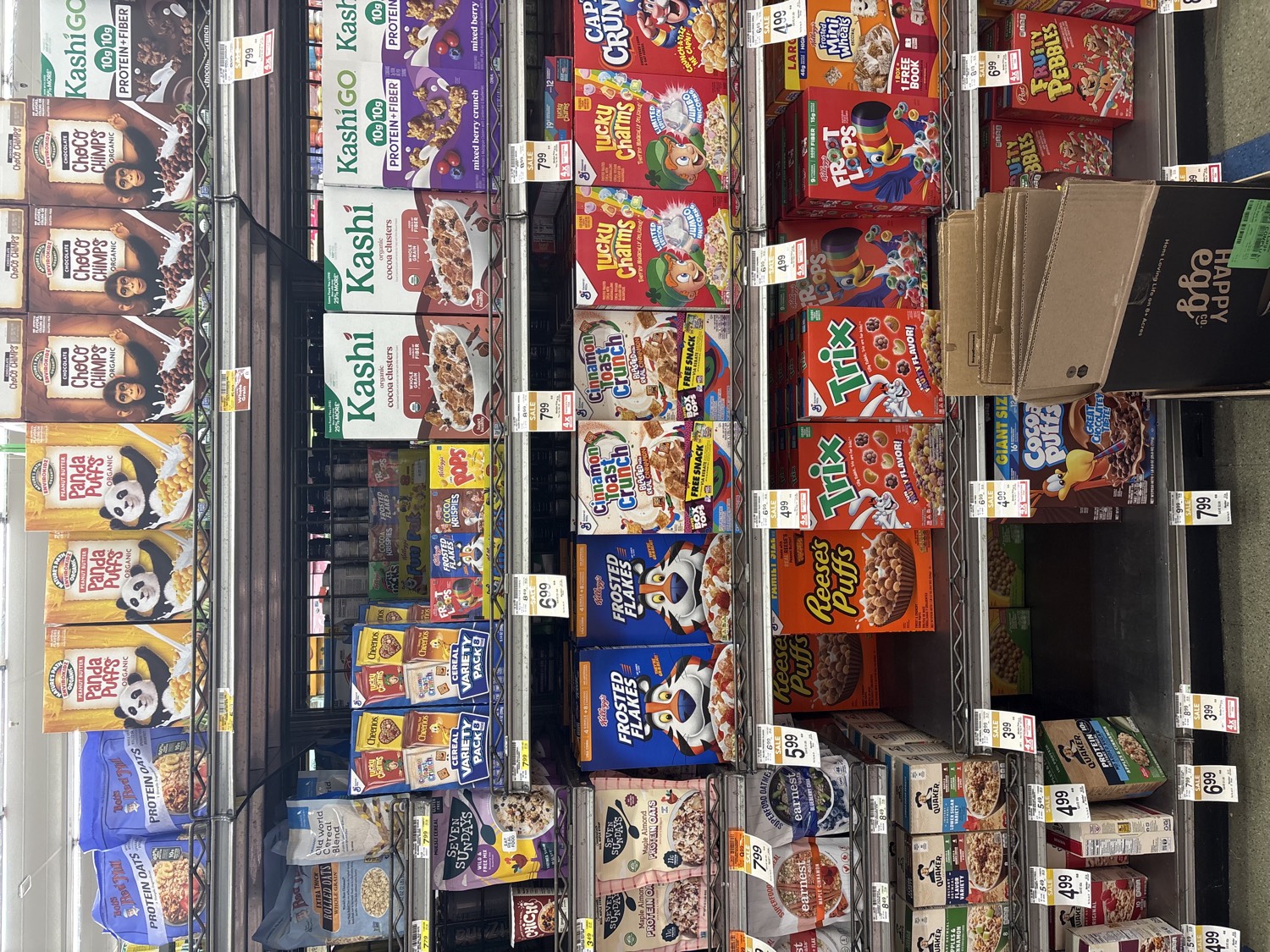
I walked my local grocery store's cereal aisle and photographed all forty feet of it, then traced how the roughly fifty boxes actually sort. They do not sort by grain, or by price, or by brand. They sort by guilt.
The one axis you can see: candy to penance
The aisle is a gradient, and you can read it walking. At one end sit the boxes that make no apology at all: Froot Loops, Trix, Cap'n Crunch, Frosted Flakes, Reese's Puffs. Mascots, primary colors, and sugar as the entire pitch. They are shelved low and bright, at a child's eye level, and they sell fun. Nobody buys Cap'n Crunch to feel good about their choices.
At the other end sit the boxes that are all apology: bran, fiber, "lightly frosted," whole grain, organic. Muted packaging, adult claims, small type. In between is everything trying to be both. The single thing the aisle is organized around is not nutrition or flavor. It is permission: how much sugar you are socially allowed, and how much penance the box demands in return. The mascots are for the people we let off the hook, and the fiber is for the people who have to answer for it.
Put simply: The cereal shelf is one long moral gradient. It runs from candy that owes you nothing to penance that asks forgiveness for the same spoonful of sugar, and every box stakes out a position on how guilty its buyer should feel.
The middle nobody fights over
Between the candy and the penance sits the boring, valuable center: Cheerios, Corn Flakes, Chex, Life. This is the high-volume mass, the "just breakfast" cereal that a family buys on autopilot, and it is owned by a short list of companies: General Mills, WK Kellogg, Post, and Quaker. It is where most of the boxes sell and where almost nothing new happens. The middle is not trying to win an argument about sugar or virtue. It is trying to stay the default.
That stability is also the problem the whole category is quietly living with: total cereal is a slow-declining business, with US cereal volume down about a quarter, from 2.1 million tonnes in 2008 to 1.6 million in 2023, and the flat commodity center is where the decline shows up first.
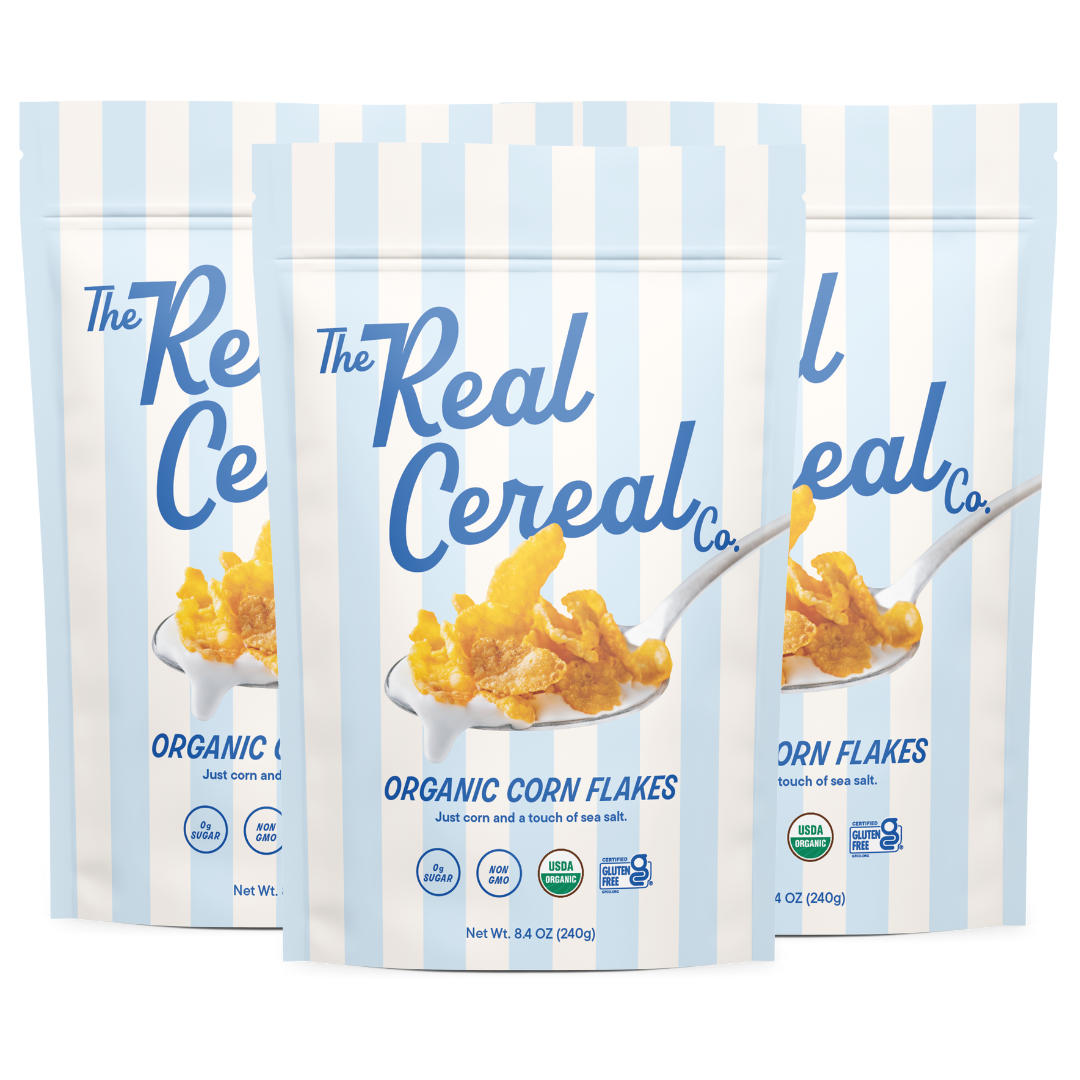
The one bet against that inertia is not on this shelf. The Real Cereal Company, sold through Whole Foods and Amazon rather than the mass aisle, makes exactly two products, organic Corn Flakes and organic Rice Crisps, both zero sugar and the corn flakes nothing but corn grits and sea salt. It took the two most commodity SKUs in the store, priced them near $7.50 a box, and wagered you can premiumize the default itself instead of fleeing to the fragmented rim. Call it the new middle: virtue built into a plain corn flake instead of forked off into a health tribe of its own, the one new move the center of this aisle never makes.
Put simply: The volume lives in the neutral middle, and the middle is the part that is shrinking. A category that cannot grow its boring center has to make its money somewhere else, which is exactly what the two ends of this shelf are doing.
The virtuous end forks
Here is where cereal stops being one axis, and the reason a shelf with fifty boxes cannot be one-dimensional. The "healthy" half of the aisle cannot agree on what healthy means, so it does not resolve into a single virtuous product. It forks into rival redemptions, each a different way to earn back the sugar:
Fiber says the sin is refinement, and answers with bran (Raisin Bran, All-Bran). Dieting says the sin is calories, and answers with portion and "lighter" (Special K). Protein says the sin is the wrong macro (Quaker Protein). Whole grain says the sin is white flour (Grain Berry, Multigrain Cheerios). Organic says the sin is the farming (Kashi, Cascadian Farm, and the store's own O Organics). And granola says the sin is processing itself, and answers with clusters of oats and honey at triple the price (Purely Elizabeth, gr8nola). Six boxes, six theologies of breakfast, and a shopper picks the one whose definition of "bad" they already believe.
This is the same fragmentation the coffee wall does when it splinters into tribes, but cereal moralizes it. Coffee's tribes are about identity; cereal's are about a clear conscience. Each label is selling a slightly different confession.
Put simply: The virtuous end of the shelf is not one product, it is a fan of competing definitions of "good for you." Every health cereal is answering the same question, what makes this a sin, with a different answer, and selling the redemption to whoever already agreed with the premise.
Granola is the priciest indulgence, dressed as the healthiest
At the far tip of the virtuous fork is the granola wall, and it is the most interesting corner of the aisle. Purely Elizabeth, gr8nola, KIND, and a row of similar small-batch bags. Kraft-paper packaging, small-batch language, ancient grains, and the highest shelf prices in the aisle. It reads as the most wholesome place you can stand.
It is also, per serving, one of the most calorie-dense things on the shelf, richer in fat and calories than the kid cereals it looks down on, at two or three times their price. Its sugar often runs lower than a Froot Loop's, but a dense scoop of oats, oil, and honey is a dessert that learned to dress like a supplement. And the tell is who occupies this premium tip: it is granola upstarts, not the venture-backed keto cereal brands. There was no Magic Spoon, no Three Wishes, no Catalina Crunch anywhere on this shelf. The premium wedge in a real supermarket is still won by clusters of toasted oats and honey with a nice bag, not by grain-free protein puffs.
Put simply: The priciest, most virtuous-looking corner of the shelf sells the richest product in it. Granola is proof that on the cereal aisle, "healthy" is a look you can charge a premium for, not a fact about the food.
What the shelf is really doing
Line the three aisles up and the pattern rhymes. Oatmeal sells an outcome and fragments along function. Coffee sells a tribe and fragments along identity. Cereal sells a clear conscience and fragments along guilt, forking at the virtuous end into rival redemptions and premiumizing at the granola tip. All three are the same underlying move: a mature, slow-growing commodity that cannot grow its center, so it slices the center thinner and thinner into personas, and lets the margin escape to the fragmented edges.
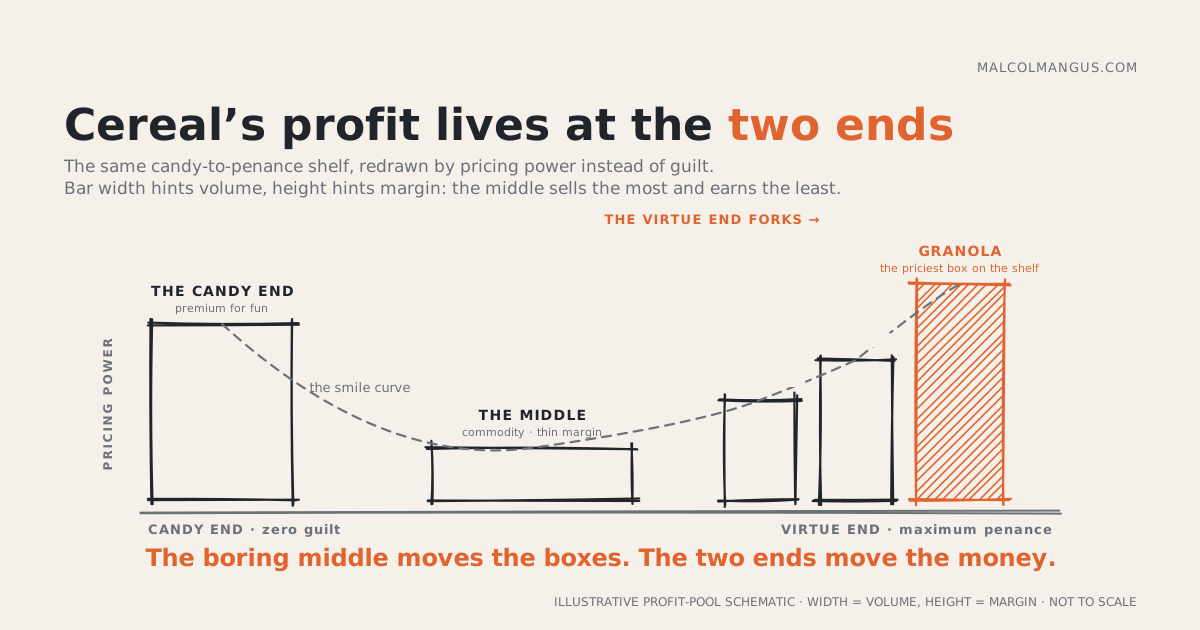
That is the same profit-pool shape as coffee and every other mature market, now drawn inside forty feet of one aisle. The shelf is not really selling breakfast. It is selling fifty different answers to the same question every shopper brings to the aisle without saying it out loud: how good, or how bad, am I allowed to be this morning.
Put simply: When a commodity category stops growing, it does not consolidate into one product, it fragments into personas and premiumizes at the edges. The cereal aisle is that strategy drawn out in full: a shrinking neutral middle, a candy end and a virtue end that both charge for feeling, and the real margin living everywhere except the boring, high-volume center.

Malcolm Angus
I'm an analytics engineer, data product manager, and forward-deployed engineer. I write about data products, moats, flywheels, and business strategy, the loops that make companies harder to catch.

The charts in this essay are free to reuse with credit.