Show notes
Bain: posture, domains, and the price of waiting
2026-08-23
The three thinnest pages of Bain's How to Win with AI series carry its strategy altitude: Decision 1: Posture, Decision 2: Domain Focus, and the closing Start Now. One note covers the three; the flagship links the full family of deep dives.
Posture: the prudent-feeling mistake
Decision 1's tagline sets the register, "this is a strategic choice, not a technology decision," and its argument is aimed at the most common posture of all: "the wait-and-see position feels prudent. It rarely is." The reason is the compounding the whole series leans on: "AI is not a technology that rewards late adoption the way, say, cloud computing did," because "every quarter spent waiting is a quarter in which your competitors are building data moats, developing software capability, and accumulating organizational learning." Three stacks, growing quarterly, none purchasable later. The page's most honest sentence is the structural one: "two decades of offshoring engineering talent and defaulting to SaaS vendors for every workflow have left most large enterprises without the internal capability to build and operate the agentic systems that now create competitive advantage." You can buy most of the stack, "what you cannot buy is the orchestration layer that ties your proprietary data, your workflows, and your agents together in a way unique to your business," and the muscle to build it takes years to regrow, which is the real cost of the prudent-feeling quarter. The page closes its own loop: "posture is only meaningful if it is matched by execution."
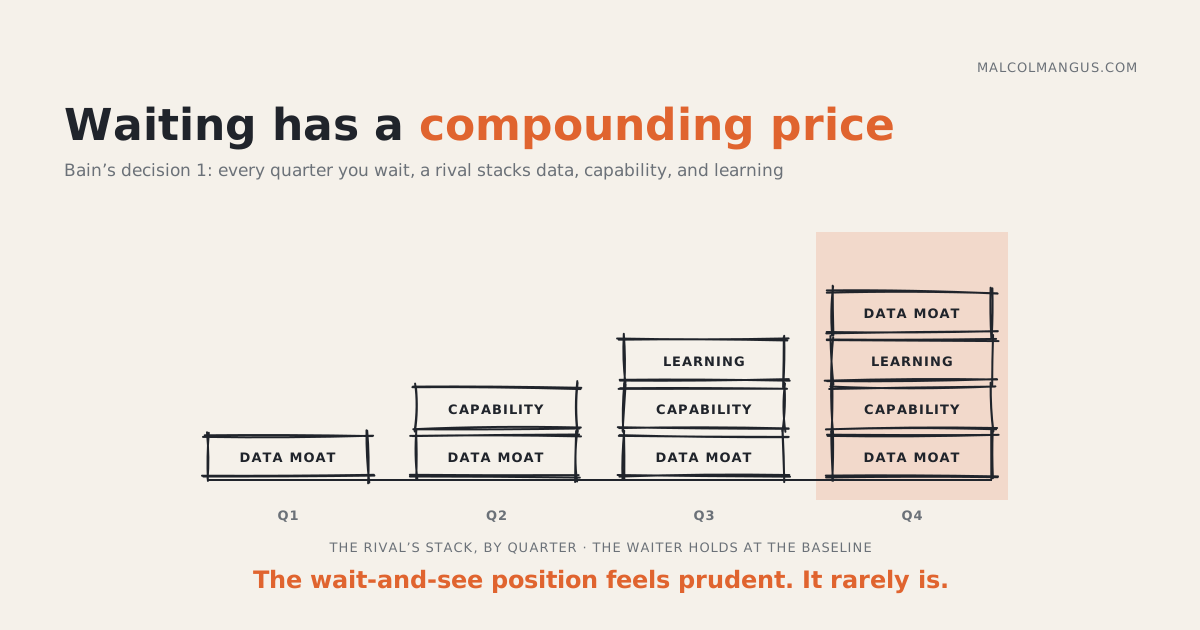
Put simply: posture is a board choice, and wait-and-see is the expensive one, because rivals stack data, capability, and learning every quarter, and the internal build muscle that two decades of offshoring dissolved cannot be repurchased on demand.
Domains: three tests, then concentrate
Decision 2 opens with the series' most revealing statistic: "roughly 85% of CEOs are using AI primarily to fund the journey, prioritizing near-term cost reduction and productivity improvements over the harder, slower work of competitive reinvention." Against that, the page's discipline: "concentrating resources on three to five domains beats broad coverage every time," chosen by three tests. "They sit close to the sources of competitive advantage in your business." "They are data-rich enough to give AI agents real signals to reason from." And "they are end-to-end in scope, meaning that reimagining them requires changing multiple steps in a process rather than just automating one." The funding corollary has teeth: "if you require every domain bet to show in-year ROI, you will systematically fund the wrong activities," because the reinvention bets are precisely the ones that cannot clear an in-year bar. And the authority point explains the tagline, "only the CEO can unlock the constraints that matter": end-to-end redesign runs into job definitions, silos, and incentives, and "only the CEO can walk into those conversations with the authority to say: This changes."
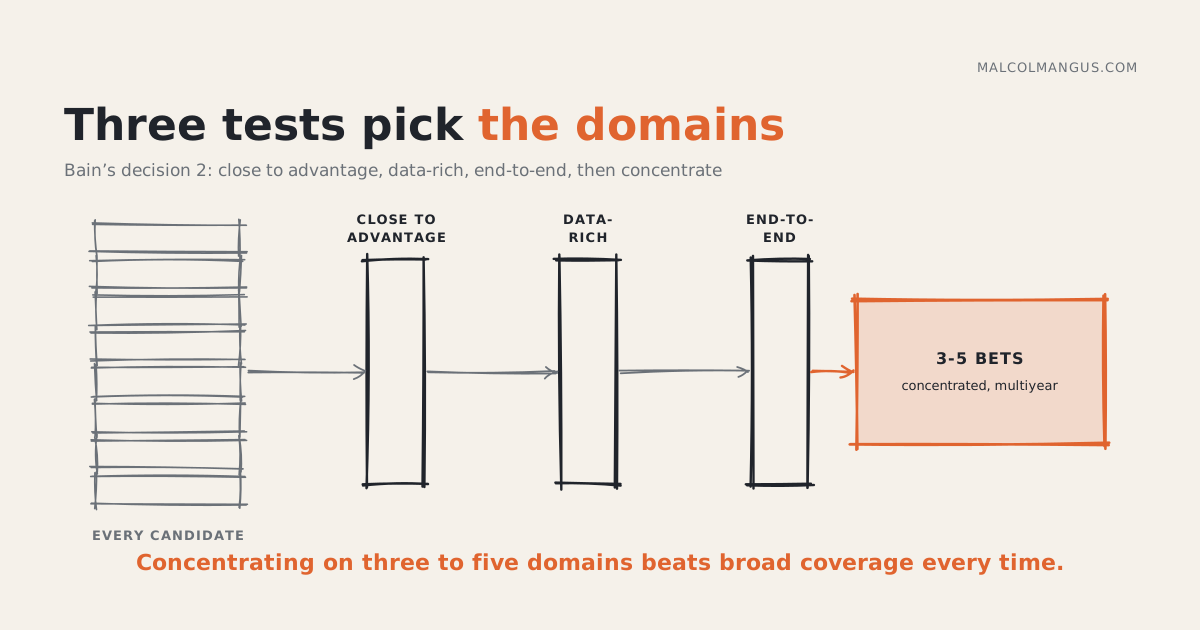
Put simply: most CEOs run AI as a cost program that funds itself. The alternative is three to five multiyear bets picked by three tests, advantage-adjacent, data-rich, end-to-end, funded as a portfolio because in-year ROI screens out exactly the bets that matter, and unlocked personally by the CEO.
The human clause
One verified sentence in Decision 2 deserves its own paragraph, because it is the series' only sentence about the people inside the redesigned workflows: "when done right, redesigning workflows is fundamentally human-centric, meaning the people whose jobs are most impacted positively or negatively are part of the redesign process." It is the strategy-altitude echo of the operating model's parallel-tracks argument and the AI-native explainer's coaching-gap statistics: every altitude of the series ends up insisting that the workflow change and the workforce change are one program, and that the people affected sit inside the room where it is designed.
Put simply: the redesign includes the redesigned. People whose jobs change are part of the process, not recipients of its output, and the series makes this point at every altitude it operates on.
Start now, on three legs
The closing chapter compresses the leaders into three traits. Personal commitment: "not budget allocation, not organizational structure, not a sponsored initiative, but the personal commitment from the CEO that this transformation is a strategic priority." Discipline: "the organizations winning with AI are not running more initiatives than their competitors. They are running fewer, better-resourced, more consequential ones." And the compounding mindset: "the most durable competitive advantage in AI is not the model you use or the platform you choose, but the learning system you build," because "the organizations that are pulling away from their competitors are the ones that have designed their transformation to get smarter with every deployment." The last word is the urgency claim the whole funnel was built to deliver: "the window to build proprietary intelligence is open. The time to create structural divergence will not last indefinitely." Worth holding with the skepticism it earns, a consultancy's conclusion page saying start now is not evidence, but the three-legged checklist above it survives the source: commitment you cannot delegate, bets you can count on one hand, and a system that learns.
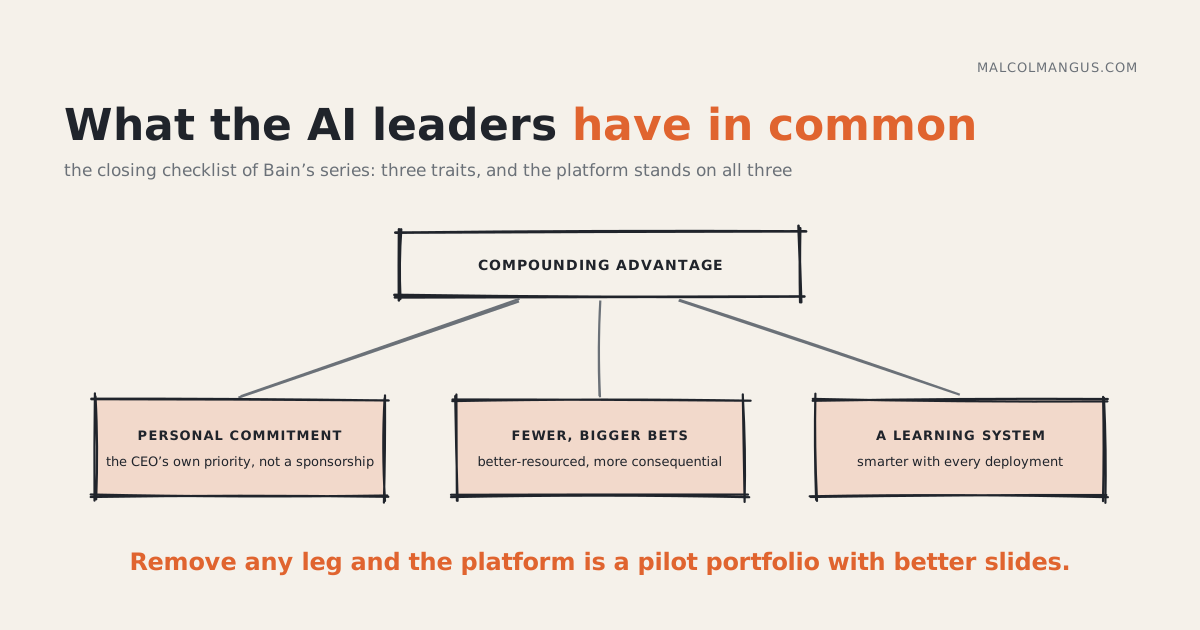
Put simply: the leaders share three legs: the CEO's personal commitment, fewer and bigger bets, and a learning system that compounds. The start-now urgency is the funnel talking, but the tripod stands on its own.