Show notes
Bain: design the operating model for speed
2026-08-22
Decision 5 in Bain's How to Win with AI series, Operating Model, carries the tagline "design for speed, then build the culture to sustain it," and opens with the series' bluntest dependency claim: "strategy and architecture mean nothing without an operating model built to deliver at pace." The posture, the domains, the data, the orchestration layer, all of it idles if the organization cannot ship. And the piece treats pace as more than hygiene: "speed is a strategic asset in AI transformation, not just a nice-to-have," because in a compounding game, the faster learner pulls away. These are my notes on it; the flagship, the AI-native explainer, the data chapter, and the architecture deep dive have their own.
Four requirements, one hard one
The piece gives the operating model a concrete spec: "building an operating model for speed requires four things." Short delivery cycles that force teams to ship something to the business every few weeks rather than building for months before revealing results. Embedded feedback loops that capture signal from users continuously rather than through periodic surveys. A structured release cadence that gives the business predictability about when changes ready to scale are coming. And decision rights pushed far enough down that squads resolve most issues without escalating to a committee. The first three are engineering culture; plenty of companies can adopt them inside the technology function. The fourth is organizational surgery, because it takes authority away from the escalation structures that middle management is made of, which is why it is the one that distinguishes the companies that actually move.
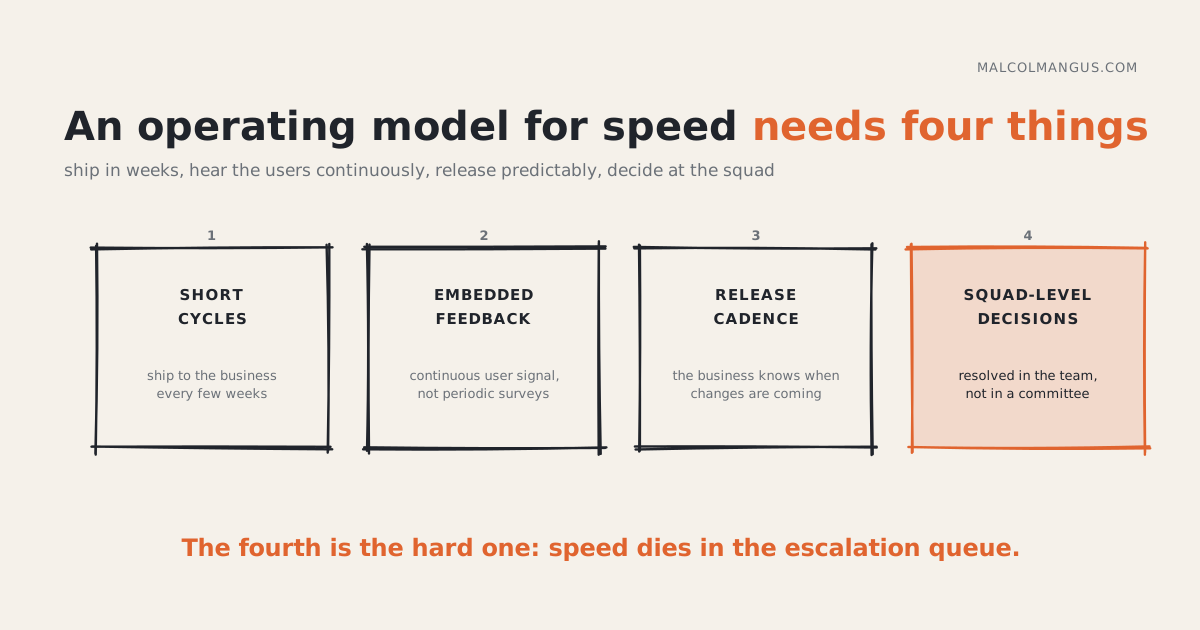
Put simply: ship in weeks, listen continuously, release predictably, and let squads decide. Three of the four are culture the tech org can adopt alone; the fourth redistributes authority, and it is the one that separates the operating models that move from the ones that meet.
Both tracks, or the org reverts
The sequencing argument is the page's structural core. The conventional program redesigns the workflow first and plans to modernize the workforce after, and the piece says that order fails on its own: the redesigned workflow lands on an unchanged organization, and the organization wins. "The only way to avoid this result is to run tracks in parallel by redesigning the workflow and modernizing the workforce simultaneously, with the same leadership attention and the same sense of urgency." This is the same simultaneity requirement the AI-native comparison table lists as a defining dimension, here given its mechanism: sequential change gives the old patterns a finished artifact to reject, while parallel change never leaves a gap for the reversion to happen in.
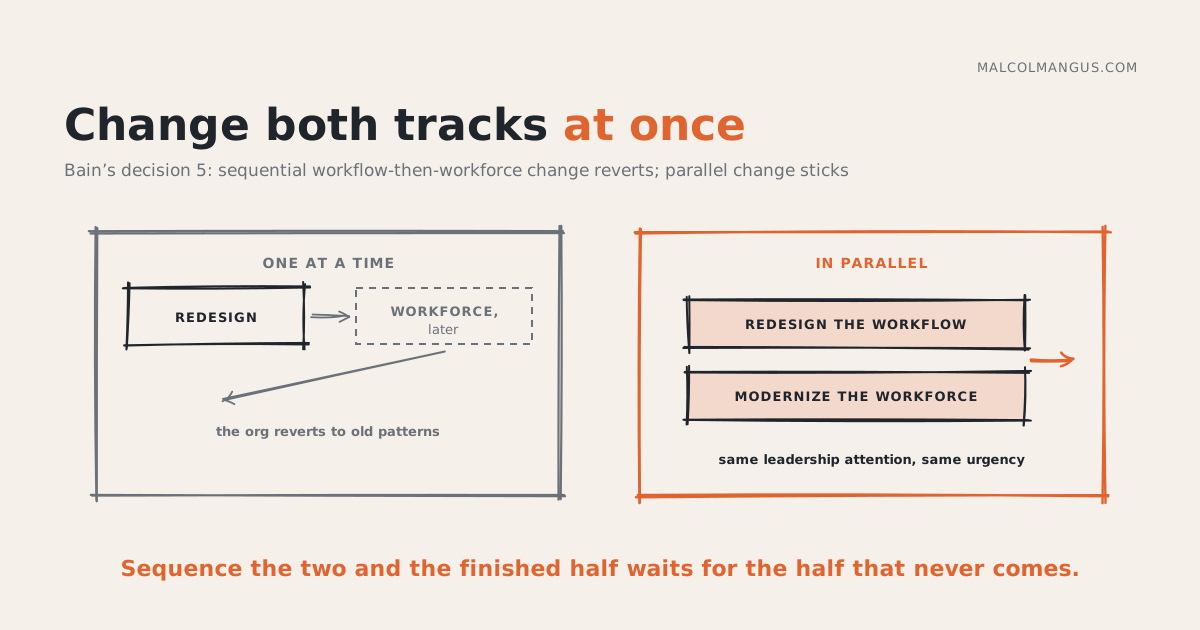
Put simply: workflow redesign without simultaneous workforce change produces a new process that the old organization quietly reabsorbs. Run both tracks at once, with the same urgency, or plan on doing the first track twice.
Tinkerers, and the test at the top
The human-centric half of the piece starts from an observation about where AI capability actually lives: "in every large organization, there are people outside of the obvious technology roles who are naturally curious about what AI can do, willing to experiment on their own time, and capable of discovering use cases and approaches that no central team would have thought to design. These are your tinkerers." The operating model's job is to find them, resource them, and turn them into superusers who spread what works, a bottom-up engine running alongside the top-down deployment. Then comes the sentence that gives the section its teeth: "the tinkerer mindset must extend to the top of the house, or it will not extend at all," and its enforcement clause, "CEOs who delegate the experience never close the gap between what they say about AI and what they understand." It is a falsifiable standard: has the chief executive personally built anything with these tools, or only watched demos of what someone else built?
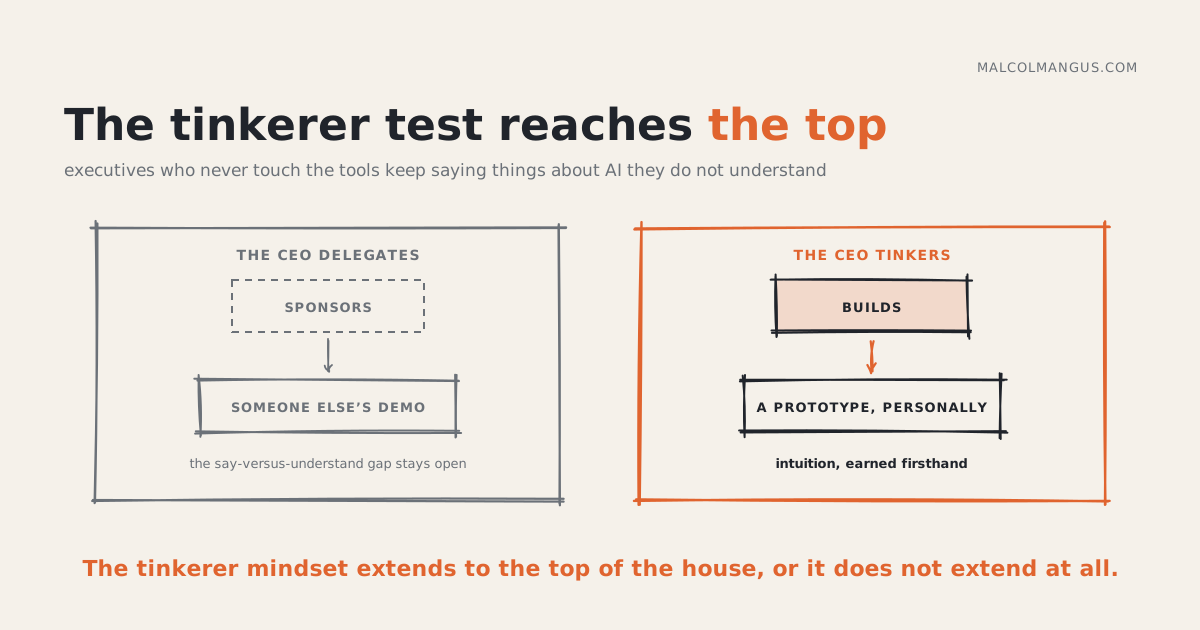
Put simply: the durable adoption engine is the tinkerer network, curious people outside tech roles given resources and permission. And the test of executive seriousness is behavioral, not rhetorical: a leader who has never touched the tools is narrating an understanding they do not have.
The proof point and the ambition
For evidence that operating-model change pays, the piece points at software development itself: teams where AI agents handle code generation, testing, and documentation while engineers keep architecture and direction. "Organizations that have made this shift report five to ten times the output from the same number of engineers." No names or methodology accompany the number, which keeps it an illustration rather than a finding, but the direction matches what the shift looks like from inside. The closing ambition is cultural rather than technical: "the ultimate multiyear ambition is an organization where digital acumen is as common as financial literacy," every businessperson able to stand up a working prototype the way every manager can read a P&L. The unexamined tension is worth keeping: an operating model tuned for speed, with squads deciding and tinkerers everywhere, is also the environment where ungoverned agents multiply, which is precisely why the architecture and governance decisions exist. Speed and the gateway have to arrive together.
Put simply: the proof point is AI-native software development, five to ten times the output from the same engineers, reported without evidence but directionally right. The end state is digital acumen as a baseline literacy. And the caveat Bain undersells: this much speed without decision 4's rails is how sprawl happens.