Show notes
Bain: what an "AI-native enterprise" actually is
2026-08-21
Bain's explainer, What Is an AI-Native Enterprise?, is the definitional companion to its proprietary-intelligence flagship, and its one-sentence answer is worth having exactly: "an AI-native enterprise is an organization that has moved beyond fragmented AI tool deployment, instead rebuilding its workflows, data, and agents to change not just how work gets done, but how the business competes." The same survey pain sits underneath, roughly 80 percent of CEOs unhappy with the pace of their AI programs, and the same diagnosis: "the source of the frustration is rarely the technology." These are my notes on it.
Six dimensions, two kinds of company
The piece's best artifact is a comparison table, and the contrasts are structural rather than matters of degree. On program maturity: a collection of pilots and productivity add-ons versus proprietary data, encoded workflows, and a learning architecture that compounds. On data: fragmented platforms with inconsistent definitions versus a shared semantic layer "that gives every agent the same business vocabulary." On the operating model: workflow and workforce change run as separate, sequential efforts versus modernized simultaneously, with short delivery cycles and decision rights at the squad level. On decisioning: sequential approvals and escalation chains versus agents handling routine decisions while humans keep the judgment calls. On learning: knowledge trapped in documentation and institutional memory versus continuous feedback loops with shared memory, so "every new agent starts smarter than the last." And on governance: one motion designed to run the business versus two parallel motions, one to run it and one to change it.
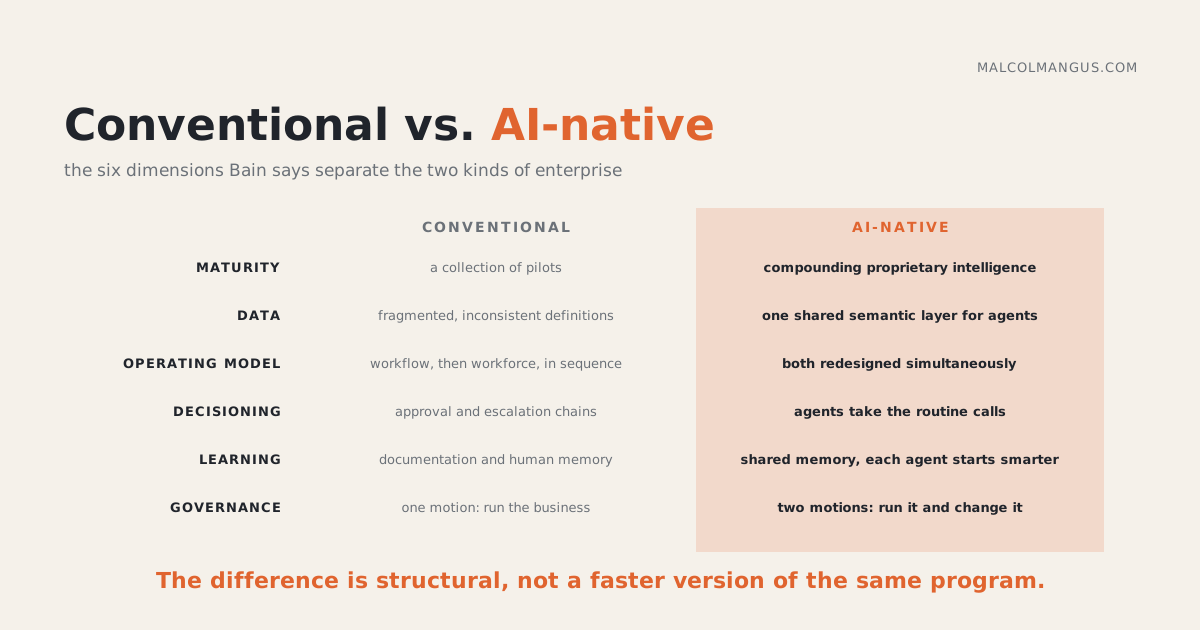
Put simply: AI-native is not more pilots run faster. It is a different structure: one semantic layer instead of fragmented definitions, simultaneous workflow-and-workforce redesign, agents on the routine decisions, shared agent memory, and a second governance motion dedicated to changing the business.
The transformation breaks in the handoff
The sharpest section is about people, and it names where the failure actually lives: "most AI transformations don't fail at the top. They fail in the handoff from senior leaders to middle managers." The piece frames the org as a cascade, the "20" senior leaders who design and sponsor the model, the "200" middle managers who translate it into workflows and routines, and the "2,000+" broader workforce who change daily behaviors. The supporting numbers are quietly brutal: fewer than 40 percent of employees feel the scope and rationale of the change are clear, only one in three feels personally motivated to adopt the new structure, and fewer than 60 percent of AI transformations include targeted support and coaching for the people most affected, compared with 70 percent for general change efforts. Companies coach less for the most disruptive change they have ever run than they do for ordinary reorgs.
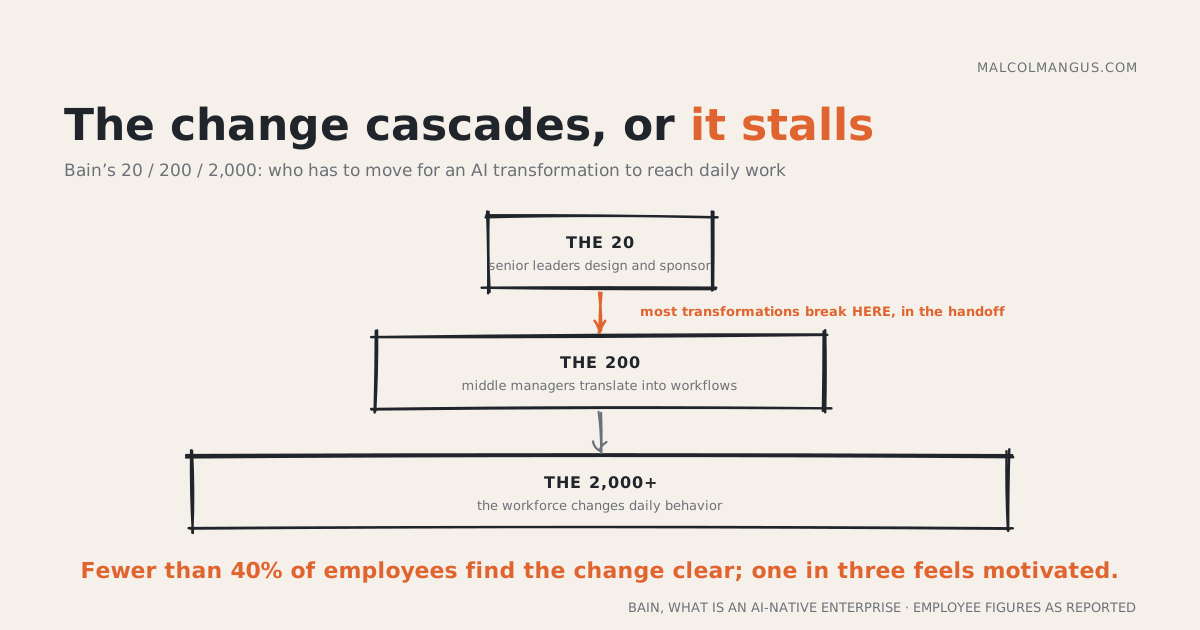
Put simply: the cascade is 20 designers, 200 translators, 2,000-plus adopters, and the break is in the first handoff. The tell is the coaching gap: AI transformations support affected people less often than ordinary change programs do.
The vocabulary layer and the two motions
Two definitions from the piece earn their space. The semantic layer: "a semantic layer establishes a shared business vocabulary of key terms, such as revenue, customer, churn, margin, and product," so that every agent reasons from the same meanings rather than each integration re-deciding what a customer is. And the orchestration layer, which "manages agents, tools, and skills as governed enterprise assets, keeping the full AI estate inspectable and changeable." Both are the connective tissue between this piece and the flywheel it shares with the flagship: proprietary data sharpening agents, agents sharpening people, people redesigning work. "That flywheel creates an advantage no competitor can close simply by spending more," and, in the line the whole Bain family leans on, "unlike prior technology waves, AI advantage compounds from day one." The sequencing argument is the same one as putting a warehouse between the AI and your systems: the shared, governed layer comes first, and the agents query it.
Put simply: two pieces of infrastructure carry the definition: a semantic layer so every agent shares one business vocabulary, and an orchestration layer that keeps the agent estate inspectable and changeable. Both exist before the agents, not after.
What the furthest-along have in common
The closing section lists three traits of the most advanced organizations, and none of them is a technology. Personal ownership at the CEO level: the CEO sponsors workflow redesign directly rather than delegating it. A disciplined focus: "leading organizations are running fewer initiatives, not more." And architecture built to compound: "the most durable advantage comes from the learning system, not the underlying model or platform." The three together read as a quiet rebuke of the standard program, an executive sponsor instead of an owner, a portfolio instead of a focus, and a model choice instead of a learning system. As a companion piece it adds little argument the flagship did not make, but the table and the cascade give the same thesis its two most usable artifacts, one for diagnosing your structure and one for predicting where your rollout will break.
Put simply: the leaders share CEO-owned redesign, fewer initiatives, and a learning system that compounds. If your program has an executive sponsor, a big portfolio, and a model decision at its center, this piece says you have the conventional column.