← All essays·July 25, 2026·9 min read
It wasn't the tequila: why American wine is losing drinkers
American wine is falling, and the easy story blames tequila. The data says something less flattering and more permanent: the drinking pie itself is shrinking, and wine is stuck on the oldest, most loyal customers in the bar.
Listen to this page
Ask anyone in the wine business what went wrong and you will hear about tequila. The kids don't want Chardonnay, the story goes; they want a spicy margarita and a bottle of Casamigos, and the agave boom is eating the vineyard alive. It is a tidy story with a villain, and it is mostly wrong. The numbers do show wine falling. They just don't show tequila catching what fell.
Start with the part everyone agrees on. American wine consumption per person peaked in 2021 and has dropped about twenty percent since, from 3.16 gallons a head to 2.54 in 2024. Total volume fell from 1.06 billion gallons to 0.87 billion in three years. That is real, and it is steep. The question is not whether wine is shrinking. It is where the drinkers went.
The pie itself is shrinking
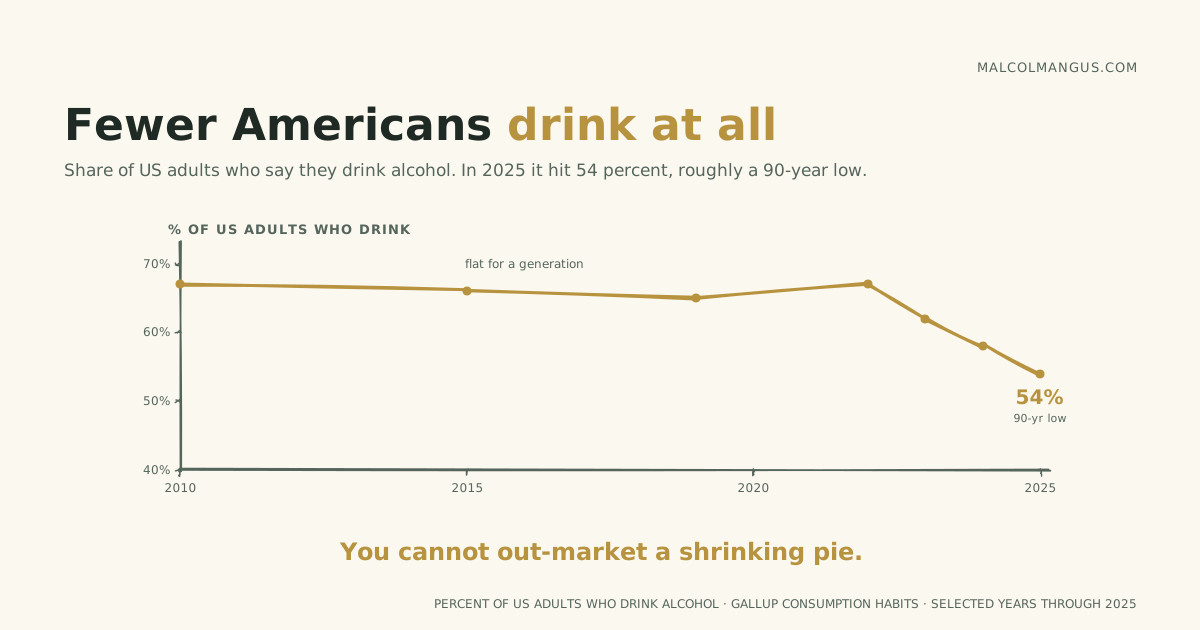
The first answer is the uncomfortable one: a lot of them stopped drinking. Gallup has asked Americans whether they drink at all for almost ninety years, and the number just hit a record low of 54 percent, down from 62 percent as recently as 2023. Three straight years of decline. The share of adults under 35 who drink fell from 59 percent to 50 percent in two years and, for the first time Gallup has ever recorded, dropped below the rate for older adults. A majority of Americans now tell Gallup that even moderate drinking is bad for your health, a belief held by barely a quarter of them in 2018.
Add the newer pressures and the trend has momentum: Dry January is now a mass event, GLP-1 drugs like Ozempic measurably cut how much their users drink, and the young cohorts that are supposed to replace the old ones are simply drinking less of everything. When the whole pie is shrinking, every category loses volume without anyone switching. Some of wine's loss is not a defection. It is just an empty glass.
Put simply: When the whole category shrinks, you can lose volume without losing a single customer to a rival. Before you blame a competitor, check whether the market itself got smaller.
The share that did move went from beer, not wine
Now the part that breaks the tequila story. Spirits really have taken share, and it is a genuine milestone: in 2022, US spirits revenue passed beer for the first time, and per drink of pure alcohol, spirits passed beer that same year for the first time since 1969. So the category shift is real. But look at who paid for it.
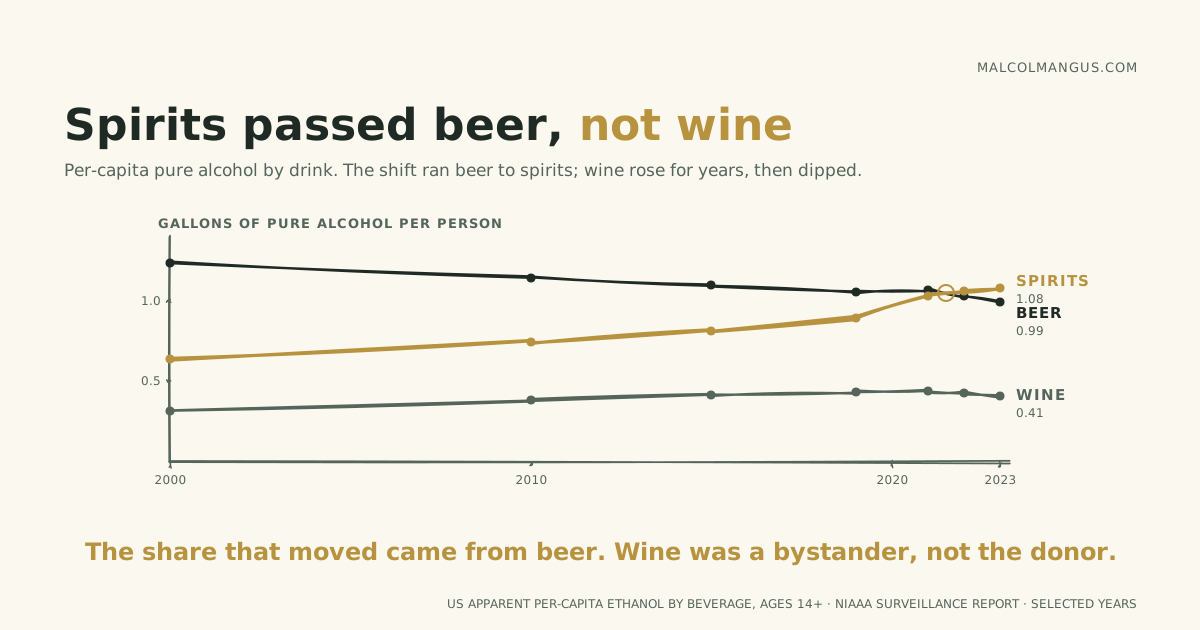
Measured in pure alcohol per person, spirits climbed about seventy percent since 2000 while beer fell off a long slide, dropping below a gallon a head for the first time in 2023. Wine, over the same quarter century, drifted up into 2021 and has eased back since, but its share of all the alcohol Americans drink slipped only about a point and a half. Whatever fed the spirits boom, it was not wine: wine and spirits rose together for twenty years. Beer is the donor here, and it is a far bigger one. Between 2020 and 2023, beer gave up twice as much per-capita alcohol as wine did, while spirits picked up more than both losses combined. The national health agency that keeps these numbers says it plainly: the recent decline "is being driven by reductions in beer and wine consumption, which have offset continual increases in spirits." Beer and wine both leak. Spirits catches. But beer is the leak that matters.
Put simply: A rival's rise is not proof it took your customers; find the category that actually shrank to feed it. Spirits grew on beer's decline, not wine's, so the obvious villain is the wrong one.
The tequila boom is already over
Even the tequila part has expired. Agave spirits were the great growth story of the last decade, climbing from four billion dollars in US revenue in 2020 to nearly seven, and passing American whiskey to become the number-two spirits category by 2022. But growth is not the same as a trend that lasts. Tequila's revenue growth decelerated every single year after 2021, from thirty percent to seventeen to eight to three, and in 2025 it went negative for the first time, a 4 percent decline. It never passed vodka. A category that is now shrinking cannot be the thing absorbing wine's losses today.
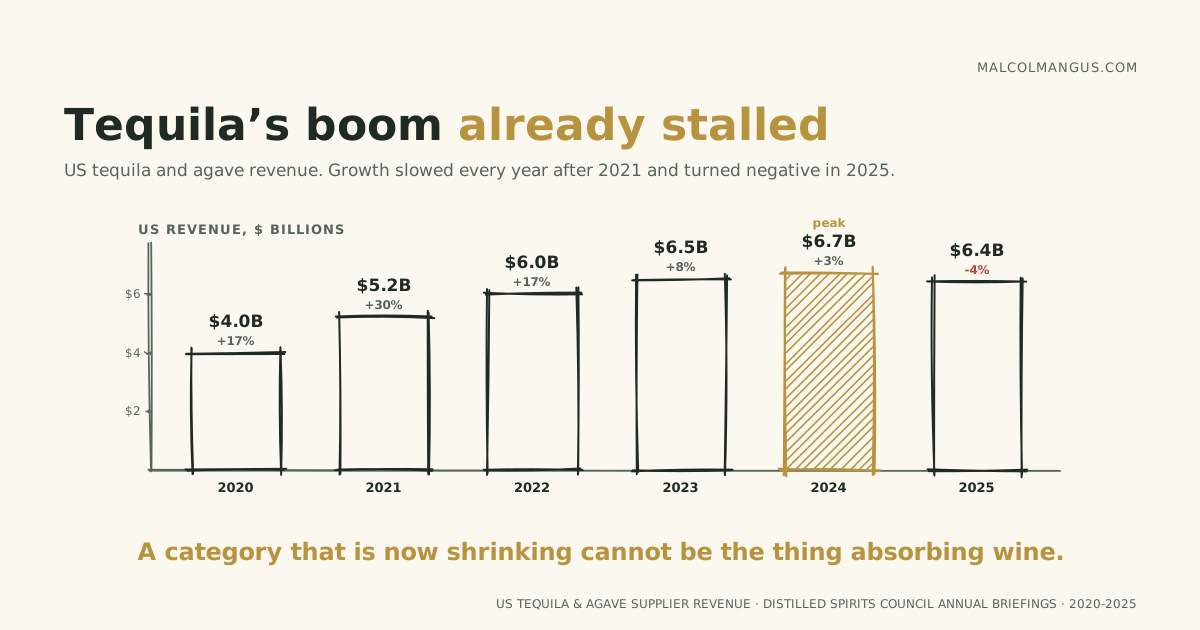
Tequila is not wine's assassin. It is a sibling in the same premiumization wave: people drinking less but trading up, choosing one good pour over three ordinary glasses. That wave lifted agave and it lifted whiskey, and it pulled most of its volume from the beer aisle, not the wine rack. The margarita did not come for your Cabernet. It came for your light lager.
The beer aisle shows the same trade-up inside a single category. In 2023 Modelo Especial passed Bud Light to become America's best-selling beer, ending a cheap domestic lager's twenty-two-year hold on the top spot. A boycott sealed it, but the direction was already set: even the beer that is winning is winning by trading up, a premium import rising while the light lager it replaced kept falling.
Put simply: A trend that has already stopped growing cannot explain your ongoing decline. Make sure the thing you are blaming is still winning before you build a strategy around beating it.
Wine's actual problem is who drinks it
If it wasn't tequila, what is wine's specific vulnerability? Age. Wine is the drink of older Americans in a way no other category is. It is the top choice of drinkers over fifty, and its core has long been an unusually loyal Boomer bulge that drinks it often and buys it by the case. That was a gift for thirty years. It is now a liability, because that cohort is aging out of heavy drinking faster than younger, lighter, more promiscuous drinkers are aging in. The largest single group of wine drinkers has, for the first time, tipped from Boomers to Millennials, but Millennials drink it less often and across more categories. Wine didn't lose a price war. It is standing on a demographic escalator that finally started going down.
Put simply: A loyal, aging customer base is an asset until it becomes a cliff. If your best buyers are the ones leaving fastest and hardest to replace, watch demographics, not competitors.
The brand game wine can't play
If tequila is not stealing wine's drinkers, it is still doing something wine cannot: it prints brands. Where American wine is a scatter of roughly eleven thousand wineries with no single name that commands a price, tequila is a handful of brands owned by three companies. Jose Cuervo, 1800, and Gran Centenario belong to one firm; Don Julio and Casamigos to Diageo; Patrón to Bacardi. The category's growth is a premium ladder that climbs past two hundred dollars a bottle, and the profit sits at the top of it.
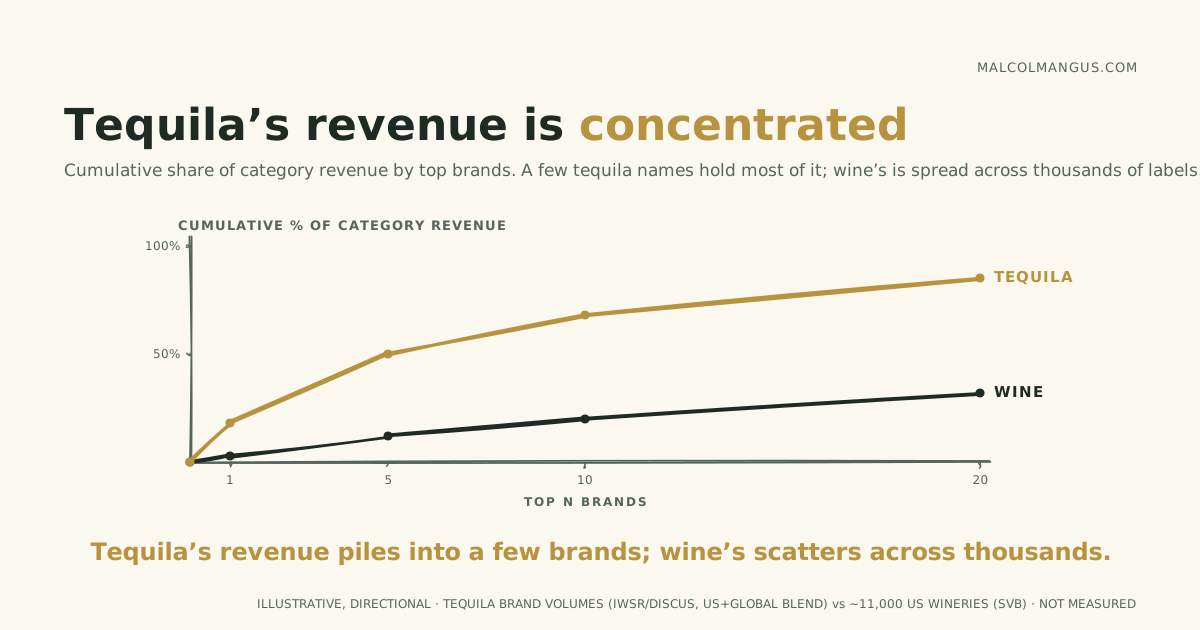
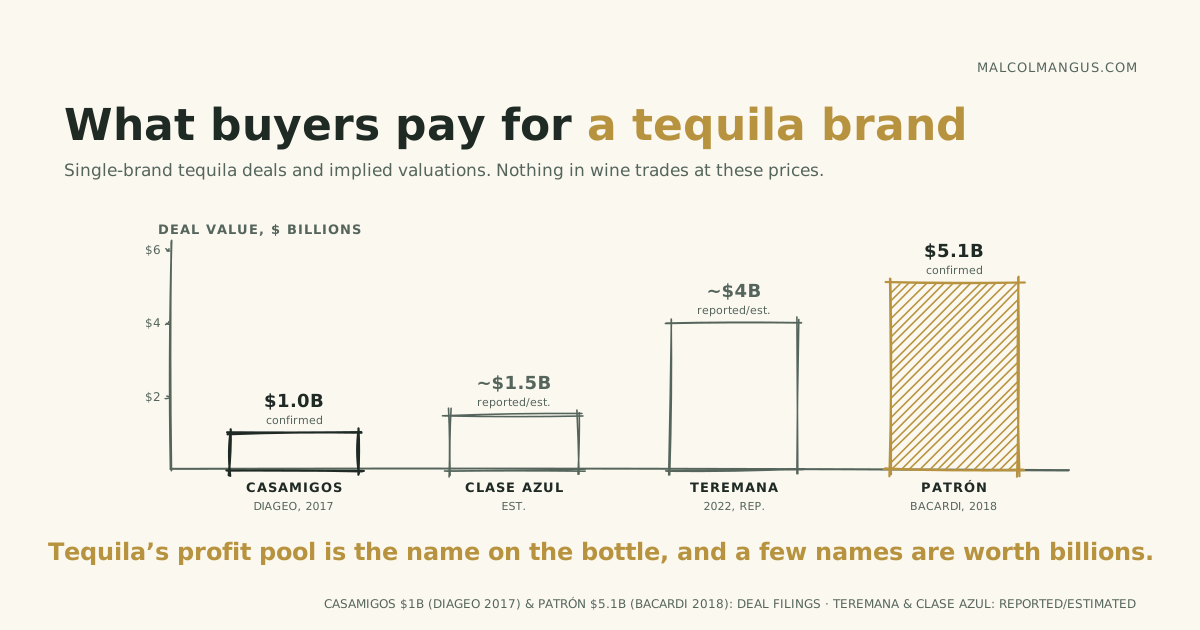
How much is that name worth? Diageo paid up to a billion dollars for Casamigos in 2017, a tequila barely four years old whose main asset was George Clooney's name. Bacardi paid 5.1 billion for Patrón in 2018. Nobody has paid anything close for a wine brand, because none has that pricing power: the best-selling wine in America is Barefoot, a seven-dollar Gallo label, sitting in a wall of interchangeable bottles that compete on price alone.
The tell is at the bottom of the chain. Agave, tequila's raw material, ran through its own boom and bust, the price per kilo crashing from about thirty-five pesos to under eight as growers oversupplied the market. Tequila's shelf prices did not fall with it; the brands kept the spread. That is the same squeeze California's grape growers are living through, unsold Napa fruit and Chardonnay at five hundred dollars a ton, except that wine has no premium brand to pocket the difference. Same grower pain, opposite ending: in tequila the brand banks it, in wine it just runs down an already-thin chain.
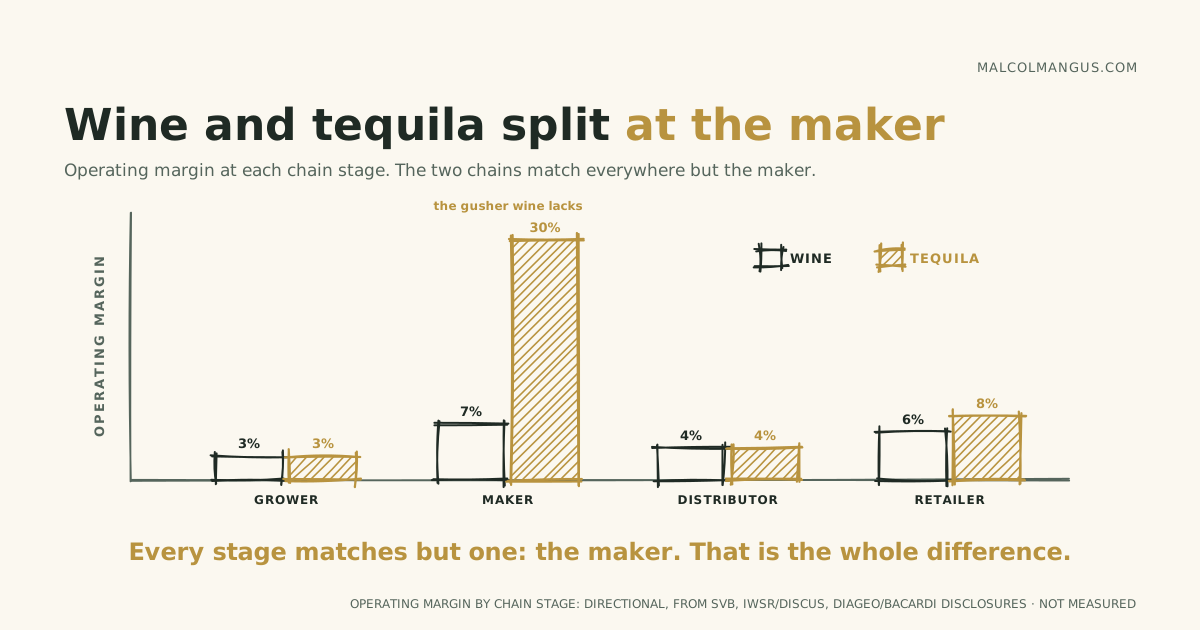
So "become tequila" is not a move wine can make. It would need a few dominant, defensible names and a price ladder reaching into the hundreds, and it has neither.
Put simply: A category's profit pools wherever a brand can hold its price while its costs fall. Tequila has a few names that can and wine has eleven thousand that cannot, which is why the identical grape-grower squeeze ends in billions for one and breakeven for the other.
The shrinking pie, not the substitution
Put the demand side next to the supply side, and the picture is complete. On any single bottle, the money pools downstream, in the distributor and the room that marks it up. Across the whole market, the trouble is that there are fewer bottles opened every year, and wine is the category most exposed to the customers who are leaving. The tequila story is comforting because it implies a fix: make a wine cooler for Gen Z, chase the trend, win the drinkers back. The real story is harder. You cannot out-market a shrinking pie, and you cannot un-age your best customer. What wine has to do is stranger and slower than beating tequila. It has to convince people who are choosing to drink less that, when they do, the glass should be wine.
Put simply: You cannot out-market a shrinking market or un-age your best customer, so chasing the trendy rival is the wrong fight. Win the fewer occasions that remain instead of the drinkers who are simply gone.

Malcolm Angus
I'm an analytics engineer, data product manager, and forward-deployed engineer. I write about data products, moats, flywheels, and business strategy, the loops that make companies harder to catch.

The charts in this essay are free to reuse with credit.