← All essays·July 26, 2026·10 min read
Rent the model. Own the implementation.
A dozen essays on AI keep landing on one claim, so here it is straight. The model is the one input that gets cheaper every year and is identical for everyone, which means it cannot be your advantage. The durable value is your implementation, the fit to your business: your data modeled and ready, your context written down, the judgment of what to build, and the evals that keep it honest. Judgment decides what to build, deployment is the mechanism that cashes it in, and proof is the only thing that separates a moat from a vibe. Rent the model. Own everything it is not.
Listen to this page
I have written a dozen essays on AI in the last few weeks, and they keep converging on one claim. This is that claim, stated straight, with the receipts underneath it.
The question everyone asks is who wins in AI. The honest answer starts by noticing which part is losing value fastest. The model is the one input that gets cheaper every single year, and it is identical for everyone who pays. So whatever your advantage is, it cannot be the model. It has to be everything the model is not.
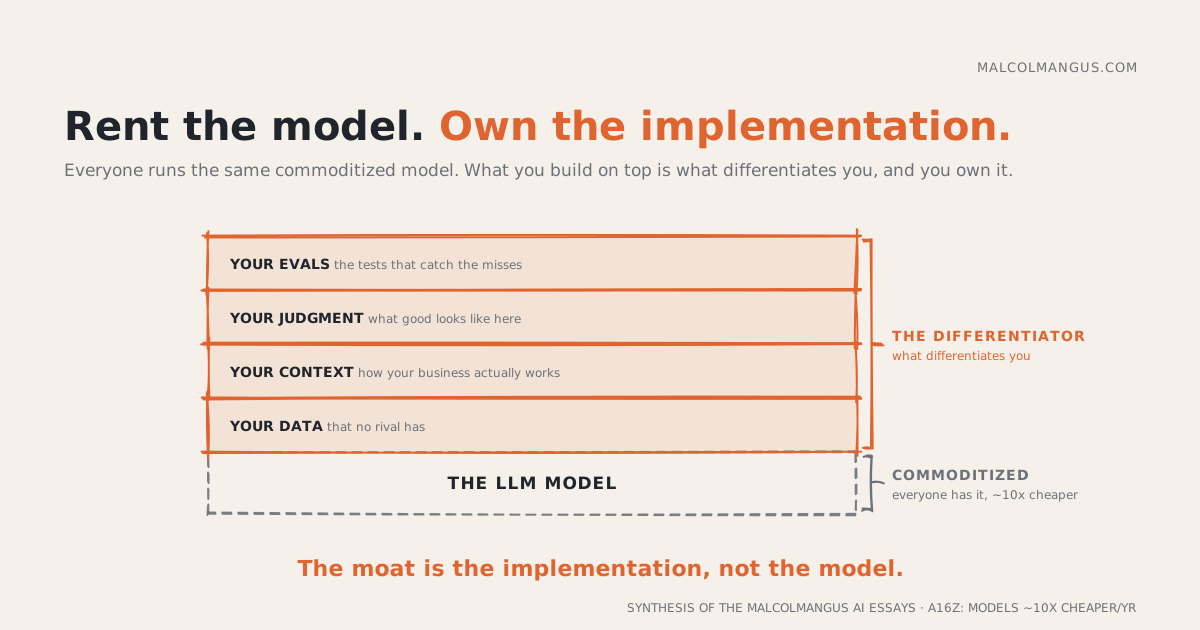
Call the thing you rent the model, and the thing you own the implementation. The implementation is the fit to your business: your data modeled and ready, your context and definitions written down, the judgment of what to build, and the evals that keep it honest. Rent the model. Own the implementation. Everything below is why, and what each word means.
The model is the commodity
Intelligence is priced by the token, and the token price falls about tenfold a year for constant capability, the trend Andreessen Horowitz named llmflation. Claude 3 Opus launched at fifteen dollars per million input tokens in 2024; the Opus flagship sells for five today, and the cheapest tier is a dollar, fifteen times below that launch price and doing work the launch model could not. Every company can turn on the same frontier through the same short list of tools, at roughly the same price. When the same capability is available to anyone who pays, it is a commodity by definition, and a commodity cannot be a moat.
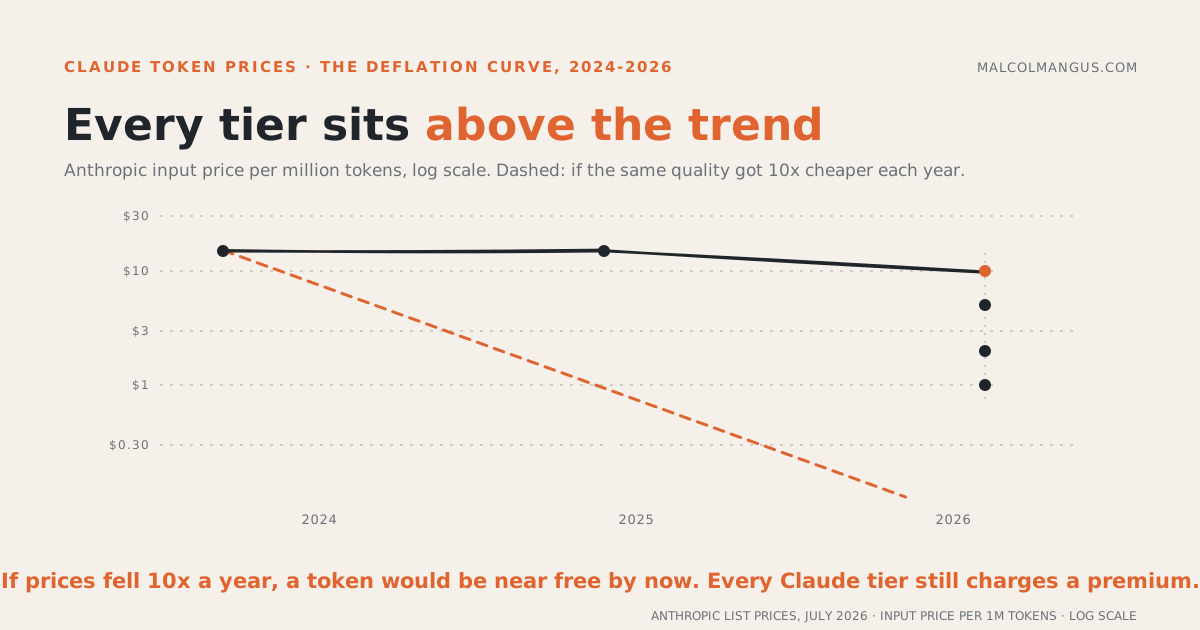
There is a subtlety worth keeping. The frontier itself holds its price; what collapses is last year's frontier, which is nearly free now. So renting the model is not a one-time purchase of an asset that appreciates. It is a lease on something that depreciates to near zero and gets replaced. You will re-rent it next year, better and cheaper, along with everyone else. That is a fine thing to buy. It is a terrible thing to build your defensibility on.
Put simply: The model is rented, identical for everyone, and cheaper every year. It is the one part of your AI that is guaranteed not to be your advantage. Buy it, do not bet on it.
Own the implementation, and build it ahead of time
If the model is not the moat, what is? The layer you own and build ahead of time: the implementation, the fit between a general model and your specific business. Concretely that is four things. Your data, modeled and ready for a real question. Your context and definitions, the meaning of your numbers, written down instead of living in people's heads. The judgment of what is worth building. And the evals that keep it honest. None of those is an AI problem, and no model does any of them for you.
The test that separates this from a pile of files is whether it compounds. Raw data is not a moat; a big warehouse nobody can interpret is a liability with a storage bill. Compounding intelligence is a moat: context that gets more correct and more complete every time someone uses it, keyed to your business so tightly that a competitor cannot buy the same thing off a shelf. That is the difference between owning the fit and hoarding data.
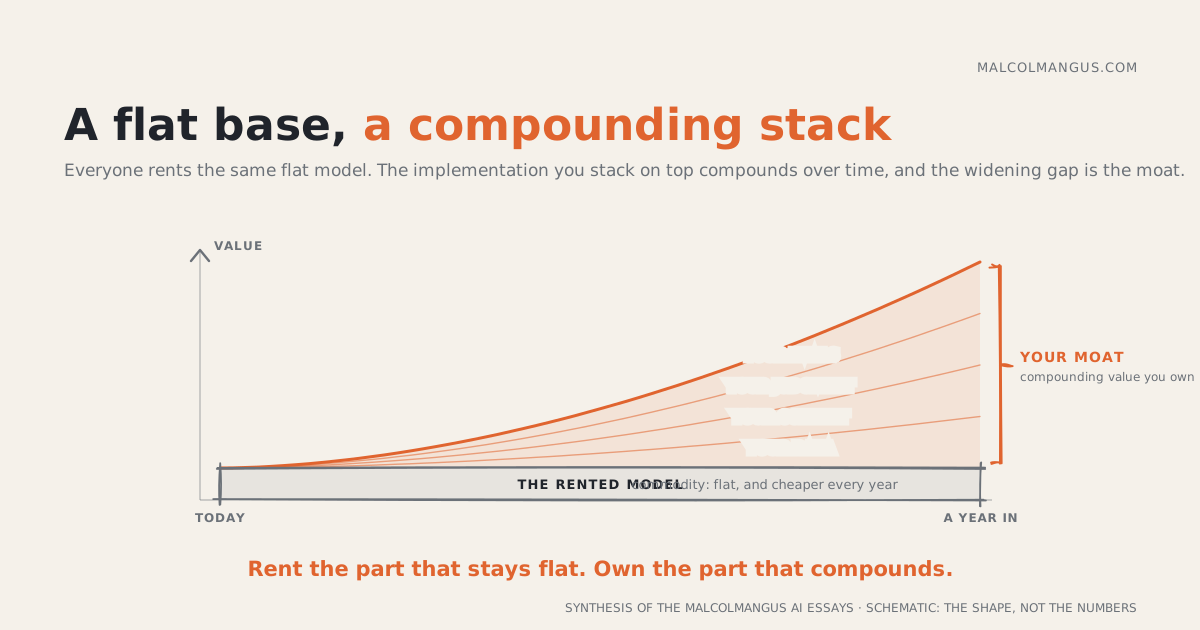
Here is the whole economic argument in one line: anything you rent gets cheaper without you, and anything you own you have to build and keep. The model is the rented layer. The fit is the owned layer. Spend your scarce effort where it accrues to you, which is never the part a vendor will sell you cheaper next quarter.
Put simply: The moat is the implementation you build ahead of time and own: data, context, judgment, evals. Put your money in the layer nobody sells, and make sure it compounds instead of just accumulating.
Judgment decides what to build
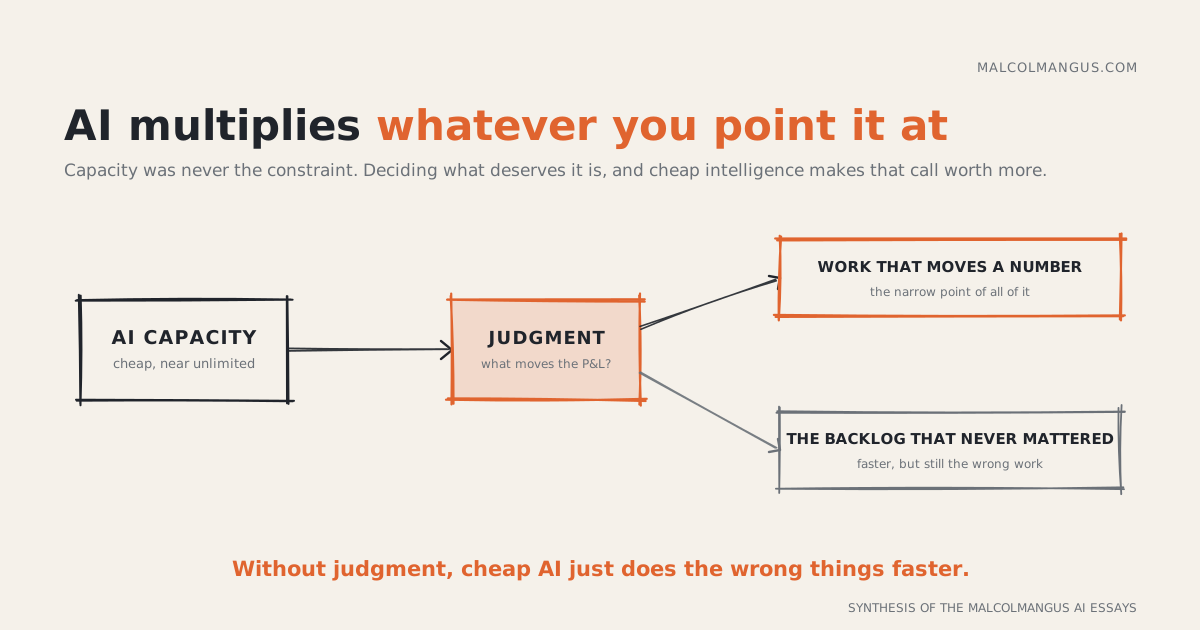
Owning the fit is not the same as building all of it. AI multiplies whatever work you point it at, including the work that never mattered. The constraint on a business was never how fast it could execute; it was deciding what deserved executing, and cheap intelligence makes that decision more valuable, not less, because now the cost of pointing it at the wrong thing is a rounding error you will happily repeat a thousand times.
This is the discipline that saves the whole thing from turning into token maxing. Before any AI initiative, write down which line of the profit and loss statement it moves, and by when. If the answer is a feeling, you have not found your constraint, and buying more capacity is buying speed you cannot spend. I have watched a ten-million-dollar model budget vanish in a quarter this way, spread across everyone, moving no number. The capacity was there. The judgment was not.
There is an old pilot's image that fits a model even better than it fit a plane. Set out across the country with your heading one degree off, and the aircraft performs perfectly the whole way; it simply lands in a different city than the one you meant. Nothing was wrong with the plane. The fault was in the aim, and the distance did the rest. A fast model is that plane. Hand it a vague destination and let it fly as the lead instead of the instrument, and every mile of cheap capacity carries you further from what you actually wanted, with the demo humming the whole way. The one job that does not commoditize is holding the heading: saying, up front and in plain terms, where this is meant to land, and refusing to hand that choice to the one thing in the cockpit with no stake in where you touch down.
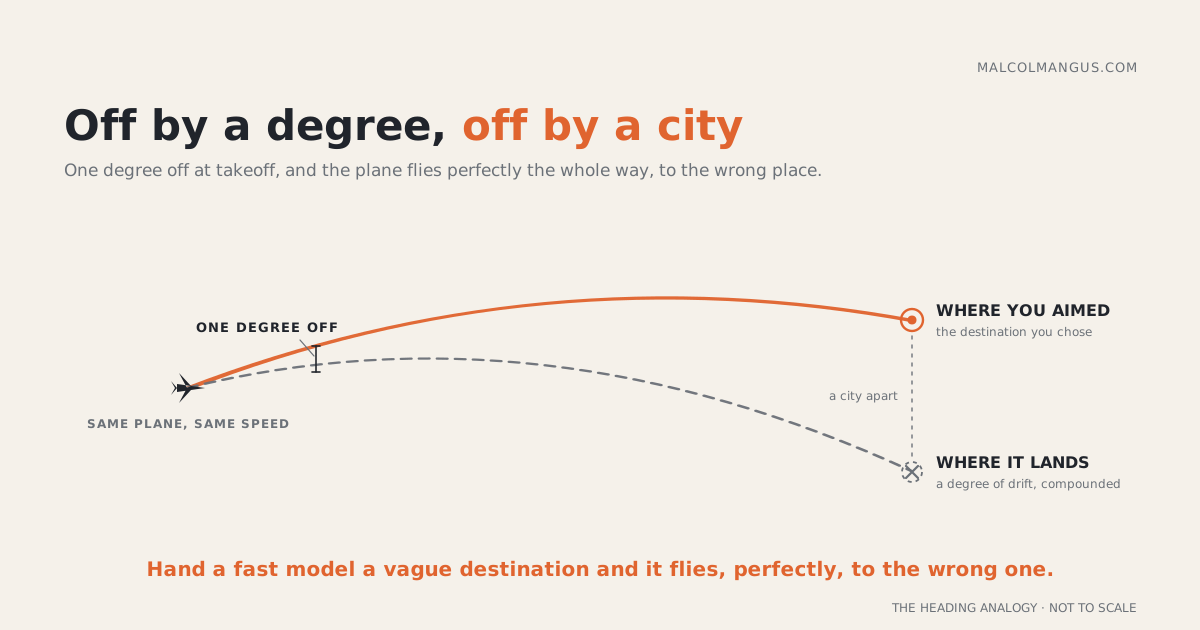
Put simply: AI raises capacity, not judgment. Point it at a named constraint that moves a P&L line, or you are just doing the wrong things faster and paying for the privilege.
Deployment is the mechanism, not the moat
The work that closes the gap between a model and a real business result is valuable right now. Forward deployed engineers, internal AI build teams, the roles that do this fitting work: postings for them jumped more than eight hundred percent last year. It is tempting to call that work the moat. I want to be precise, because my own essays have flirted with saying so.
Deployment is the mechanism, not the moat. It is how you turn the model into value, and it is genuinely where the money is today. But the fitting work is a flow, not a stock. If it deposits into something you own, a data or context asset baked into your product, it compounds and you keep it. If it does not, it is just work that gets cheaper from above the moment it commoditizes, which it will, because more people learn to do it every month.
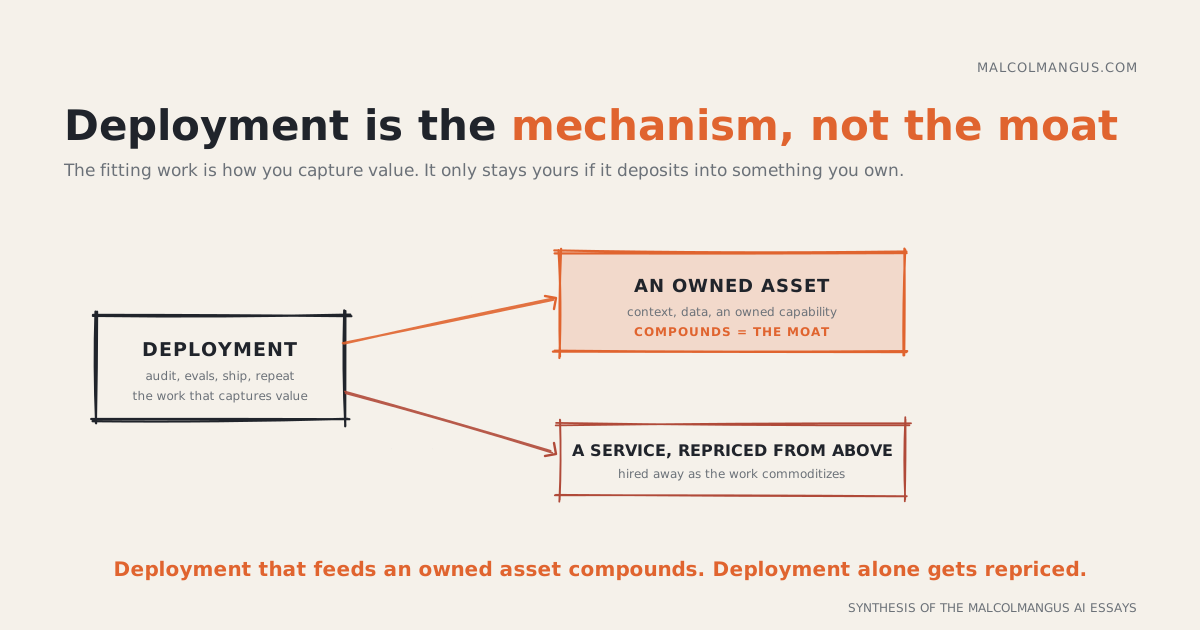
So the sharper version is this: what matters is the thing the work builds, not the work itself. Make it deposit into a layer you own, a data or context asset the model plugs into, so the layer above cannot reprice you out of existence. Fitting work that feeds an owned asset compounds. Fitting work alone commoditizes.
Put simply: The fitting work is the mechanism that cashes in the moat, not the moat itself. Make every build deposit into an asset you own, or you are just repeating work that is getting cheaper too.
Prove it, or it is a vibe
Every layer of this argument runs on the same discipline, and it is the one most AI programs skip. There are exactly three numbers a business counts: revenue up, risk down, cost down. An initiative moves one of them or it moves none. If it moves none, it is token maxing, however good the demo felt.
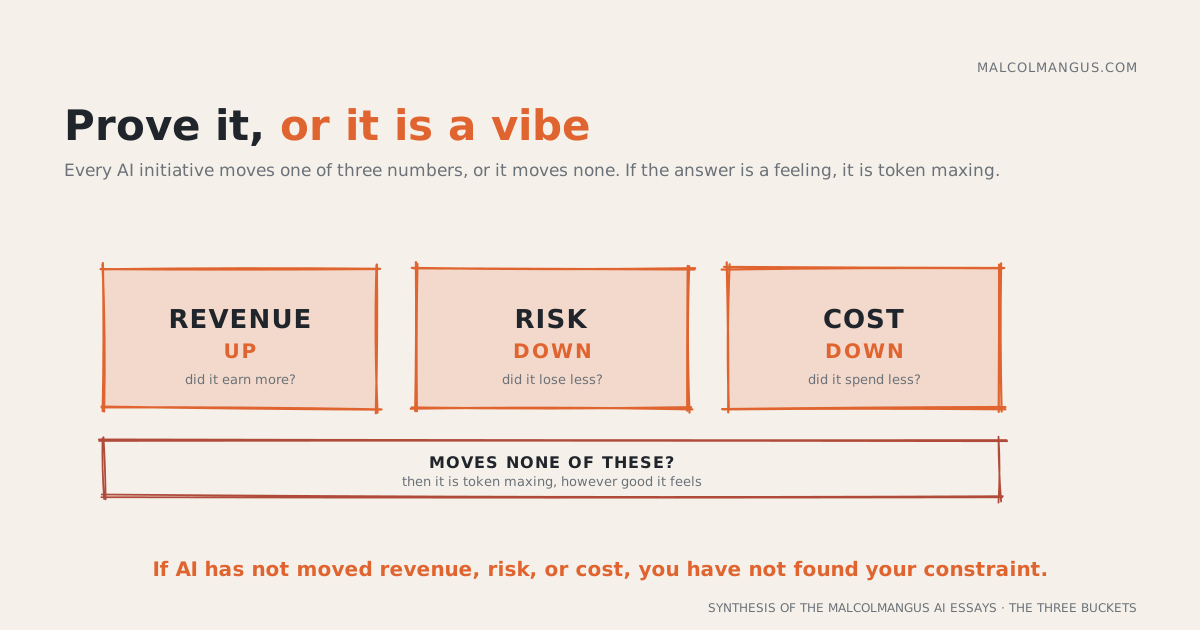
Proof is also what makes the moat legible to the people who decide where to invest: your own team, your own board. They price durability, not momentum: a year from now, is this still working, and what stops a competent team from rebuilding it. The parts of your business that are painful and slow to build are the answer, because that pain is exactly what keeps a copycat out. Run the honest test on your own work and report the number, including the one that indicts you. When output is abundant, the scarce asset is the thing with a consequence attached: the signature, the liability, the measured result. Reality is the moat.
Put simply: Score every initiative on revenue, risk, or cost, and nothing else. A number you can defend is a moat; a number you cannot is a vibe you are paying to host.
What it adds up to
Strip it down and this is the same pattern I keep tracing through every profit pool: when a layer commoditizes, the margin does not vanish, it slides to the adjacent layer that stays scarce and hard. Intelligence went first, priced by the token and roughly equal for everyone. What stayed scarce is the fit, the owned and compounding work of making a general model do one specific business's real job, and proving it did.
So, one line to keep: the model commoditizes, the owned implementation compounds, and only judgment and proof tell you which is which. Rent the model, because it is cheap and getting cheaper. Own the implementation, because it is the only part that is still yours next year.
Put simply: Do not build on the layer that gets cheaper without you. Build on the fit: the owned, ahead-of-time, hard-to-rebuild work that a commodity model runs on top of. That is the part that compounds, and it is the whole game.

Malcolm Angus
I'm an analytics engineer, data product manager, and forward-deployed engineer. I write about data products, moats, flywheels, and business strategy, the loops that make companies harder to catch.

The charts in this essay are free to reuse with credit.