← All essays·July 19, 2026·21 min read
Why over 10% of Delta's revenue comes from Amex, and why OpenAI would acquire Ramp
Amex pays Delta $8 billion a year for a currency Delta invents. Trace the same machine through Starbucks balances, Robux, and your expiring API credits, and OpenAI buying Ramp starts to make complete sense.
Listen to this page
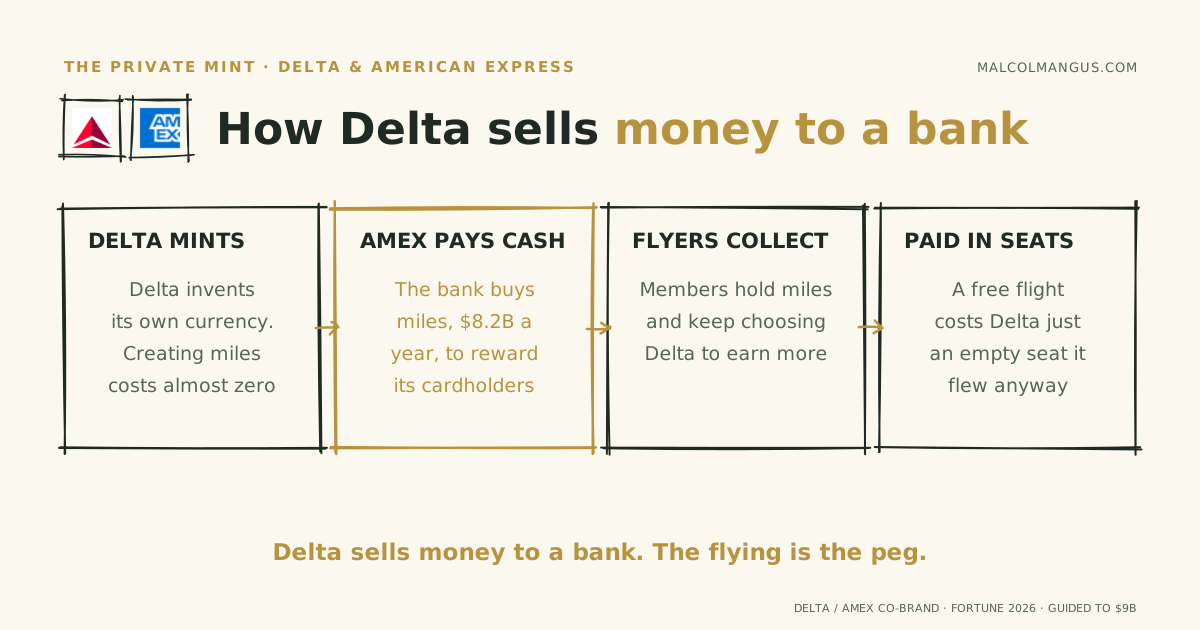
In April, Fortune ran a headline that reads like a misprint: "How Delta CEO Ed Bastian built a massive partnership with American Express that now generates over 10% of the airline's revenue." Read it twice. One credit card partnership. A tenth of an airline.
The real figure is stranger than the headline. American Express paid Delta $8.2 billion in 2025, on its way to Bastian's stated goal of $10 billion a year, and spending on Delta's cards approaches 1% of US GDP. The relationship even has a founding legend: in 2008, with credit markets frozen, Amex wired Delta a billion dollars: a cash advance secured by miles Delta had not yet minted. The bank has been buying the airline's money ever since.
So what does a bank buy from an airline for $8 billion a year? Not seats. Not ads. It buys SkyMiles: a currency Delta invents at a cost of approximately nothing and sells for real dollars, so Amex can hand it to cardholders as rewards. An airline prints private money, and one of the largest financial institutions on earth pays cash for it.
There is an old word for the profit in that arrangement, and it belongs to kings: seigniorage, the gap between what money is worth and what it costs to make. Governments mint a coin for cents and spend it as a dollar. It turns out you do not need a throne to run the trick. You need a product people keep coming back for, and the nerve to denominate it in your own money.
Central bankers noticed early. A 2012 ECB report on virtual currencies, mostly about Bitcoin, filed the frequent-flyer program in the same family, noting that airlines "can manage the supply of air miles according to their own strategy," and repeated an estimate that the world's stock of miles was worth roughly $700 billion, comparable to all US dollar bills then in circulation.
I wrote about where an industry's profit settles elsewhere. This essay is about a machine that creates one of those profit pools: the private mint. Once you see its mechanics, you will find it running quietly inside some of the most familiar companies in the world, up to and including the AI vendor selling you tokens.
The four mechanics
Mechanic one: the mint spread. Create the currency for approximately nothing and sell it for real dollars. Delta does not give miles away; it sells them, mostly to American Express, which hands them to cardholders as rewards. The airlines' co-brand deals bring in billions of real dollars a year.
Mechanic two: settle at marginal cost. The currency is sold at face value but redeemed against your own spare capacity. The "$400 seat" a member books with miles is, to the airline, a seat that was flying anyway. A latte redeemed with stars costs Starbucks the ingredients, a fraction of the menu price. Sell at retail, settle at marginal cost, and profit on both ends.
Mechanic three: the float. Cash arrives when the currency is sold; the obligation is honored months or years later, if ever. In between, you hold other people's money for free. Warren Buffett built Berkshire on this mechanic, and his definition is the cleanest one written: float is "money we hold but don't own." Before insurance, he saw it in American Express traveler's checks, which customers bought with cash and carried for months; Amex invested the difference.
Mechanic four: breakage. Some of the currency simply never comes back. Cards get lost, points expire, chips go home in pockets as souvenirs. The issuer eventually books the unredeemed balance as revenue, the closest thing in accounting to money for nothing. Americans are currently sitting on about $27 billion in unused gift cards.
Four mechanics, one machine: mint and sell at face, hold the cash, settle at cost, and keep whatever never returns.
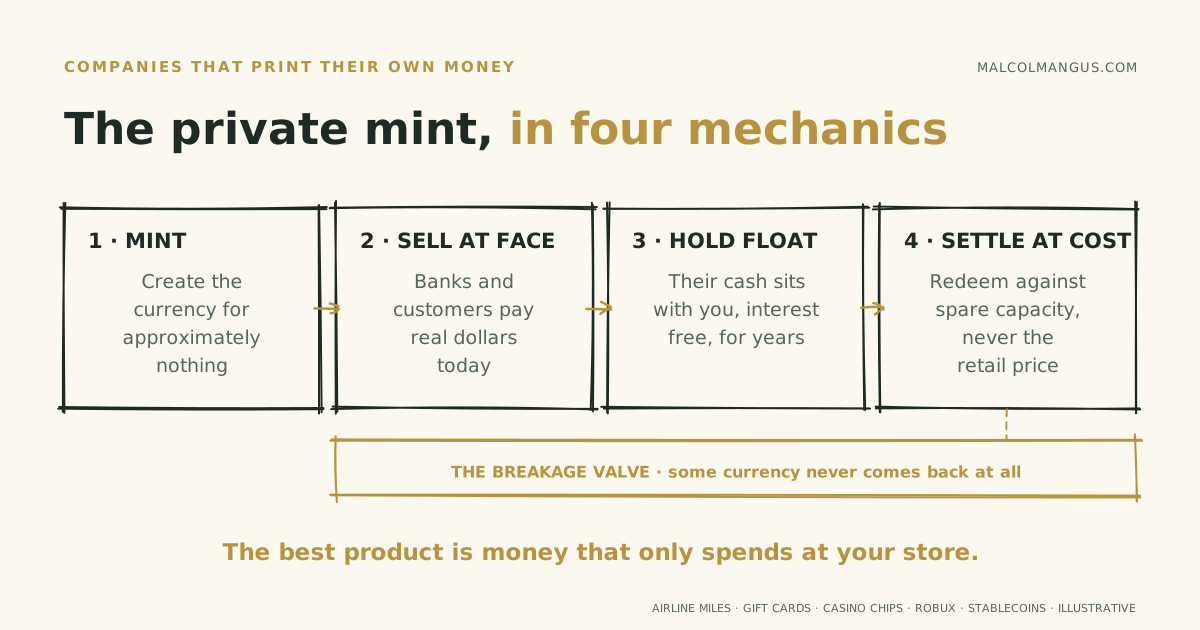
Put simply: Some companies create their own play money, sell it for real dollars, and profit four ways: it costs nothing to make, they hold your cash while you hold their points, they settle in spare capacity, and some of it never gets cashed in at all. If your business takes money before delivering value, you are already running part of this machine.
The whole flock does it
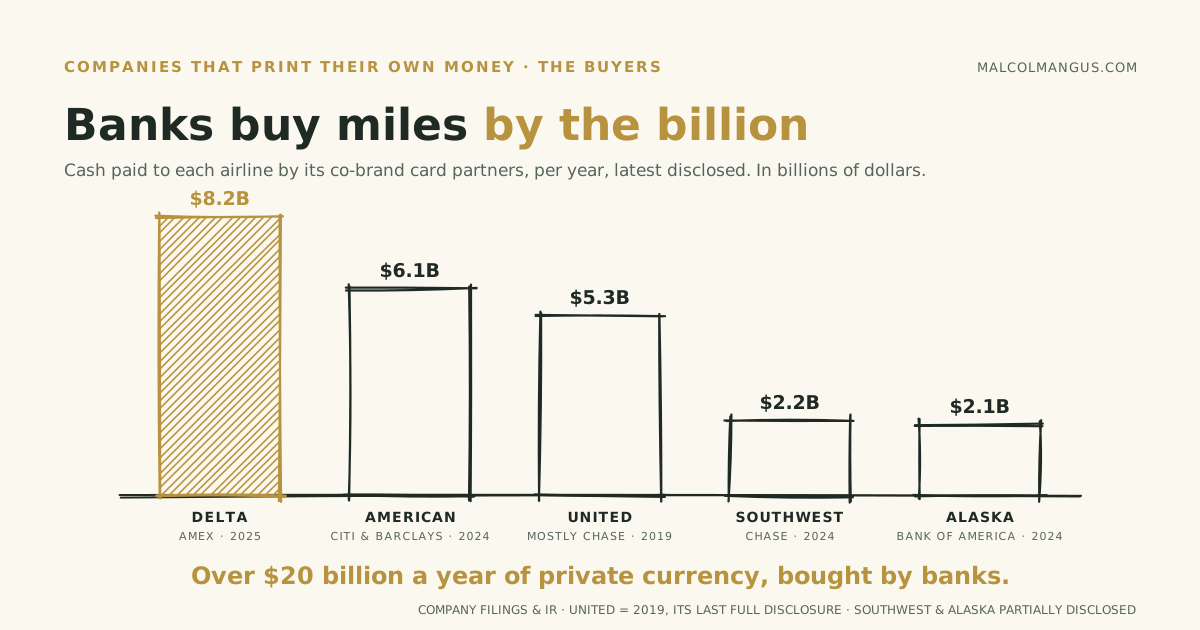
Delta runs the biggest mint, not the only one. American Airlines collected $6.1 billion from its card partners in 2024, and Reuters calculated that its 2025 card cash ran roughly four times its operating income. Sit with that ratio: inside one company, the business that prints miles out-earns the business that flies planes, several times over. Add up the disclosed flows and banks now pay US airlines north of $20 billion a year for privately printed currency, about five times what the same flows were in 2008.
The hotels run the same machine, and in the spring of 2020 the buyers showed what the arrangement really is: Amex pre-purchased $1 billion of Hilton points in cash, and Chase and Amex advanced Marriott $920 million. When the crisis hit, the banks behaved like lenders of last resort to the private mints, because that is what they were.
COVID put a price on all of it. Every major carrier pledged its loyalty program as loan collateral, and the appraisals came back higher than the airlines themselves: United borrowed $6.8 billion against MileagePlus after valuing it at $22 billion, when the whole airline traded around $10 billion, and a Financial Times analysis put AAdvantage near $24 billion against American's $6.6 billion market cap. The market was saying the planes, gates, and brand were worth less than zero. The Atlantic ran the obituary under the cleanest possible headline: airlines are just banks now.
Put simply: Every big US airline sells miles to a bank, and together the banks pay airlines more than twenty billion dollars a year, so much that in 2020 the miles programs were worth more than the airlines themselves. When a side business out-earns the main one, the side business is the business.
Why the bank never blinks
A bank paying $8 billion a year for another company's private currency only looks strange from the airline's side of the contract. From the bank's side it is the cheapest way to buy customer behavior, because card economics and airline economics are not the same sport. American Express earned $10.8 billion on $72 billion of revenue in 2025, a 34% return on equity. Delta, the most profitable airline in America, ran a 9.2% operating margin. The issuer's return on equity is more than three times the airline's operating margin, on the two sides of the same partnership.
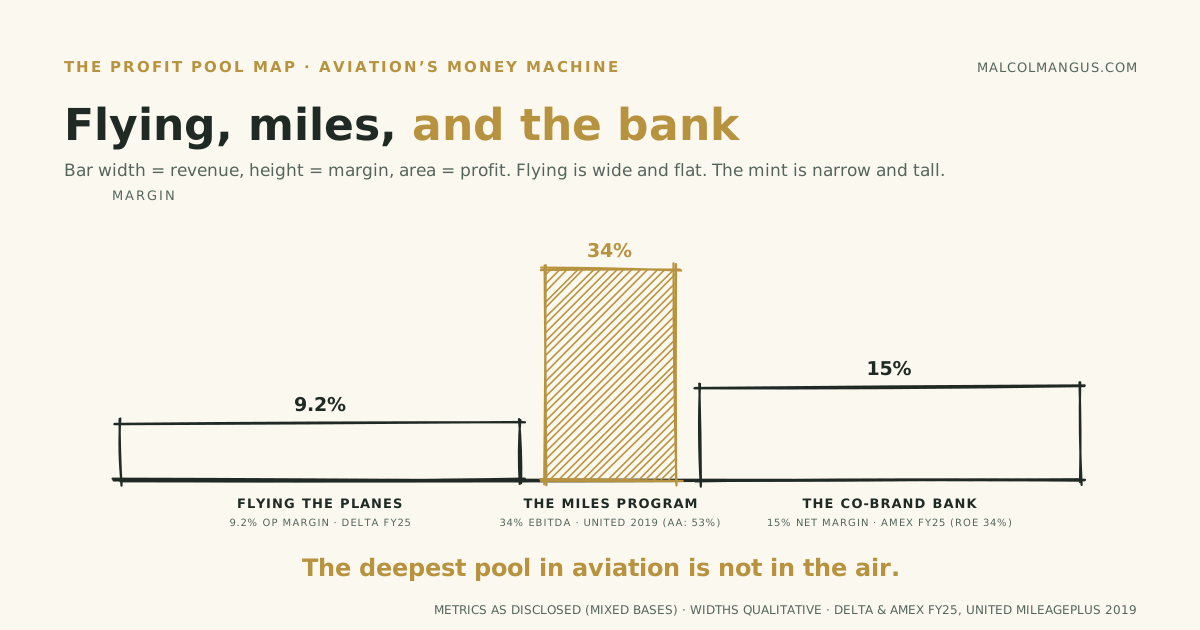
The mile is bait for three revenue lines at once. Discount revenue: $37 billion skimmed from merchants, about 2.2 cents of every dollar spent on its cards, with the Delta portfolio alone roughly 13% of Amex's worldwide billings. Card fees: nearly $10 billion a year, anchored by cards like the $650 Delta Reserve. And net interest income: $17 billion, the fastest-growing of the three, on a loan book where Delta cardholders are about 21% of Amex's worldwide card loans. One mile, three registers ringing.
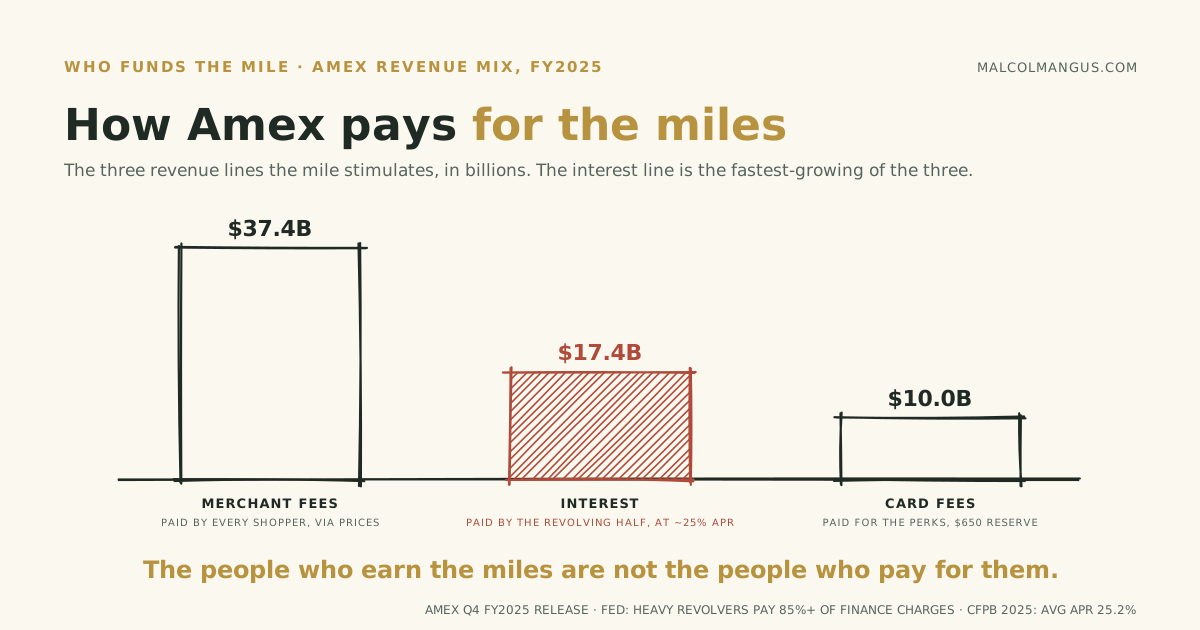
The interest side is where the machine gets uncomfortable. Card customers are really two populations wearing one product. Transactors pay in full every month, do much of the spending, and harvest the rewards. Revolvers carry balances at today's 25% average rates and pay nearly all the interest. Federal Reserve economists studied 200 million cards under the title "Who Pays For Your Rewards?" and measured the result: roughly $15 billion a year moves from revolvers to transactors through the rewards system. The miles you earn by paying in full are financed by the people who cannot. That is the book the co-brand market is built on.
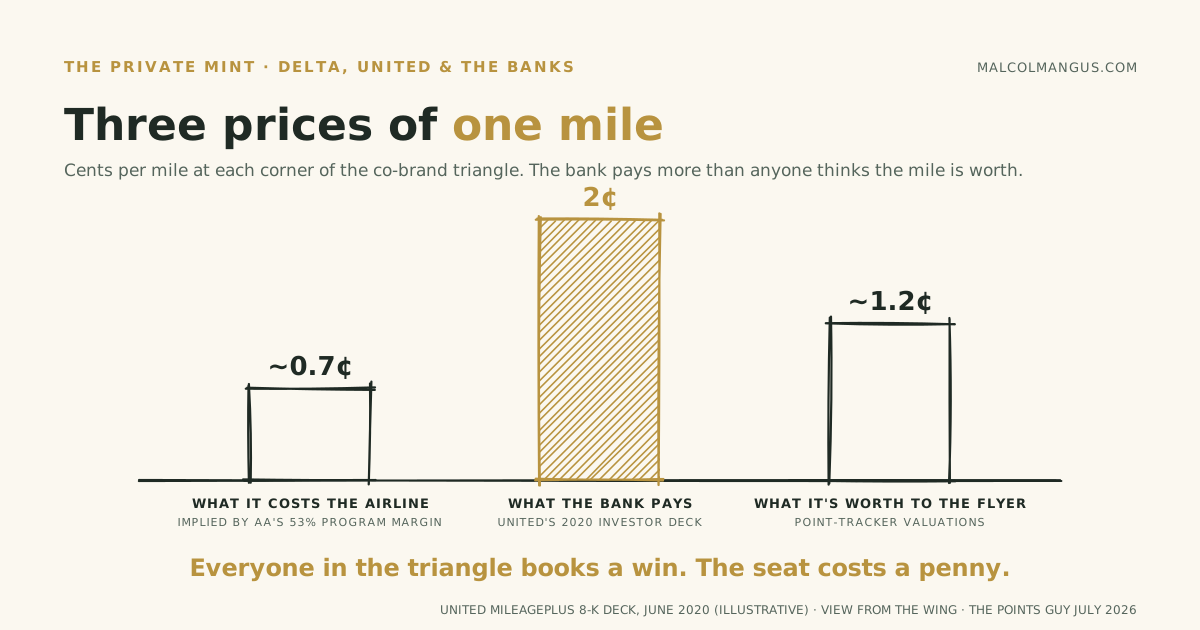
United once put real numbers on the three-cornered trade between the airline, the bank, and the flyer. Its June 2020 investor deck told bondholders: a partner buys miles at 2 cents each, the member redeems, and the program buys the seat back from United at 1 cent, in United's own words "for a 50% profit." Analysts working from American's disclosed program margin put the cost of minting a mile around 0.7 cents, and point trackers value a Delta mile at about 1.2 cents. Three prices for one mile, and every corner of the triangle books a win.
Put simply: The bank happily pays billions for miles because cards are a far better business than planes: every swipe, every annual fee, and every unpaid balance earns the bank money, and the miles keep people swiping. Before envying a partner's spending, understand what your asset does for their economics.
The junior version on your pricing page
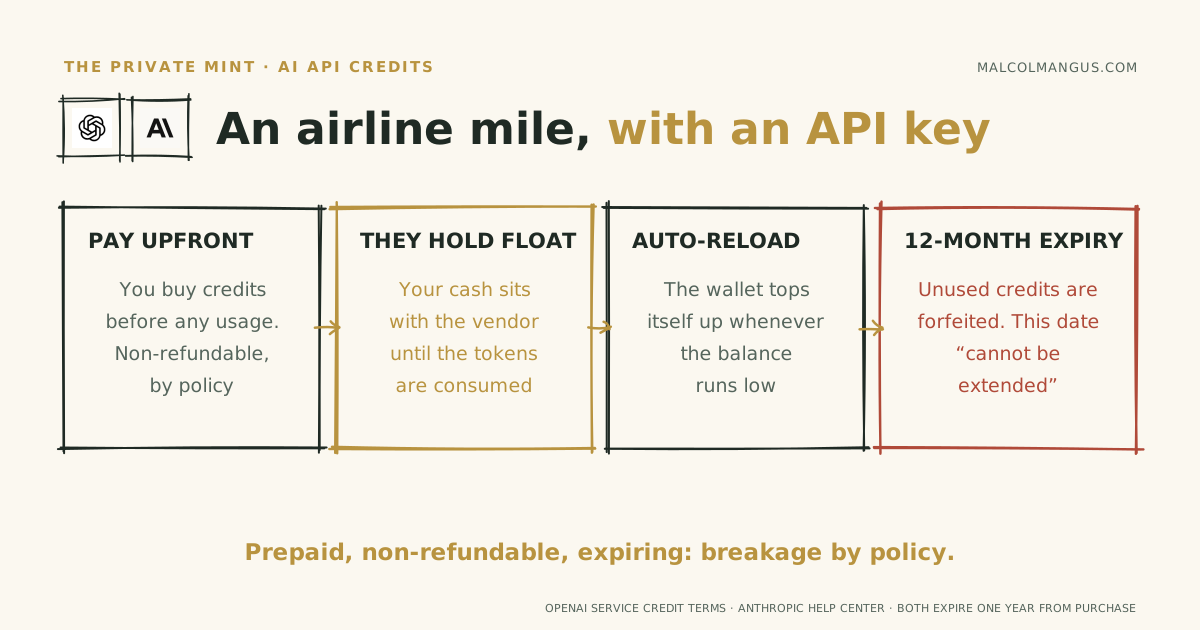
Most companies will never sell their currency to a bank the way Delta does. But the rest of the machine hides in plain sight on ordinary pricing pages: the gift card, the prepaid credit pack, the annual plan, and above all the API credit. The AI vendors run the mint almost verbatim. OpenAI's API runs on prepaid credits that expire twelve months after purchase, per its service credit terms, and Anthropic's help center says the quiet part in writing: "Credits expire one year from the purchase date, and this expiration date cannot be extended." Non-refundable, paid upfront, forfeited on expiry: that is breakage by policy, an airline mile with an API key. Auto-reload tops the wallet back up whenever the balance dips, so the float never drains.
The enterprise version adds the mechanic you would least expect a software company to own: monetary policy. Snowflake does not sell compute, it sells "credits," and it publishes the exchange rate itself in a consumption table it has revised dozens of times since 2021, per the Internet Archive's captures. The current edition prices an XS warehouse at one credit per hour, and a Gen2 warehouse at 1.35x the credits for the same size, so the credit's dollar price never moves while what it buys does. Its filings note that unused capacity generally rolls over only when you buy more. Databricks runs the same lever with multipliers: certain features burn DBUs at 2x, 3x, or 4x, and a million Claude output tokens costs about 1,100 DBUs, one private currency denominated inside another. This is devaluation, running inside enterprise software. And the industry has already run its devaluation experiment: when Unity tried to redefine its unit loudly, springing a per-install Runtime Fee on games already shipped, developers revolted until Unity canceled it outright. The lesson vendors internalized was not "don't reprice." It was "move the consumption table quietly."
And breakage scales up too, it just changes its name to "commit." Google's committed-use documentation is admirably blunt: you pay "regardless of whether or not you use those resources," and once purchased "you can't cancel or delete it." Azure commit shortfalls are simply kept; AWS bills you for the shortfall at year end. Flexera's annual survey now puts 29% of all cloud spend at waste, the first increase in five years, driven by AI complexity. From gift cards forgotten in drawers to seven-figure cloud commitments that lapse unused, the mint books the difference.
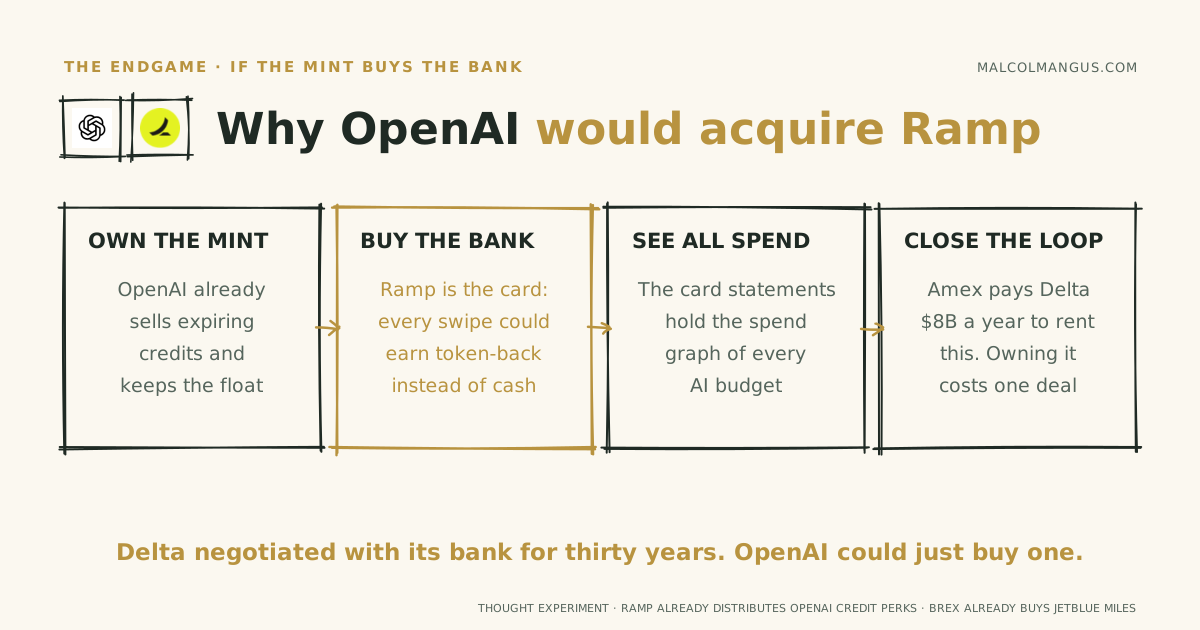
So the junior mint is less junior than it looks. If customers pay you before you deliver, in a unit you define, at a consumption rate you control, you are running the whole machine except its best customer: the bank, a third party that buys your currency in bulk to hand out to its own customers. And the bank is already circling. Brex points redeem into JetBlue's TrueBlue miles today, a corporate card buying an airline's currency just as Amex does. Both Brex and Ramp already hand out up to $2,500 in OpenAI API credits as perks, and Anthropic sits in Brex's partner catalog. The day a corporate card lets you redeem points for tokens, and pre-buys those tokens in bulk the way Amex pre-buys miles, the loop closes and OpenAI gets its Amex. Or the mint skips the courtship entirely and buys the bank. An OpenAI acquisition of Ramp sounds outlandish until you price it against this essay. Delta spent three decades negotiating with Amex over whose customer the cardholder was; owning both sides settles it in a term sheet. The combined machine would denominate corporate spend in tokens, swipe anywhere and earn compute instead of cashback, hold the float on the card and the credits at once, and read every AI budget in America straight off the card statements. And the customer fit is sharper than it looks: Ramp's base skews startup and growth-stage, exactly the population whose fastest-growing bill is model spend. Ramp's own index shows median business AI spend grew 4x in a year, and this July it shipped token-level spend tracking because AI had become its customers' fastest-growing cost. The bank is already counting the tokens. Cashback is generic. Token-back pays their biggest invoice. Amex pays $8 billion a year to rent Delta's currency. The endgame owner rents nothing.
The strategic question is whether your product is loved enough to be that currency, and the airlines show what full throttle looks like: a bank paying you $8 billion a year for the privilege of distributing your money.
Put simply: Your software vendors run the airline trick with prepaid credits that expire, annual contracts paid up front, and cloud commitments you lose if unused. Audit what you have prepaid, and if customers prepay you, know which levers you are already holding.
Two more mints, in other verticals
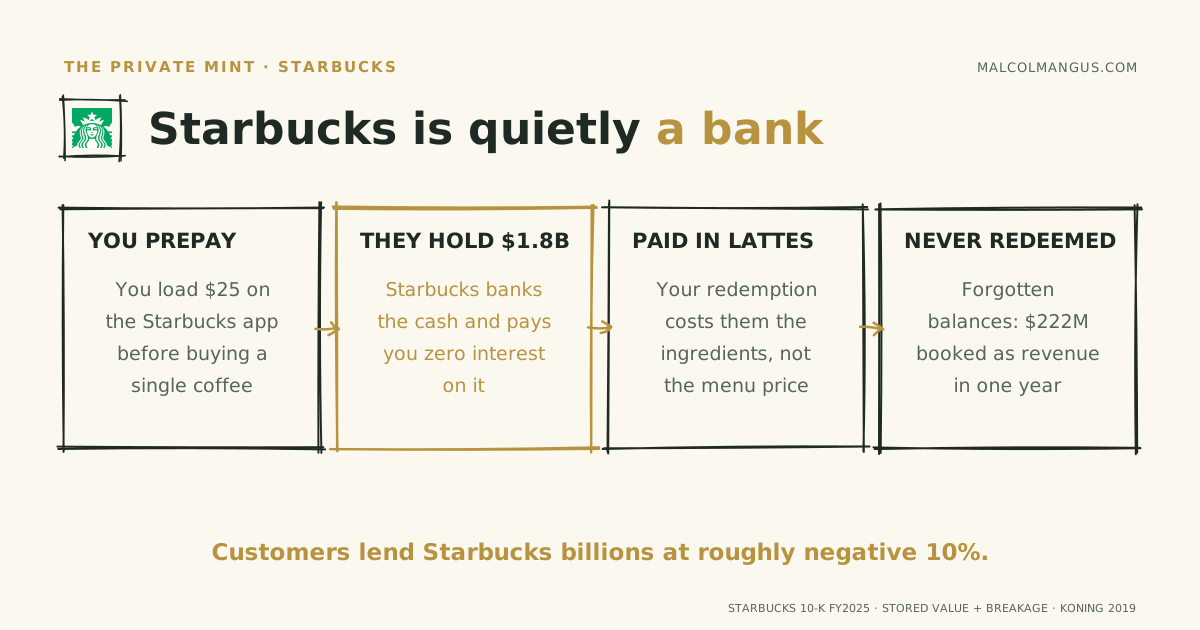
The coffee bank. Load the Starbucks app and you have made an interest-free deposit at an institution with no banking license. Starbucks held about $1.8 billion in stored value balances as of fiscal 2025, per its own filings, more than the total assets of most American banks, and recognized $222 million of breakage revenue in a single year. The monetary economist JP Koning put it best: with roughly 10% of balances forgotten, customers are effectively lending Starbucks money at around negative 10%. The chairman of Korea's Hana Financial put it plainly: "It will be fine to call Starbucks an unregulated bank, not a mere coffee company."
The child's central bank. Roblox sells its currency, Robux, to players at about 1.25 cents each. Creators who earn Robux inside the platform can cash out through the developer exchange at 0.38 cents, about a third of the retail rate. One company sets the buy price, sets the sell price, and keeps the spread on a closed-loop economy: an ecosystem where the currency is earned and spent only inside the issuer's walls. That loop is a structural moat, because a competitor cannot poach the balances, the creators, or the currency without building an entire economy first. The purchase page was once literally named the "Roblox Central Bank." At scale it is very real money: $6.8 billion of bookings in 2025, with $1.5 billion paid out to creators, per its filings. That spread is the platform's take.
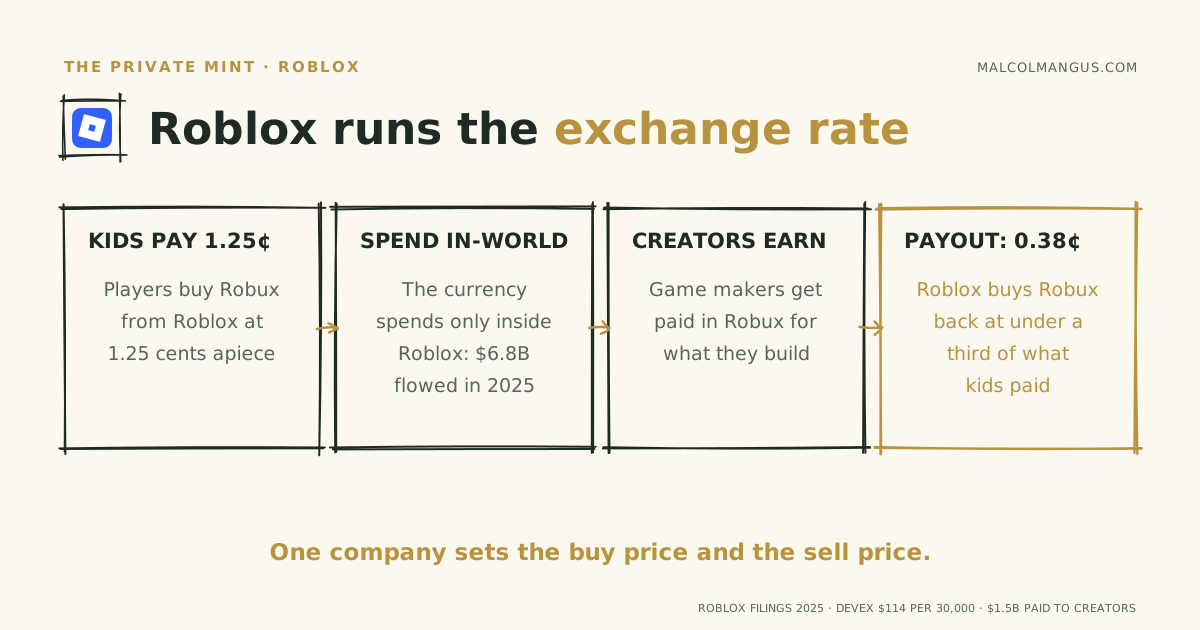
Put simply: Starbucks holds billions of customer dollars interest-free through its app, and Roblox buys its currency back from creators at a fraction of what players paid. If customers will hold a balance with you, you have a bank hiding inside your product.
The dark mechanic: your central bank is against you
Every currency has a monetary policy. When the issuer is a company, the policy has one mandate: the issuer's margin.
Airlines print miles faster than they release award seats, so the price of a seat in miles rises, which is inflation by another name; a guest post on Marginal Revolution worked through the monetarist arithmetic as early as 2005. Hotel programs quietly repriced award charts up 70 to 90% in three years. Delta tightened so hard in 2023 that its CEO admitted, "We probably went too far." Regulators have started using the vocabulary of money outright: the CFPB's director warned of "deceptive devaluation tactics that can plague these alternative currencies," and the Transportation Department opened a probe into the four largest airlines' programs that names devaluation explicitly.
Hold a company's currency and you hold an asset whose central bank profits when it shrinks. That tension is the business model, and it is also its regulatory ceiling.
Put simply: A company that runs its own currency profits by quietly making that currency worth less over time; your points buying less each year is by design. Never hold large balances in someone else's private money.
The graveyard
If minting money were easy, everyone would do it, and in 2017 everyone tried: thousands of companies issued tokens in the ICO boom, and nearly all of that private money went to zero. The failures share one autopsy. A currency needs a peg: a product people persistently want, redeemable on demand at the issuer's marginal cost. Miles are pegged to seats, stars to lattes, Robux to games. A token pegged to a whitepaper is pegged to nothing. S&H Green Stamps, the loyalty currency that once claimed to print three times the Post Office's volume, died when discounters made its peg, catalog merchandise, cheaper in cash; when the successor program closed in 2020, every unspent stamp went to zero.
Even a working mint dies when its peg weakens. Canada's Air Miles coalition lost its anchor grocers, filed for bankruptcy protection, and in 2023 its own bank sponsor bought the entire program for $160 million US, roughly a week of Delta's Amex income for a currency that once sat in two-thirds of Canadian households.
So the conditions for a working mint are strict: a product with durable demand to back the currency, spare capacity or zero-marginal-cost goods to settle in, enough trust that people will hold your money, and a regulator's tolerance. Miss any one and you are not a mint, you are a coupon printer.
Put simply: Private money only survives while it is backed by something people genuinely want, like seats or lattes. Before minting anything, be sure the thing backing it has durable demand, or you are printing coupons.
The cousins: minting the customer instead of the currency
The currency issuers all work the liability side of the balance sheet: they owe you the seat, the latte, the Robux, and they profit on the spread, the float, and the forgetting. There is a second family of mints that owes you nothing at all. These companies give the consumer product away at or below cost because using it manufactures an asset, and the real customers are the businesses that buy the asset.
Robinhood made the trade free and sold the traders. At its 2021 peak, 77 cents of every revenue dollar came from routing customer orders to market-making firms like Citadel Securities, which pay for the privilege of taking the other side; even in 2025, after years of diversification, selling order flow was still most of the revenue. Zillow gives you every home's value and turns your browsing into address-level buyer intent; for years its Premier Agent business, selling that intent to real-estate agents, was two-thirds of the entire company's revenue. Credit Karma hands out free credit scores and rents the resulting financial X-ray to lenders, a business Intuit now reports at $2.3 billion a year. NerdWallet is the same machine with nothing else attached: essentially every dollar of its $837 million in 2025 revenue is a fee for handing a reader to a bank. Reddit spent twenty years hosting humanity's conversations for free, then disclosed $203 million in contracts selling the corpus to Google and OpenAI as model training data. And the grocery apps discovered their real crop is the shelf: Instacart's advertising line, CPG brands buying placement in your cart, runs near 30% of its revenue and roughly the size of its entire net income, while Amazon charges brands $56 billion a year and climbing in rent for a shelf that only exists because you searched.
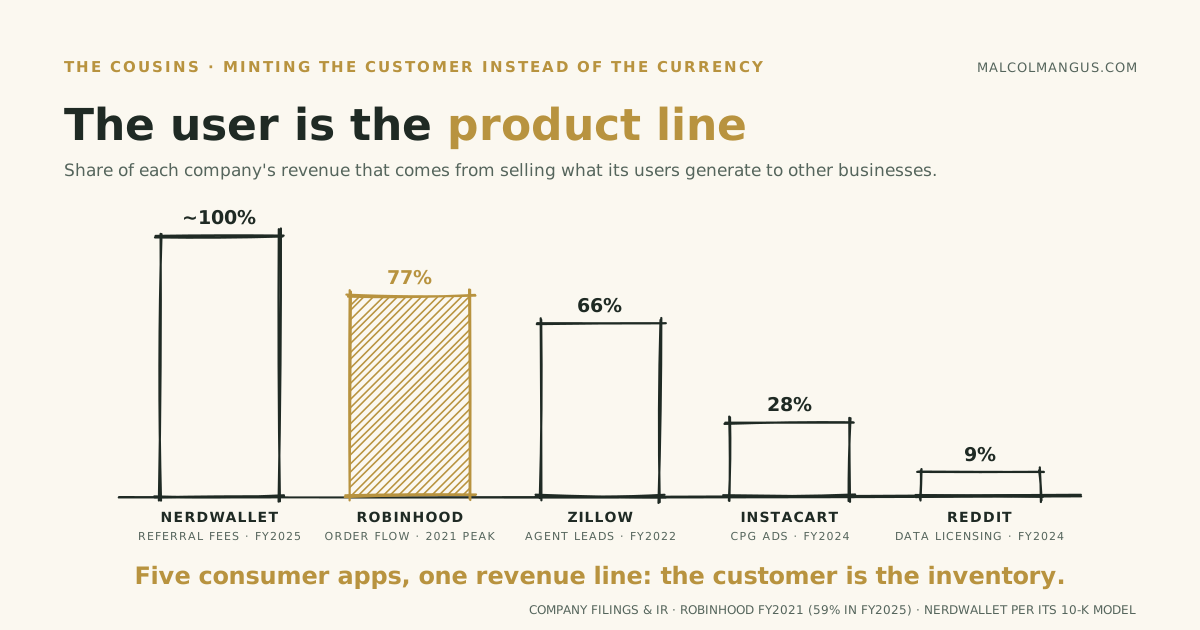
The mechanics differ from seigniorage in one important way. A mile is a liability: Delta must eventually fly you somewhere, and the mint's margin lives in redemption math and breakage. Order flow, intent, corpora, and shelf space are byproducts: nobody redeems them, so the B2B line is nearly pure margin on an asset the consumer manufactures for free while consuming the subsidy. What the two families share is the tell: when a consumer product is priced at or below cost and the company is thriving, the product is the mint, and you should ask who the currency is being sold to. The constraint is also shared. These machines run on users not minding, and they wobble when users notice, as the congressional hearings over order flow and the Reddit data revolt both demonstrated.
Put simply: Some companies give the product away because you are the inventory: your trades, searches, and posts get sold to other businesses at nearly pure margin. Your own product's data exhaust may be worth more than you think, to someone.
The interest-free loan from your customers
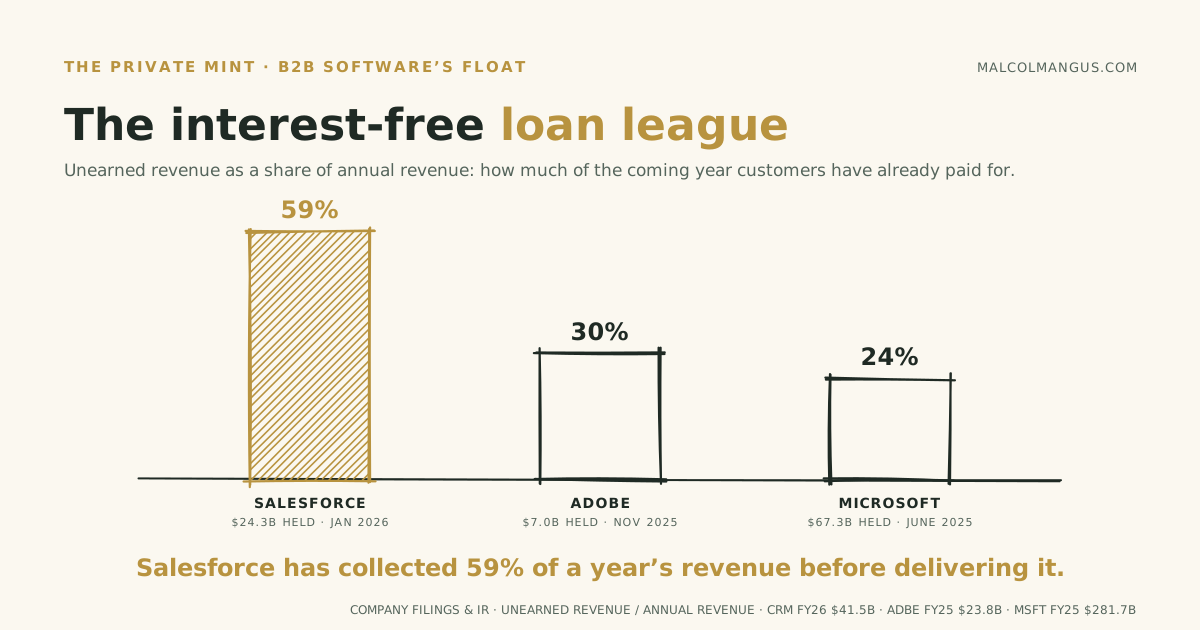
Back on the liability side, the enterprise float is the part that would make Buffett smile, and its real name is cash flow. Prepaid contracts land in operating cash flow the day they are signed, months or years before the revenue is earned, so a credit-and-commit business generates cash faster than it generates income and finances its own growth with customer money. Microsoft holds $67 billion in unearned revenue, customer cash collected for software not yet delivered. Salesforce holds $24 billion, which is 1.7 times what its customers actually owe it in receivables; last year it billed $45 billion against $42 billion of recognized revenue, and the swelling of the unearned balance alone added $2.9 billion to operating cash flow. Adobe carries about $7 billion, per its filings. This is why SaaS vendors discount annual prepay so aggressively. The venture capitalist Tomasz Tunguz described the tactic with a candor the airlines never manage: customers are "lending the startup money at effectively zero interest." The industry politely calls it deferred revenue. The street name is a cash advance from your own customers.
The profit pools essay maps where an industry's money settles. This one leaves the sibling question for your own business: what would it mean to denominate your most loyal customers' relationship with you in a currency you issue? Answer carefully. You might be a bank.
Put simply: Customers who pay a year in advance are lending the company money at zero interest, which is exactly why software companies discount annual plans. Prepay is never generosity on either side; it is financing.

Malcolm Angus
I'm a hands-on data product manager. I write about data products, moats, flywheels, and business strategy, the loops that make companies harder to catch.

The charts in this essay are free to reuse with credit.