Show notes
Show notes: One title, four companies, four different jobs
2026-08-02
Listen to these notes
Video: The Future of Forward Deployed Engineering, South Park Commons.
The other FDE notes are single voices. This one is a South Park Commons panel with four people who are each building the function right now at very different companies: Calvin, who built Ramp's forward deployed team; Jason, the founder-CTO of Nominal, a Palantir alum; Howard, co-founder of Dataland, another Palantir alum who came up through the echo and delta teams; and Colin Jarvis, who runs it at OpenAI. The value of a panel is not depth on any one point, it is triangulation: what four dissimilar companies independently agree on is probably real, and where they openly disagree is where the future is genuinely undecided. This complements the deep single-author sources, the OpenAI operator report, the Palantir playbook, and the skeptic, by putting them side by side.
The same title, four different mandates
The first thing the panel makes obvious is that "forward deployed engineer" describes four different jobs at these four companies. At Ramp, Calvin calls it a sword and a shield: the team exists to win enterprise deals and to protect the core product teams from being dragged off their roadmap, and he is refreshingly blunt that the motion is "a little less grandiose," barely an AI story, sometimes not even on-site. At Nominal, it is about empowering the customer's mission and finding the bleeding edge of what the product should become. At Dataland, it is bespoke agent work for heterogeneous enterprises, treated as the lifeblood of the company. At OpenAI, it is the tip of the spear, pushing both adoption and the model's frontier at once. One title, four mandates, and any advice about "the FDE role" that ignores which of these you mean is close to useless.
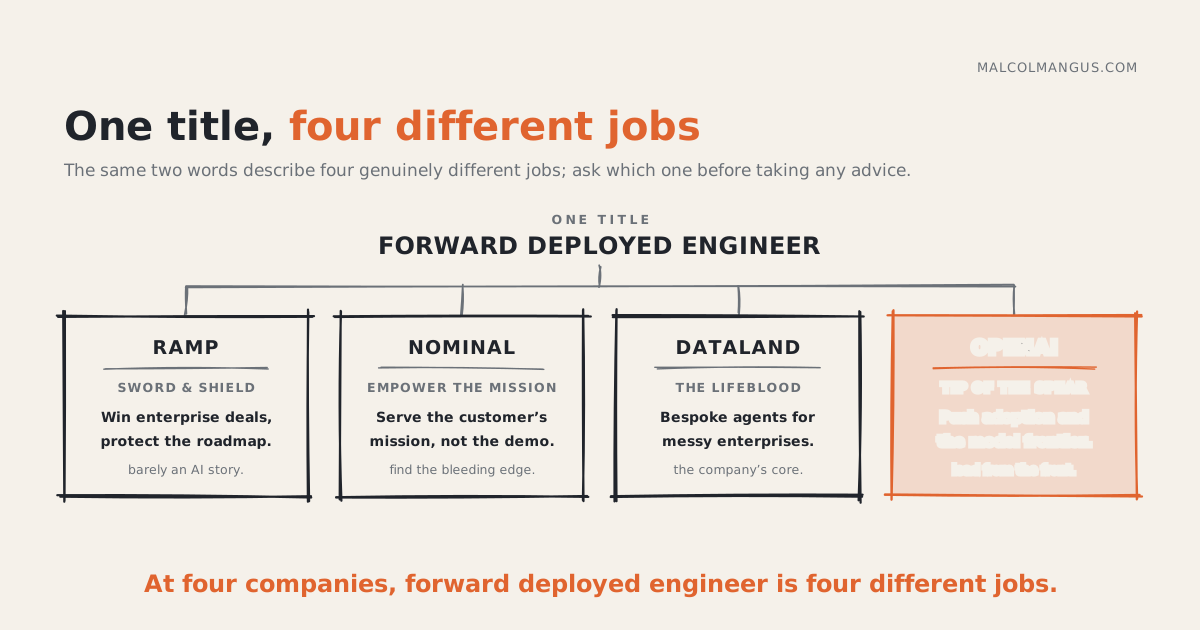
Put simply: forward deployed engineer is not one job. At Ramp it defends the roadmap and wins deals, at Nominal it finds the product's edge, at Dataland it is bespoke agent work, at OpenAI it pushes the model frontier. Before you copy anyone's playbook, establish which of these mandates you actually have.
A spectrum from roadmap defense to frontier push
Line the four up and they form a spectrum of ambition. At one end sits Ramp's deliberately modest motion: low-AI, often over Zoom, stretched so thin that Calvin says they have "only ever had like a third of an FDE" on a customer, whose job is mostly to keep enterprise demands from drowning the core teams. At the other end sits OpenAI, putting as many as fifteen forward deployed engineers on a single account and using the work to move the model itself. Nominal and Dataland fall in between. The lesson is not that one end is right. It is that the correct intensity of the motion is set by your business, and importing OpenAI's fifteen-person frontier push into a company that needs Ramp's thin defensive shield would be a catastrophe, and vice versa.
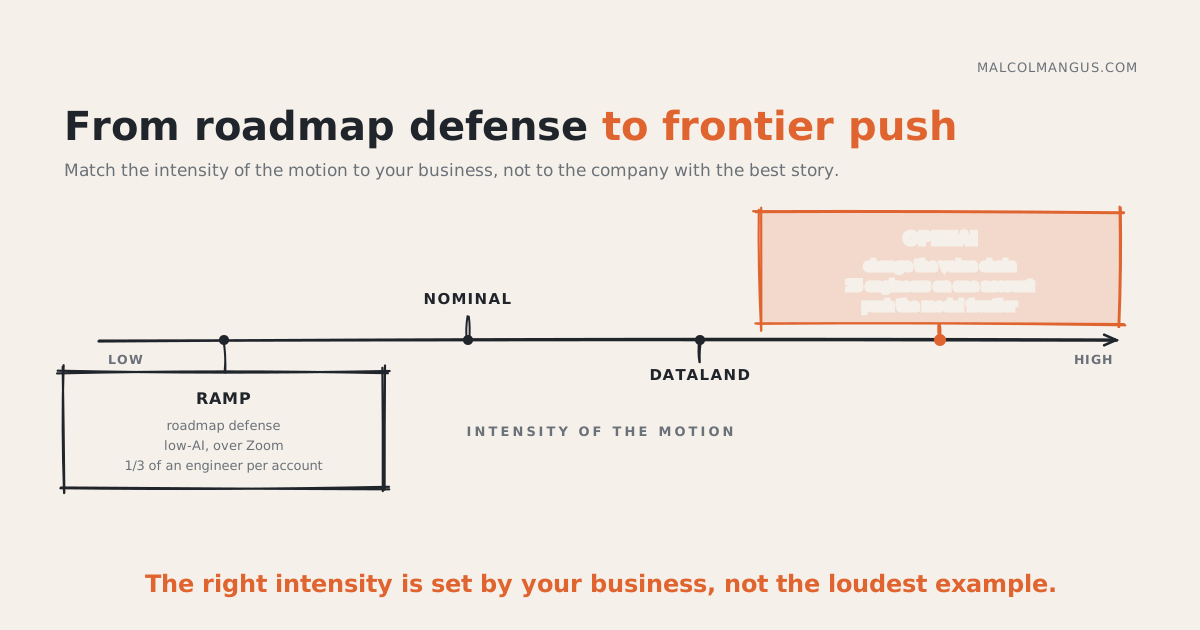
Put simply: the forward deployed motion runs from Ramp's thin, defensive, barely-AI shield to OpenAI's fifteen-engineer frontier push, with others in between. Match the intensity to your business; copying the most ambitious version into a company that does not need it will sink you.
When the model gets good enough to eat your product
The most 2026 idea on the panel is a live one from OpenAI. Six months ago the plan was to build roughly fifty small products out of forward deployed work. Then Codex got good, and now the team asks of every proposed product, "can this just be a Codex extension?", and the answer killed about eighty percent of them. This is the forward deployed engineer's version of the rising tide: the more capable the base model gets, the more of your painstakingly-built primitives it simply absorbs, which is not a threat so much as a promotion. It frees the engineers from the bottom half of the work, the plumbing and the evals the model can now be trusted to handle, and pushes them up the stack toward the genuinely novel problems, like moving a semiconductor account from accelerating software to designing the physical chip.
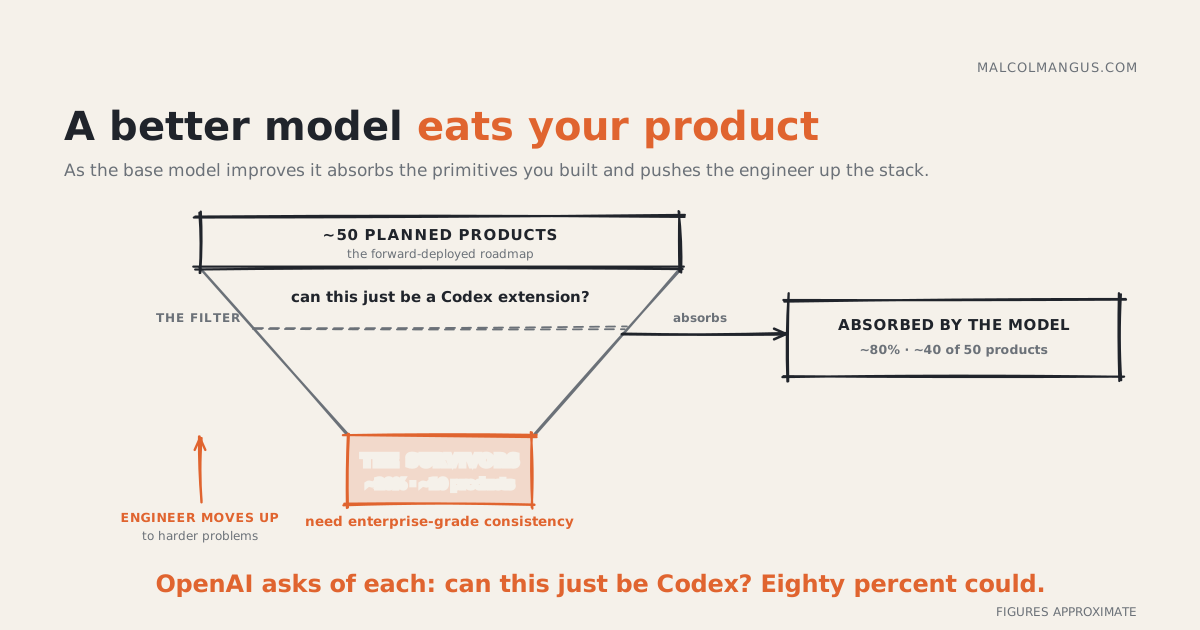
Put simply: a better base model absorbs the products forward deployed engineers build, so OpenAI now asks whether each one could "just be Codex." Roughly eighty percent could. That is not a threat, it frees the engineer from plumbing and pushes them toward the harder, still-novel problems.
Which way the addiction runs
Everyone in the forward deployed world worries about becoming a consulting shop, but the panel splits interestingly on the mechanism of the danger. Colin frames it the usual way: services revenue is "a drug you can't get off of," and it is protected at OpenAI only because the commercial arm is not the power center, product and research are, so the gravity pulls toward self-serve. Jason flips it: the more dangerous addiction runs the other way, where the customer becomes hooked on the forward deployed engineers themselves, so that when you try to pull them off, "they just fire you." Howard's counter is the sharpest line of the session: if the customer would fire you for reducing headcount, "you haven't done the value engineering," meaning the value was living in the people, not the product. The de-risking tactics differ by company, Ramp stretches a third of an engineer across accounts and never puts two on one customer, Nominal and Dataland run many accounts per head, and a general rule floated is to cap tenure on an account, whether that is six weeks or twelve to twenty-four months.
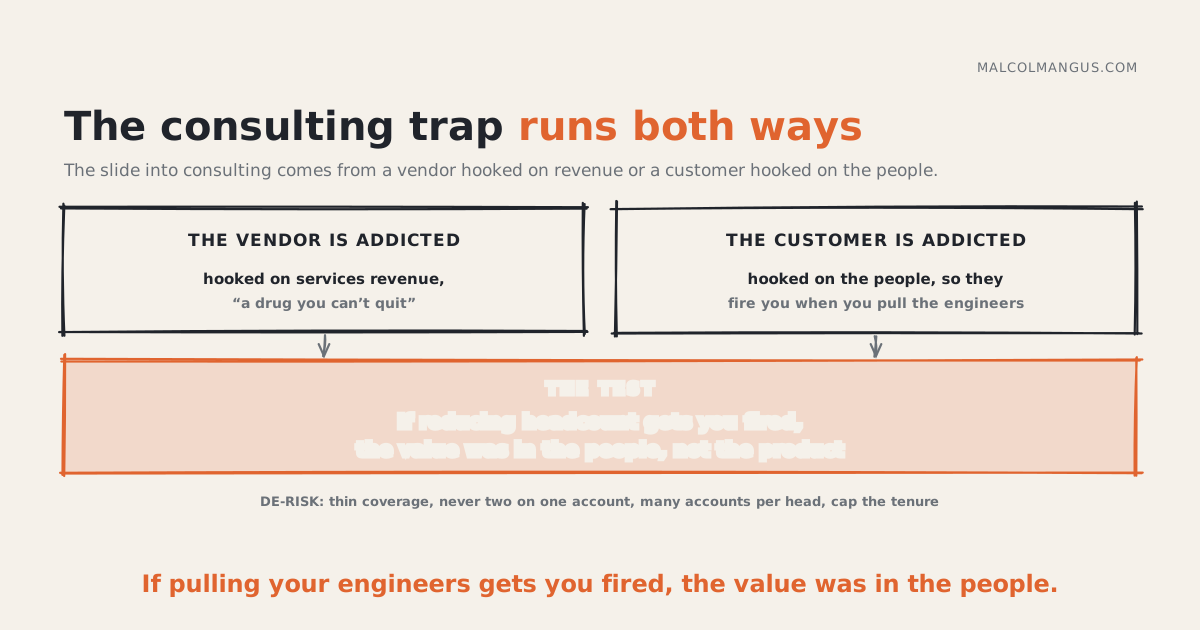
Put simply: the slide into consulting can come from the vendor getting hooked on services revenue or from the customer getting hooked on the people. The test that separates a product company from a services shop: if pulling your engineers off the account would get you fired, the value was in the people, and you have not built a product.
The one real disagreement: collapse or specialize
Prompted by Palantir's classic split between echo (the embedded analysts) and delta (the engineers), the panel divides on where AI takes the org, and this is the genuine open question. Howard predicts collapse: as agents absorb more of the grunt work, the roles fold into a single person practicing "radical ownership," one human able to hold the whole context, business and technical, in their head. Colin and Jason predict the opposite, specialization: OpenAI is adding domain experts inside its vertical teams, actual chip-verification engineers and life-science scientists, and Nominal splits into mission-operations, mission-development, and account roles. Both cannot be right, and which way it goes will reshape who gets hired for this work. It is the clearest place the future of the role is still being written.
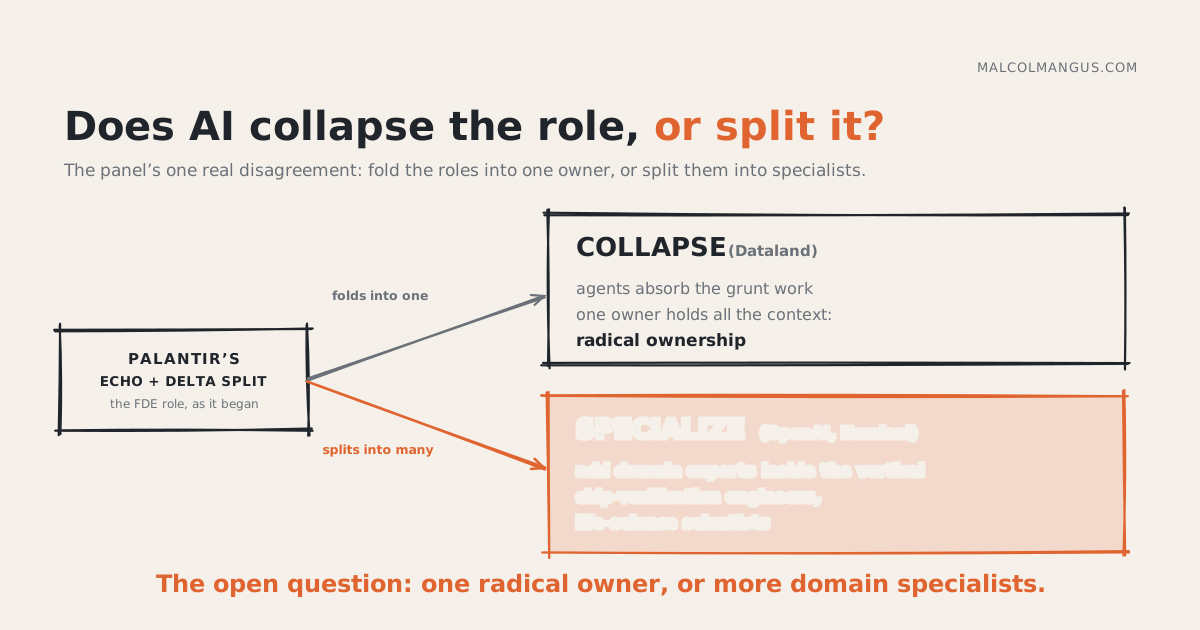
Put simply: the panel agrees on most things but genuinely splits on the future org. Dataland says AI collapses the echo and delta roles into one radical owner; OpenAI and Nominal say it splits into more specialists with real domain expertise. Which one is right will decide who gets hired, and it is not settled.
Takeaways
- One title, four jobs. Ramp runs a defensive sword-and-shield, Nominal finds the product's edge, Dataland does bespoke agents, OpenAI pushes the model frontier. Establish which mandate you have before copying anyone.
- The motion runs on a spectrum of intensity, from a third of an engineer over Zoom to fifteen on one account. Match it to your business, not to the best story.
- A better base model eats the products forward deployed engineers build. OpenAI now asks "can this just be Codex?", which killed eighty percent of a planned slate and pushed the engineers up the stack.
- The consulting trap runs both ways, vendor hooked on revenue or customer hooked on the people. The test: if pulling your engineers off would get you fired, the value was in the people, not the product.
- Where four dissimilar companies independently agree, recurring value on a fixed cost as the software test, build-the-roadmap-feature-not-the-custom-one, hiring for outcome over form, the signal is strong.
- The one genuine disagreement is the future org shape: collapse into one radical owner (Dataland) or split into domain specialists (OpenAI, Nominal). That question is still open, and it decides who gets hired.