Show notes
Show notes: The hottest AI job is an old job, renamed
2026-08-02
Listen to these notes
Video: Forward Deployed Engineer is The Hottest AI Job, Jean Lee.
Two hundred thousand dollars is the average compensation Jean Lee quotes for the newest, hottest role in AI, the forward deployed engineer, with the highest reported package over six hundred and fifty thousand at a company like OpenAI according to levels.fyi. Lee has spent twenty years in tech, as a software engineer and engineering manager at companies like Meta and earlier as a technical consultant at IBM, and her whole point is that she has watched this exact movie before. This is the skeptic's companion to the model as its inventors describe it: where that talk explains why the motion works for the company, Lee asks a colder question for the person thinking about the job. Is this a durable new kind of work, or a temporary title that will burn out fast?
What a forward deployed engineer actually does
Palantir coined the title and companies like OpenAI adopted it. A forward deployed engineer is a technical expert who works on site with the customer, and the job is to connect the shiny, out-of-the-box AI product to the customer's messy, real-world problems. One FDE lead in Lee's clips describes it as a zero-to-one team: they come in and break the back of the difficult, novel problems at the root of what the customer is trying to do. The people doing it are careful to say it is not consulting and not sales. The distinction they draw is that sales-led discovery talks to the customer from the outside, while forward deployed discovery figures out what the product needs next right where the customer is actually using it, and that feedback improves the core product for everyone else. So the role gets described as part engineer, part consultant, part product manager, all working out of the customer's office.
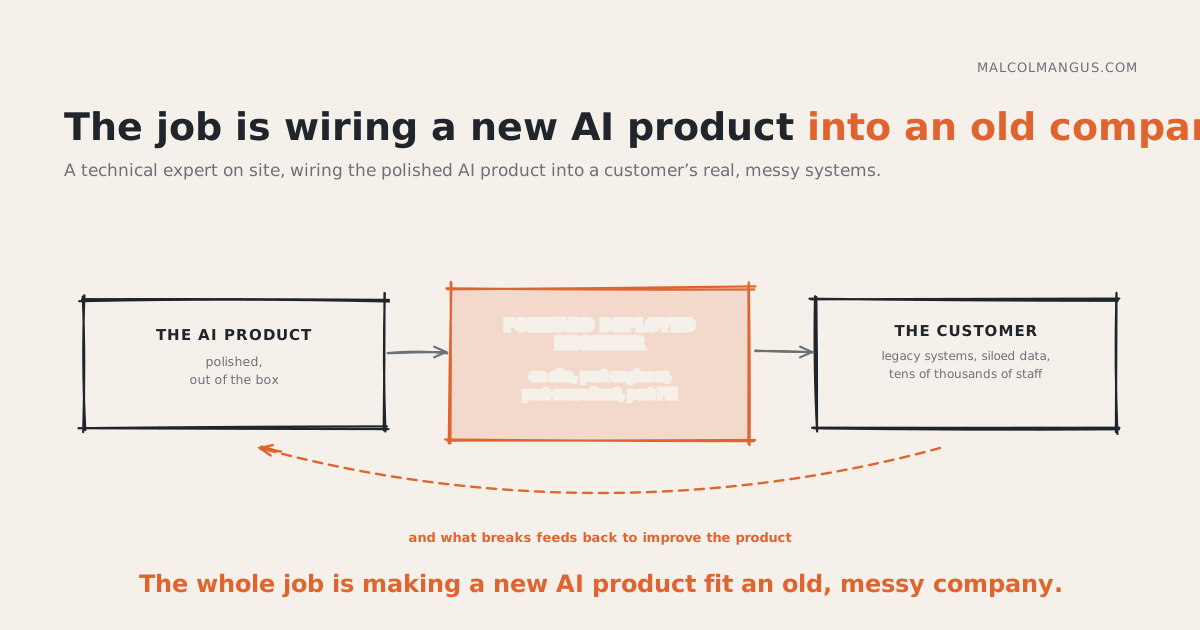
Put simply: a forward deployed engineer is the person who stands between a clean AI product and a messy real company and makes the two fit, then hands what they learned back to the product team. It is real, valuable work, and it is the honest core under all the hype.
We have seen this movie before
Lee's twenty years give her a pattern to match against, and the match is unkind. Just a year or two ago the title everyone chased was prompt engineer. There were courses from gurus, news stories claiming salaries as high as three hundred and seventy-five thousand, and Sam Altman himself tweeting that writing a really great prompt for a travel persona was an amazingly high-leverage skill. People rushed to add prompt engineer to their LinkedIn and their resumes to catch the wave. Today you will struggle to find many prompt engineer jobs. The skill did not vanish, it dissolved into every other job: engineers, marketers, and product managers all write prompts now, so it became a skill you use, not a title you hold. Go back further and the same shape appears. In the 1980s, before the internet was mainstream, the valuable information lived in expensive paid databases, so companies hired specialists called online searchers who knew exactly where to look and how to write the commands to pull the data out. It was a hot job, right up until search got easy enough that a grandmother could Google from her bed, and then it simply disappeared. It was a bridge, necessary until it wasn't.
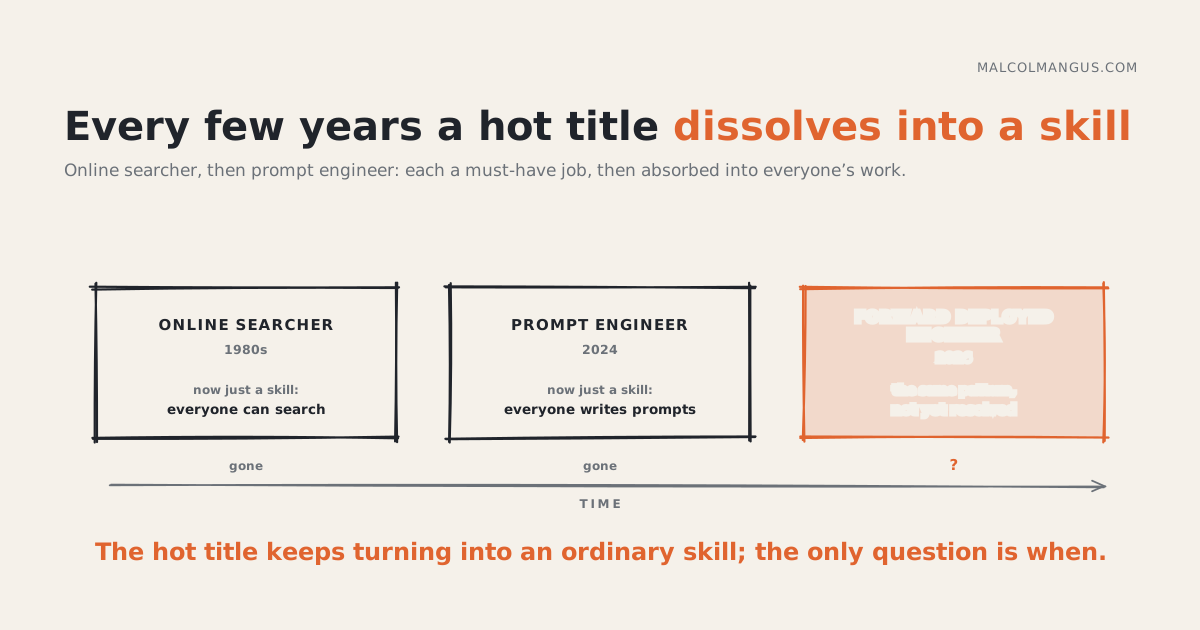
Put simply: the tech industry keeps minting a hot new title, watching everyone pile in, and then absorbing the skill into ordinary jobs until the title fades. Prompt engineer and online searcher both ran that cycle. The open question is whether forward deployed engineer is any different.
The job already existed
Here is the part that should give a job seeker pause. For decades companies have employed technical people who work directly with customers, and they were called sales engineers, or solutions architects, or technical account managers. The job was always the same: understand a customer's need, design a solution using your company's product, and help them get it set up. Put a solutions engineer job description next to a forward deployed engineer job description and they are almost identical. Both work with clients, both are deeply technical, both sit between the product team and the customer. So the honest question is why, all of a sudden, this old job needs a brand new name.
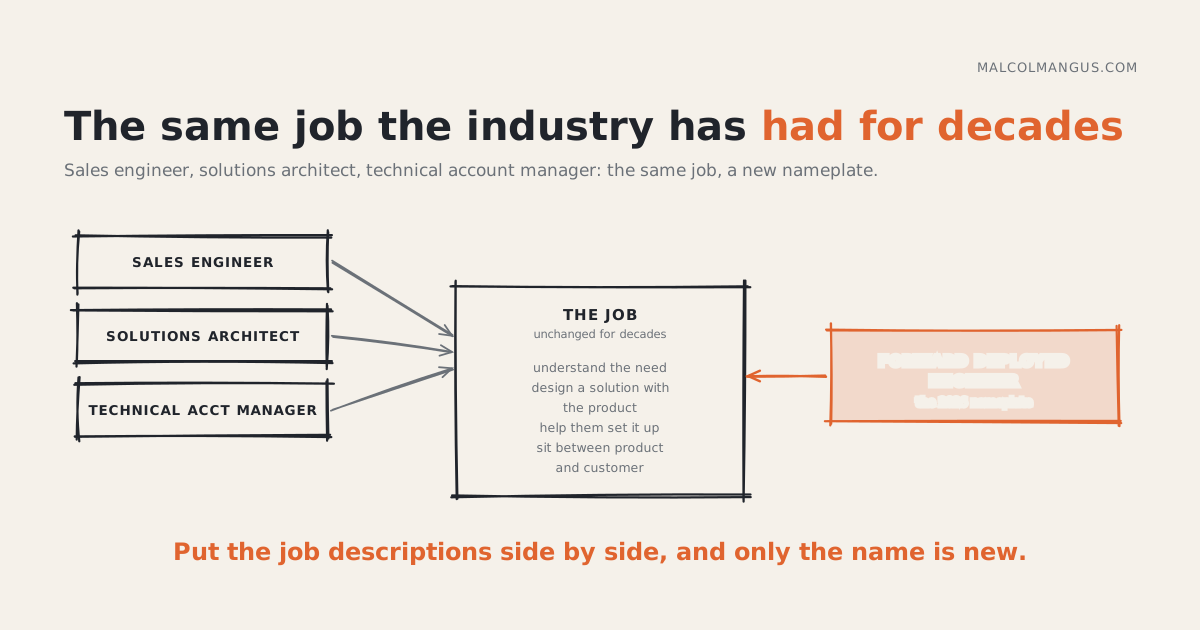
Put simply: the forward deployed engineer job description is nearly word for word the sales engineer, solutions architect, and technical account manager roles the industry has had for decades. The work is old. Only the name is new, which means the name is doing something on purpose.
Why the name says "engineer"
Lee's sharpest point comes from a Marc Andreessen interview. Andreessen asks the host how many software engineers he knows who work on weekends, and the answer is almost all of them. Then he asks how many salespeople work weekends, and the answer is zero. Nobody loves sales so much that they do it for free on their own time. That gap is the whole trick. The name forward deployed engineer does two things. Forward deployed borrows military language to sound important and exciting. And engineer, the more important half, is bait: it makes a customer-facing job legible and attractive to technical people who would never in a hundred years apply to something with sales in the title. The name is not describing the work more accurately. It is recruiting.
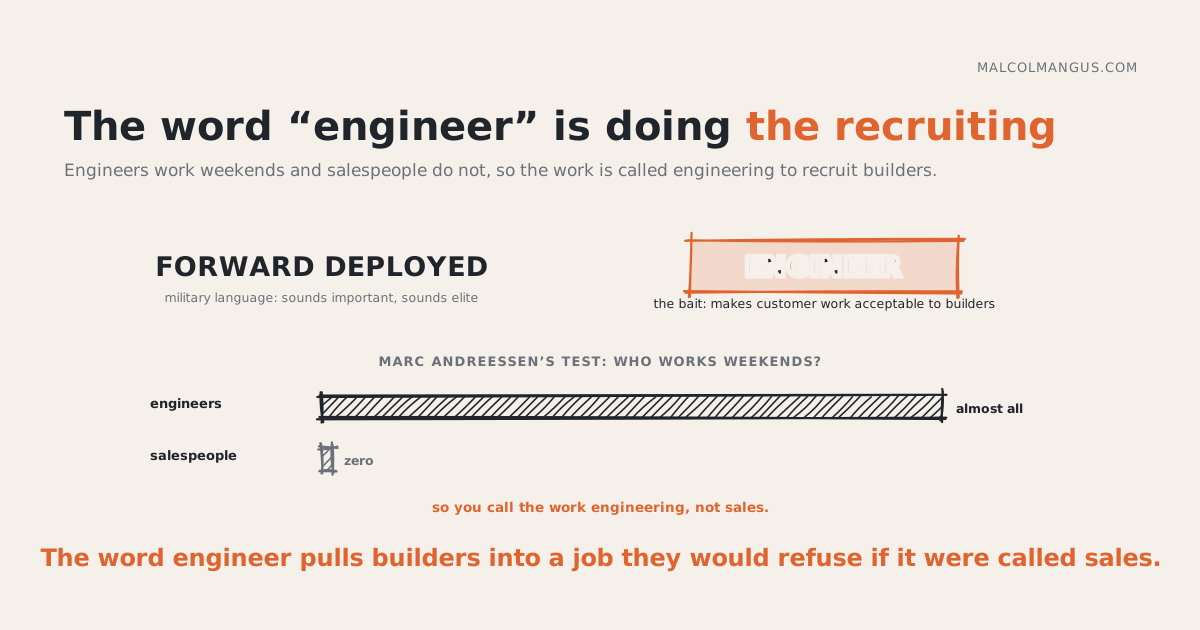
Put simply: engineers will grind on weekends and salespeople will not, so if you need technical people to do customer-facing work, you do not call it sales, you call it engineering. The word engineer in the title is a recruiting device aimed straight at builders.
The real reason the role exists
Underneath the naming is a genuine business problem, and Lee names it from experience, having been a technical consultant at IBM. Most AI products are new, and companies like Palantir are selling them into very large organizations with tens of thousands of employees and many divisions and years of tangled in-house systems. Those customers cannot just buy an out-of-the-box tool and be done, they need serious help wiring it into the mess. That work is essential, but it is exactly the work a company's best engineers do not want: they would rather build the core models and flagship products than fly to a bank in Ohio to connect someone's data. So the company invents an important-sounding, high-paying title to make the unglamorous customer work appealing to top talent. In Lee's words, they are artificially increasing supply. It is, she is quick to add, a very smart business strategy.
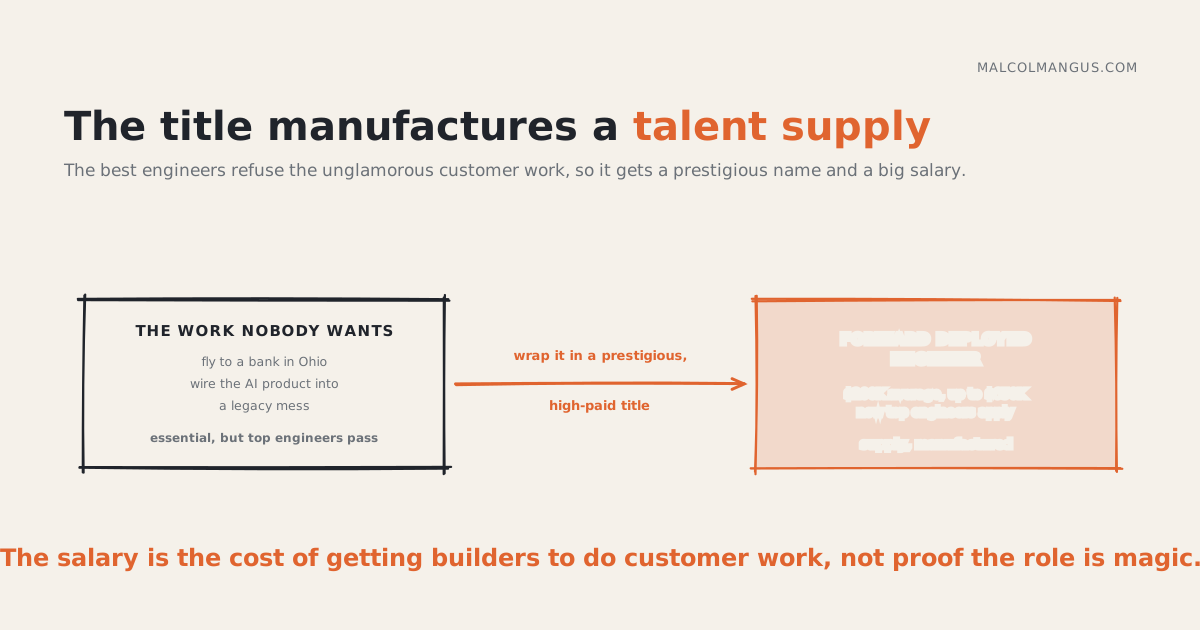
Put simply: the companies have work their best engineers refuse to do, so they reprice it with a prestigious title and a large salary to manufacture a supply of willing technical talent. The high pay is not proof the role is magic. It is the cost of getting builders to do customer work.
What it means for your career
None of this means the job is fake. It is a real role, it pays very well, and for the right person it is a great fit. Lee's warning is only against following the trend blindly. In three to five years the title may not be in demand: it could be renamed, or wider AI adoption could shrink the need, or smarter models could require less human hand-holding. What lasts is not the phrase forward deployed but the skill underneath it, using a complex technology to solve a real business problem for a customer. That skill has always been valuable and always will be, whether it is called sales engineering, solutions engineering, or some title nobody has coined yet. This is the same reason I have argued that the deployment work itself, not the model, is the moat. So before chasing the pay, ask whether the work fits you. If you love talking to people, solving business problems, and traveling, it is a genuinely good path. If your passion is the code and the architecture and going deep, it probably is not. Those are just different tracks, with no right answer.
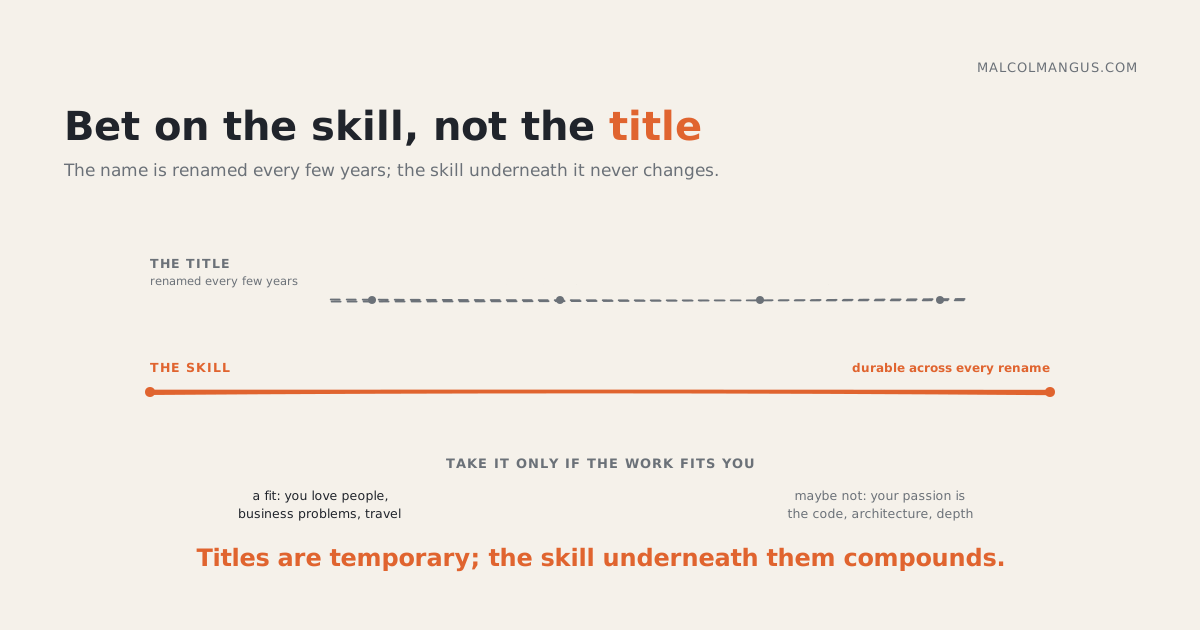
Put simply: job titles are temporary and the forward deployed engineer label may not outlast the decade, but the underlying skill, turning a hard technology into a solved business problem for a customer, is permanent. Chase the skill and the fit, not the title and the salary headline.
Takeaways
- Forward deployed engineer is a real, well-paid role, quoted at about two hundred thousand on average and up to six hundred and fifty thousand at a company like OpenAI, but the pay is the headline, not the whole story.
- The work, connecting a new AI product to a customer's messy real systems on site, is the honest core: part engineer, part consultant, part product manager.
- The industry keeps minting hot titles that dissolve into skills. Prompt engineer and the 1980s online searcher both ran the cycle; forward deployed engineer may be next.
- The job description is nearly identical to the decades-old sales engineer, solutions architect, and technical account manager roles. The work is old; only the name is new.
- The name is a recruiting device. Engineers work weekends and salespeople do not, so companies call customer-facing work engineering to attract builders who would never take a sales job.
- The role exists to solve a supply problem: top engineers refuse to fly to a bank in Ohio, so a prestigious title and high pay manufacture the willing supply. Smart strategy, not magic.
- Bet on the durable skill, using complex technology to solve a customer's business problem, not the temporary title. And take the job only if the customer-facing, travel-heavy work actually fits you.