Show notes
Show notes: The title means nothing, and that is the point
2026-08-02
Listen to these notes
Video: The Dirty Secret of Forward Deployed Engineering, Natalie Meurer (Sierra), AI Engineer.
Natalie Meurer runs agent engineering at Sierra, Bret Taylor's AI-agent company, and before that spent five years at Palantir, from 2016 to 2021, as a forward deployed engineer in the origin years of the title. So when she stands up at the AI Engineer conference and says the dirty secret is that forward deployed engineering does not really exist, she is not a skeptic throwing stones from outside, she is an insider who has done the job, hired for it for two and a half years, and watched the word lose its meaning. This is the candid counterweight to the trilogy: where Bai supplies the model, McGrew the operator's playbook, and Jean Lee the skeptic's warning, Meurer sits in between, arguing the title is empty and the job is nonetheless everywhere. Her thesis, stretched between two lines: the term "is meant to describe so many things that it sort of means nothing," and yet "it's sort of the hottest job in AI."
The job was never the helicopter
Start by killing the myth, because Meurer does. The fantasy of the forward deployed engineer is someone parachuting out of a helicopter to fix a runtime issue mid-air, the heroic technologist saving the customer in real time. The reality of the early Palantir job was the opposite of glamorous. Platform stability was the bulk of it: keeping on-premise instances alive, and getting the 2 a.m. email that the customer's deployment is down and you need to go in. Her actual onboarding project was deploying the software on an EC2 instance. The work that would later be dressed up as elite problem-solving started as DevOps babysitting, and pretending otherwise is the first dishonesty.
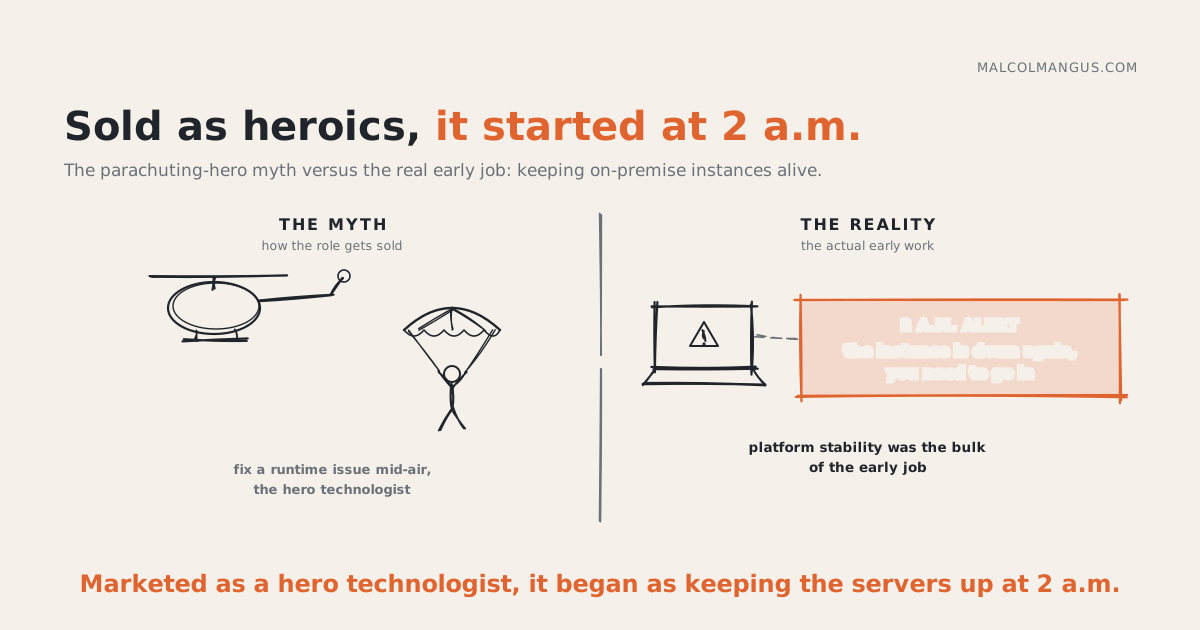
Put simply: the forward deployed engineer was marketed as a parachuting hero and began as a pager-carrying operator keeping on-premise instances from falling over. Any honest account of the role starts by admitting the unglamorous origin.
The jobs to be done only ever accumulated
Here is Meurer's most original contribution, and it is a piece of history no other source gives. Trace the role at Palantir across the years and you do not find eras that replace one another, you find layers that stack. Platform stability and DevOps came first, around 2008. Then data integration and the ontology, around 2012. Then custom solutions and dashboards, around 2016. Then the platform itself plus customer enablement, around 2020. Then the agent and language-model work of today. The trap is to read these as a swim-lane where each phase ends and the next begins. What actually happened is that the total set of jobs to be done increased over time: the new work landed on top of the old work, which never went away. This is why she says there is a particular vintage to every forward deployed engineer, the way there is to a wine. Ask which layers someone learned the job in and you learn what they actually mean by the title.
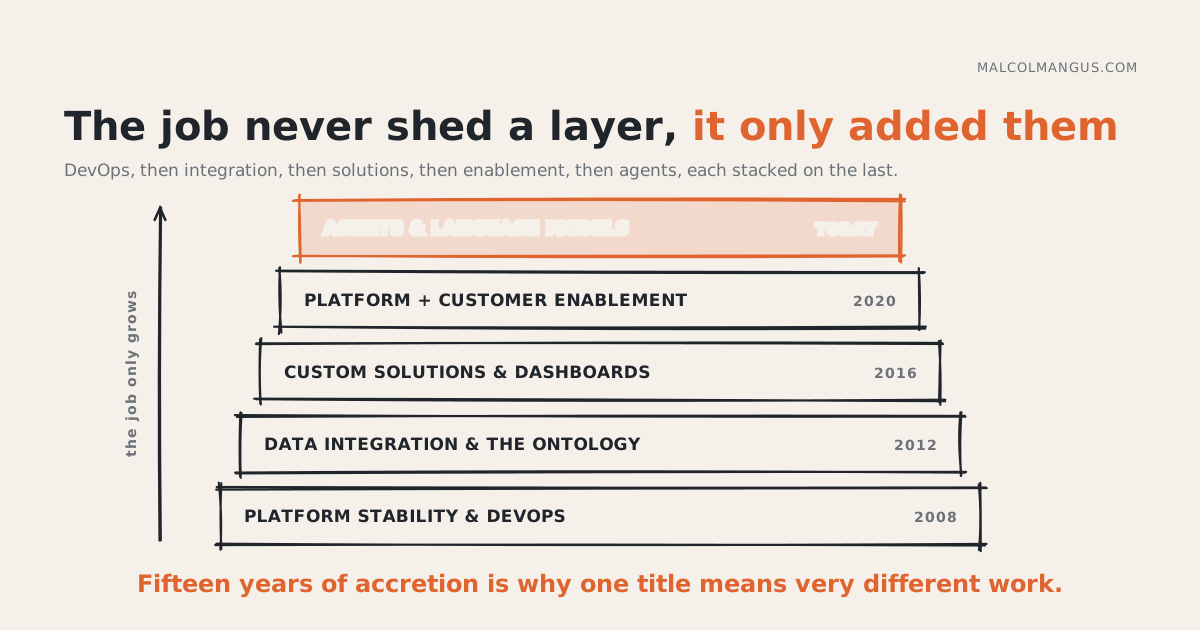
Put simply: the forward deployed role did not evolve by swapping one job for the next, it grew by piling new jobs on top of old ones that never left. Fifteen years of accretion is why two people with the same title can mean completely different work; ask what vintage of the role they come from.
Combine the job postings and you get a person who does not exist
If you want proof the title is incoherent, Meurer says, do the exercise of combining every forward deployed engineering job posting into one. You get a requisition that asks for a staff engineer of eight years with six years of direct sales experience and four years as a solution architect, and probably a former teacher on top. Nobody is that person. She has been hiring for the role for two and a half years, and her blunt conclusion is that the title either does not exist or it exists too much, which are the same problem seen from two sides. A word asked to mean everything ends up meaning nothing, and that is the dirty secret said plainly: the market is frantically hiring for a role it cannot define.
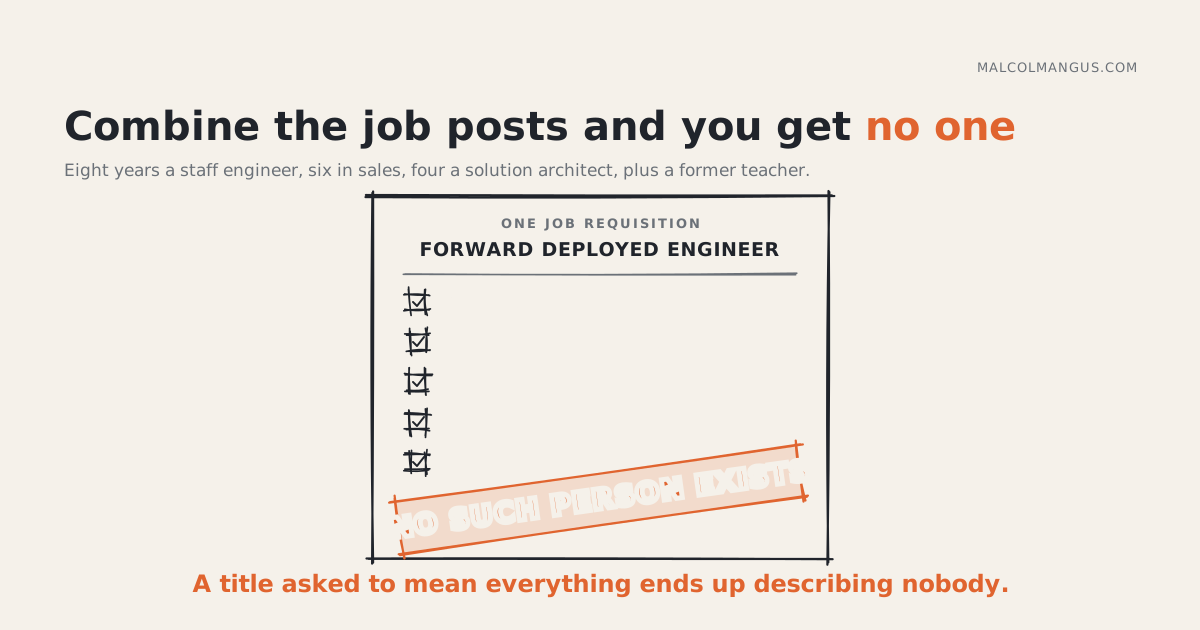
Put simply: merge the job descriptions and the forward deployed engineer becomes a superhuman composite that no real person matches. The incoherence is not a rough edge, it is the whole problem: the industry is hiring hard for a role it has not actually defined.
What survives is accountability to the customer
Then Meurer does the interesting move: she deflates the title and rescues the job. Strip away the DevOps and the integration and the enablement and the solutioning, and every version of the role, across every vintage, shares exactly one thing. The forward deployed engineer is accountable to the customer. Not to a ticket, not to a sprint, not to an internal roadmap, but to whether the customer's outcome actually happened. That single invariant is what makes the role coherent even when the skill list is not, and it is the honest answer to what the title means once you admit it means nothing else. Everything the role has ever included was just a different way of being on the hook for the customer.
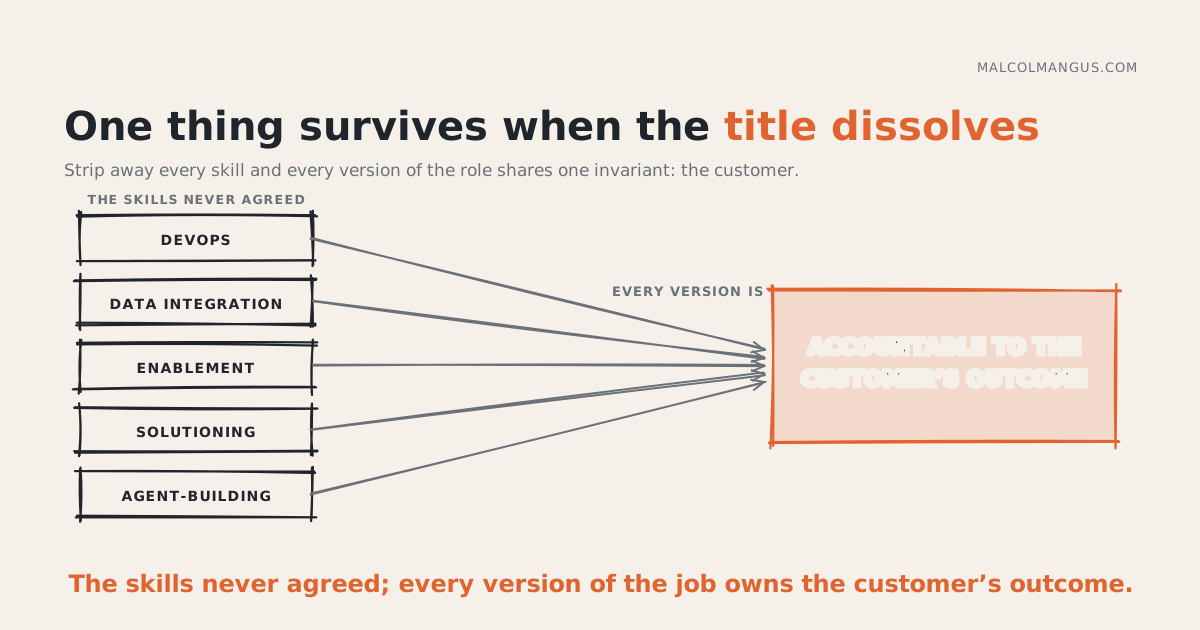
Put simply: when you subtract everything the versions of the role do not share, one thing is left in every case, the engineer is on the hook for the customer's outcome. That accountability, not any particular skill, is the real definition of a forward deployed engineer.
Why the invariant is spreading: someone has to guarantee the outcome
The reason this matters now, and not just as history, is pricing. Meurer lays out a two-by-two, credited to Emergence Capital and Sierra's Elliot Greenwald, with outcome attribution on one axis and agent autonomy on the other. Software pricing has been climbing from seats, to usage, to outcomes, and agents push hard toward the top-right corner where you are paid for the result, not the access. But the moment you sell an outcome, someone has to actually guarantee that outcome, and that person, the one accountable when the promised result has to be real, is by definition a forward deployed engineer. So the same customer accountability that was always the invariant becomes the economic engine of the whole market. As code gets cheap and pricing moves to outcomes, product engineers become client-facing and the lines blur, until, in her words, everything is forward deployed engineering, or at least everything is trending that way.
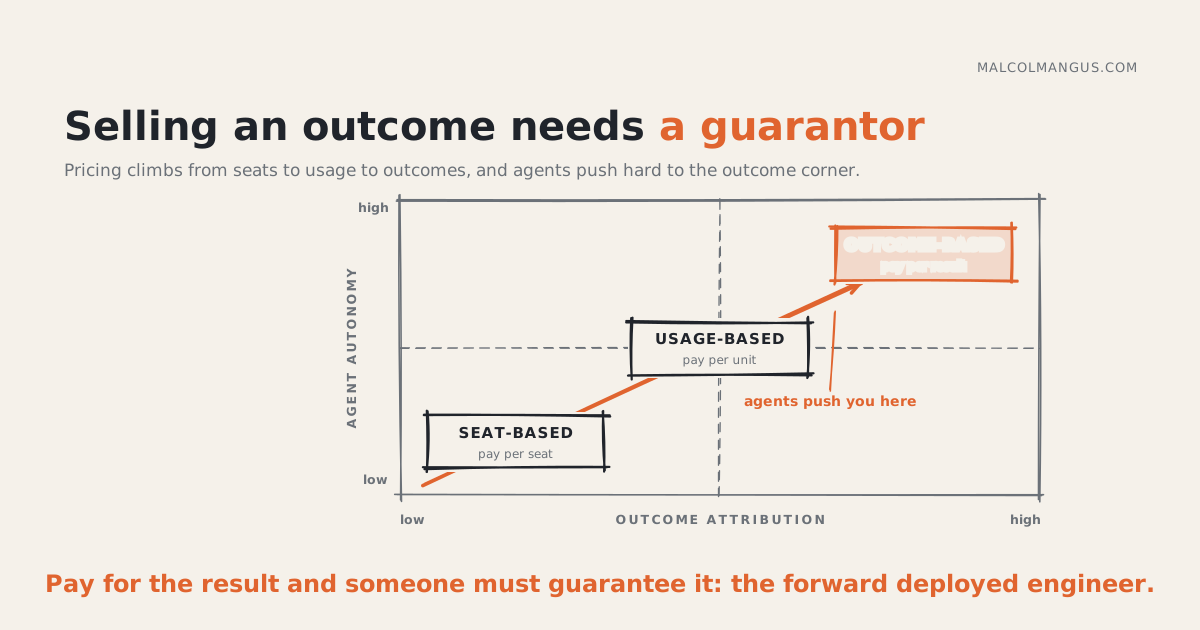
Put simply: pricing is moving from seats to usage to outcomes, and agents accelerate the jump to outcomes. But a guaranteed outcome needs a human guarantor, which is exactly the forward deployed engineer, so the invariant that always defined the role is becoming the thing the whole market pays for.
Dead, and long live
Meurer ends on a deliberate paradox: forward deployed engineering is dead, and long live forward deployed engineering. The title, as a precise job description, is finished, killed by its own overload. The function, being on the hook for a customer's outcome, is not only alive but expanding to swallow more and more of engineering. It is worth naming the built-in irony, and she does not quite: she closes a talk about how the role does not exist by announcing that Sierra is hiring across forward deployed engineering roles, which is precisely the recruiting move Jean Lee warns about. Both things are true at once. The word is a Rorschach blot, and the job it points at is becoming everyone's. The honest posture is to stop arguing about the title and ask the only question that ever mattered: are you accountable for whether the customer actually wins?
Takeaways
- The myth of the parachuting hero is a cover story. The forward deployed role began as 2 a.m. DevOps babysitting, keeping on-premise instances alive, and honesty about the job starts there.
- The role's jobs to be done accumulated rather than rotated: DevOps, then integration and ontology, then custom solutions, then platform and enablement, then agents, each layer stacked on the last. Ask what vintage of the role someone comes from.
- Combine the job postings and you get an impossible composite person, which is the proof that the title means everything and therefore nothing. The market is hiring hard for a role it cannot define.
- The one invariant across every version is accountability to the customer's outcome. That, not any skill list, is the real definition.
- Pricing is moving from seats to usage to outcomes, and a guaranteed outcome needs a guarantor, so the invariant becomes the economic center of the market and the role spreads.
- The paradox to hold: the title is dead, the function is expanding to cover most of engineering. Stop arguing about the word and ask whether you own the customer's result. And note the irony, a talk on how the role does not exist ends with a job ad for it.