Show notes
Show notes: A consultant who can actually build
2026-08-02
Listen to these notes
Video: What is a Forward Deployed Engineer? The New AI Job Everyone Wants But Nobody Understands, Tech With Soleyman.
Soleyman is an independent tech consultant, roughly eleven years across startups, enterprise, and government, and his video is the plainest explainer in this collection. He is not a Palantir alum or an OpenAI operator, so treat this as the how-to lens rather than new evidence: he synthesizes OpenAI's and Anthropic's own job descriptions with his consulting experience. But the synthesis is genuinely useful, because he gives the clearest definition anyone has offered. A forward deployed engineer, he says, is literally a consultant who can actually engineer and build, and that is it. Not a consultant who just makes slides, not a software engineer writing code in a basement with no customer context, but someone who sits in the middle: close to the customer, understanding the business problem, designing the system, building it, deploying it, fixing it when it breaks, and turning what they learned into something repeatable. Where the skeptic calls the rebrand a recruiting trick and the operators give the deep mechanics, Soleyman gives the working person's field guide.
The one-line mental model
The cleanest thing in the video is a three-way comparison you can keep in your head. A normal engineer builds the product. A consultant advises the customer. A forward deployed engineer builds it with the customer. That last preposition is the whole job. It is why this is not a normal software role, where you pick tickets off a clean backlog and build a feature in isolation. Here you work inside ambiguity: the customer does not know exactly what they want, the requirements are messy, the environment is messy, the politics and the data are messy, and your job is to produce a working system in the middle of all of it. Soleyman is blunt that this makes it a poor fit for someone who wants a quiet coding task with zero customer interaction, and a great fit for someone who likes solving messy problems, talking to people, building fast, and seeing the business impact.
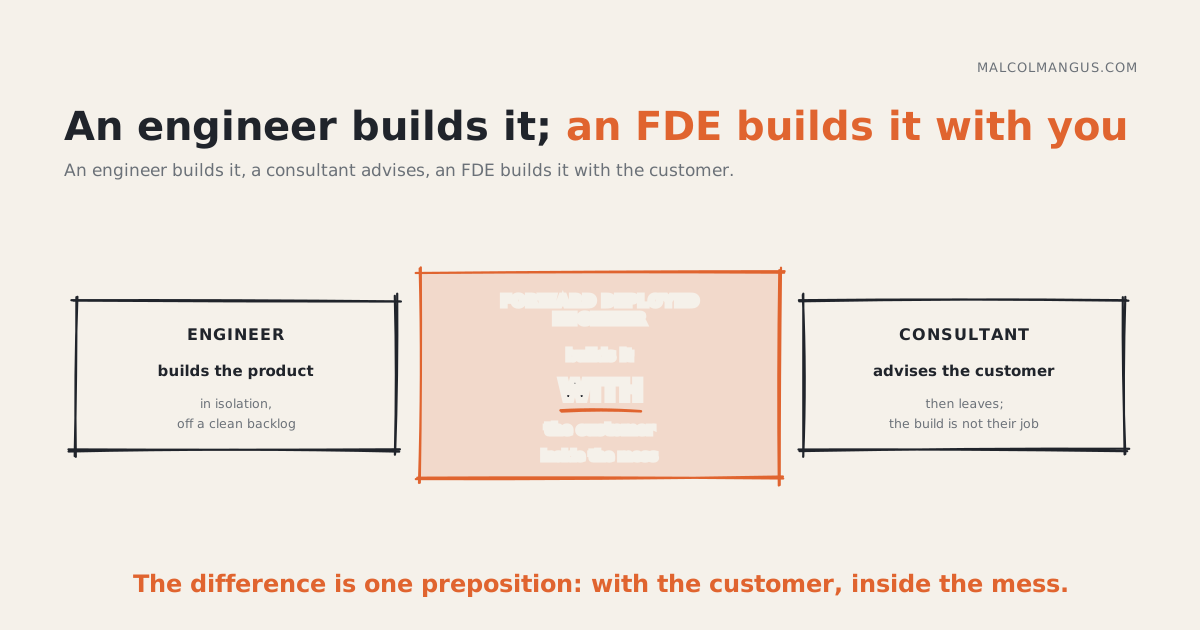
Put simply: hold one sentence. An engineer builds the product, a consultant advises the customer, a forward deployed engineer builds it with the customer. That preposition, with, is the entire difference, and it is why the job lives in ambiguity rather than a clean backlog.
The demo everyone claps for, and then production
The reason the role exists is the gap between a demo and a working system, and Soleyman draws it vividly. A company gets access to a frontier model, leadership says we need to use AI across the business, and someone builds a demo. The demo looks amazing, the founder shows the board, everyone claps. Then they try to put it inside the actual business and it falls apart: the data is messy, the workflow is unclear, the users do not know how to use it, the security team says absolutely not, the model gives inconsistent outputs, the integration needs to connect to five or ten internal systems, and nobody knows where it should run, how to monitor it, how to secure it, or who owns it when it breaks. The real problem in 2026 is not whether you can access AI, everyone can, it is whether you can turn AI into a working system inside a real business. That gap is where the money is, and it is what the role is hired to close.
The job is six steps
The heart of the video is the most concrete breakdown of the actual work anyone in this collection offers. Step one, understand the real problem, not the surface problem the customer names but the process underneath it, asking where the business loses money, where the bottleneck to growth is, where people waste time. Step two, scope the system, turning vague pain into a technical scope and, crucially, into the smallest useful thing you can actually deploy, because AI projects die from wanting the magical system that does everything. Step three, design the architecture, where it runs, where the data lives, the APIs, auth, permissions, logging, monitoring, cost spikes, the non-functional requirements that make this closer to cloud engineering and solution architecture than most people expect, because the model is only one part and the real product is the system around it. Step four, build it, with Python, RAG, agents, MCP, connecting Claude or GPT to internal systems, delivering technical artifacts that actually get used. Step five, deploy it, which is where it gets real, because production means access control, security, monitoring, latency, cost, data privacy, and user adoption, and enterprise environments are brutally messy, which is why the role leans so hard on cloud and infrastructure skills. Step six, feed the learning back into the product, spotting the patterns that repeat and codifying them so the field work improves the product for everyone.
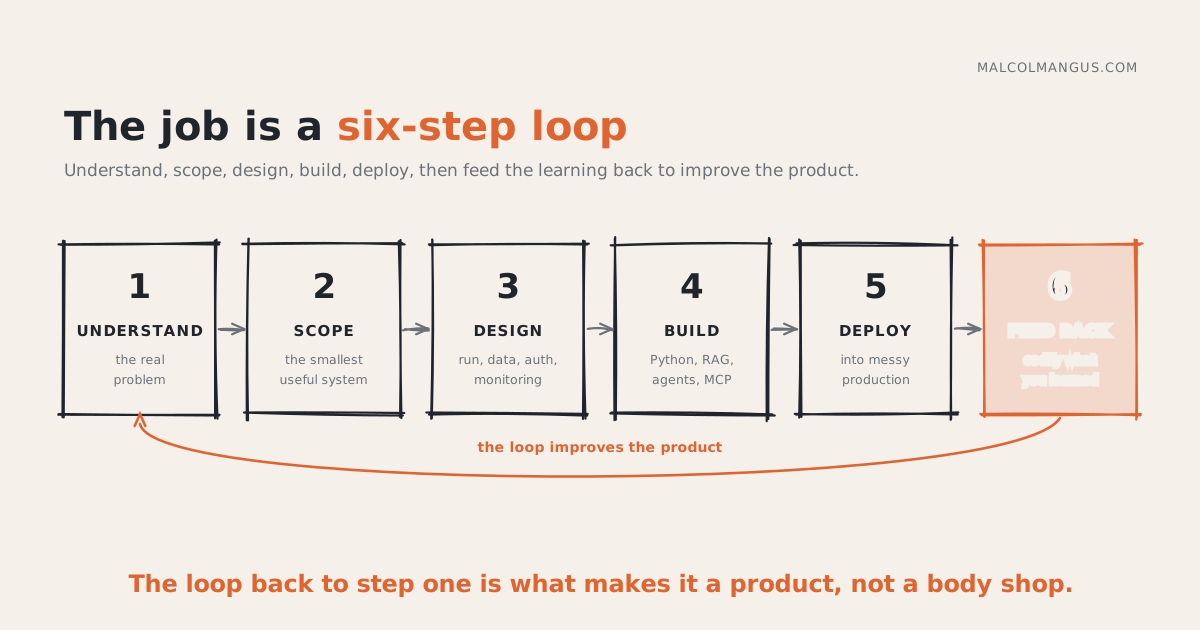
Put simply: the job is a six-step loop, understand the real problem, scope the smallest useful system, design the architecture, build it, deploy it into the mess, and feed the learning back into the product. The last step closes the loop and is what separates a forward deployed engineer from a body shop doing custom work forever.
The skill stack it actually demands
Because the model is only one part of the product, the skills are broader than AI. Soleyman lists them plainly: business understanding, so you build the right thing rather than the wrong one; discovery, asking the right questions instead of accepting the vague answer that we want AI; system design, turning messy requirements into inputs, outputs, data flow, and trade-offs; cloud and infrastructure, because you are deploying real systems into real businesses and everything now runs on the cloud, which he argues is the most underrated requirement; AI integration, the practical stack of models, RAG, agents, tool calling, and evaluation; security and product thinking, what data is sent, who has access, what happens when the model is wrong; and communication, because you will speak to executives, engineers, product teams, security teams, and end users, and if you cannot communicate you cannot do the job at all.
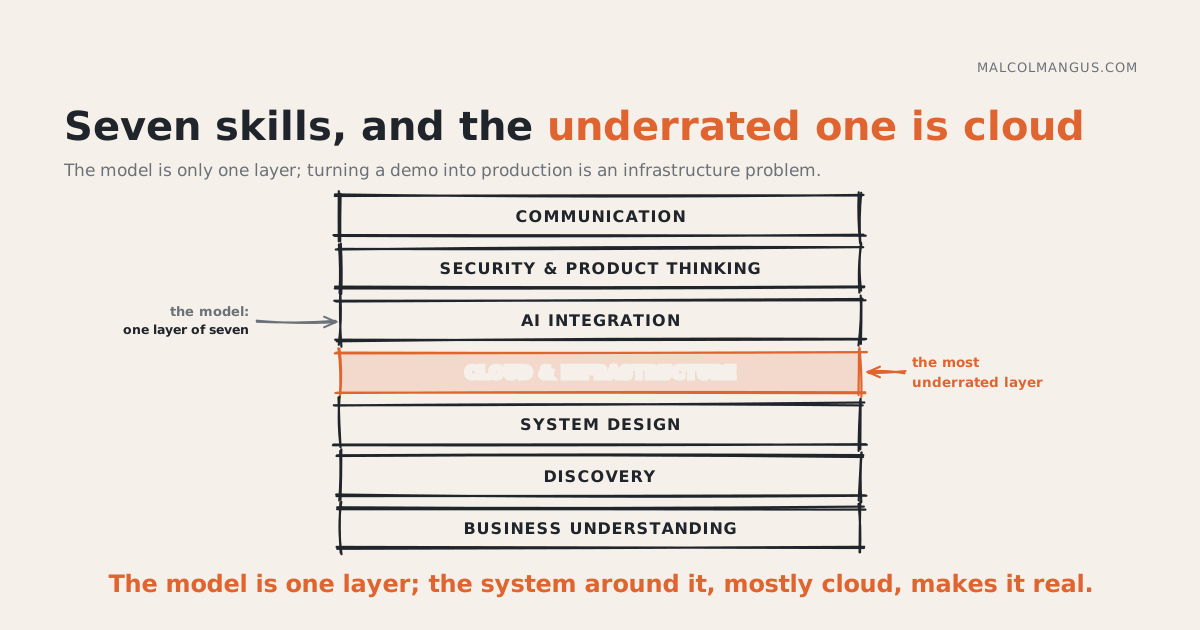
Put simply: the skill stack is business understanding, discovery, system design, cloud and infrastructure, AI integration, security and product thinking, and communication. The model is only one layer; the underrated one is cloud and infrastructure, because turning a demo into production is an infrastructure problem.
Build the stack, not the title
Soleyman ends on the same note the skeptic does, from the other direction. Never chase the job title, because titles always change: today it is forward deployed engineer, tomorrow it is AI architect or AI solutions architect or AI cloud engineer. The title is not the point, the capability is. Can you understand a business problem, translate it into a system, build the first version, deploy it into a real environment, secure it, monitor it, explain it to technical and non-technical people, and turn what you learned into a repeatable pattern? That stack is what companies actually pay for, and it survives every rename. His closing framing is that this is a new job title for an old pattern, that companies do not just need technology, they need outcomes, and that in the AI era the outcome is no longer a slide deck, it is a working system.
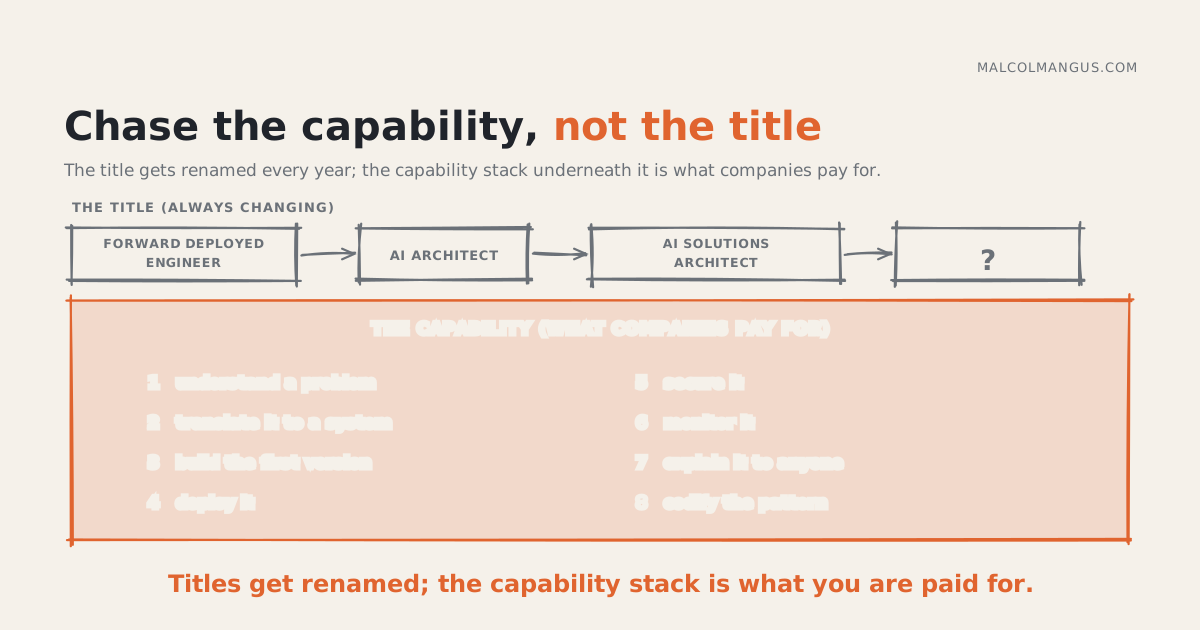
Put simply: do not chase the title, build the capability. Understand a problem, turn it into a system, build the first version, deploy it, secure it, monitor it, explain it, and codify it. That stack outlives every rename, and it is the thing you are actually being paid for.
Takeaways
- The plainest definition in the set: a forward deployed engineer is a consultant who can actually engineer and build. An engineer builds the product, a consultant advises the customer, a forward deployed engineer builds it with the customer.
- The role exists to close the gap between a demo everyone claps for and a working system inside a messy real business. In 2026 the problem is not accessing AI, it is making it work in production.
- The job is a six-step loop: understand the real problem, scope the smallest useful system, design the architecture, build it, deploy it, and feed the learning back into the product.
- The skill stack is broad: business understanding, discovery, system design, cloud and infrastructure, AI integration, security and product thinking, and communication. Cloud and infrastructure is the most underrated.
- Do not chase the title, which will be renamed to AI architect or the next thing. Build the capability stack, because that is what companies actually pay for and it survives every rename.
- Weight this one as the how-to field guide, not new evidence: it is a clear synthesis of the operators' and the labs' own descriptions, from a consultant rather than a firsthand Palantir or OpenAI source.