Show notes
Doing the wrong things, faster
2026-07-22
Per-video writeup, kept as a note. The public essay is the combined Alex Hormozi: "AI does dumb things faster"; this is the eleven-minute-clip source draft.
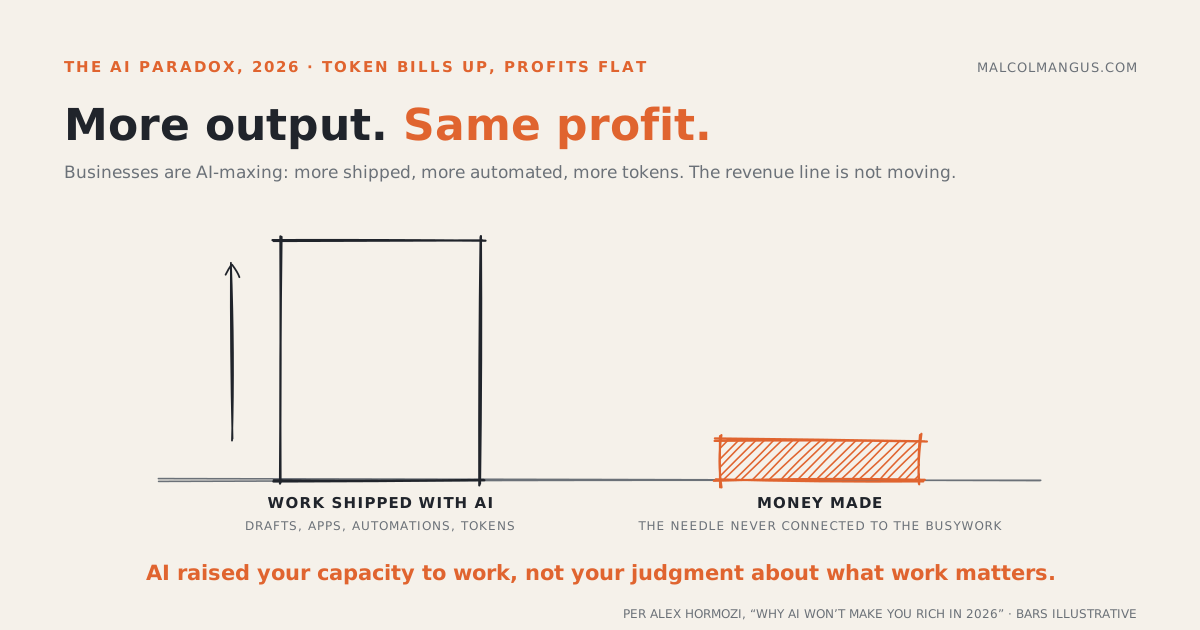
Alex Hormozi opens a recent video with a confession you rarely hear from someone whose feed is wall-to-wall AI: his business just took another step up in revenue, and AI had nothing to do with it. Then he asked his wealthiest friends, in private, how much they personally use AI. The answer, behind the public advocacy: barely at all. Their teams use it. They fund the training. They do not touch it. And their businesses keep compounding.
Meanwhile the people token-maxing and vibe-coding are watching bills climb and income sit still. Hormozi's explanation is not that AI is weak. It is that a tool for doing more work was handed to people who had not decided which work matters.
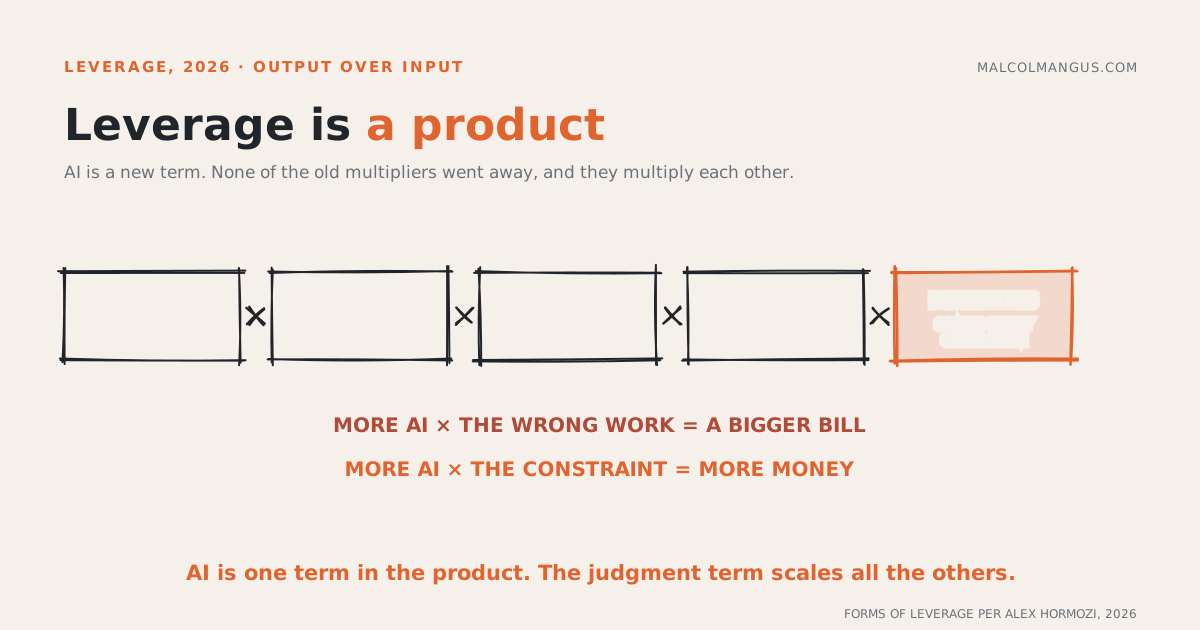
Leverage is a product, not a substitute
The misconception he is pushing against: that AI canceled every other form of leverage. Leverage is just output over input, and the old sources still multiply. Capital still works. Media still works; one video reaching a million people is leverage AI does not erase. People still work, and he points at the irony that the frontier labs, holding more AI than anyone on earth, still employ thousands of humans. These terms multiply each other, and AI is one term in the product, not a replacement for the row. He sharpens the same point in a separate clip: no AI beats a good decision for leverage, which is why there are "old men right now that don't use AI that are making way more money than the kids using AI."
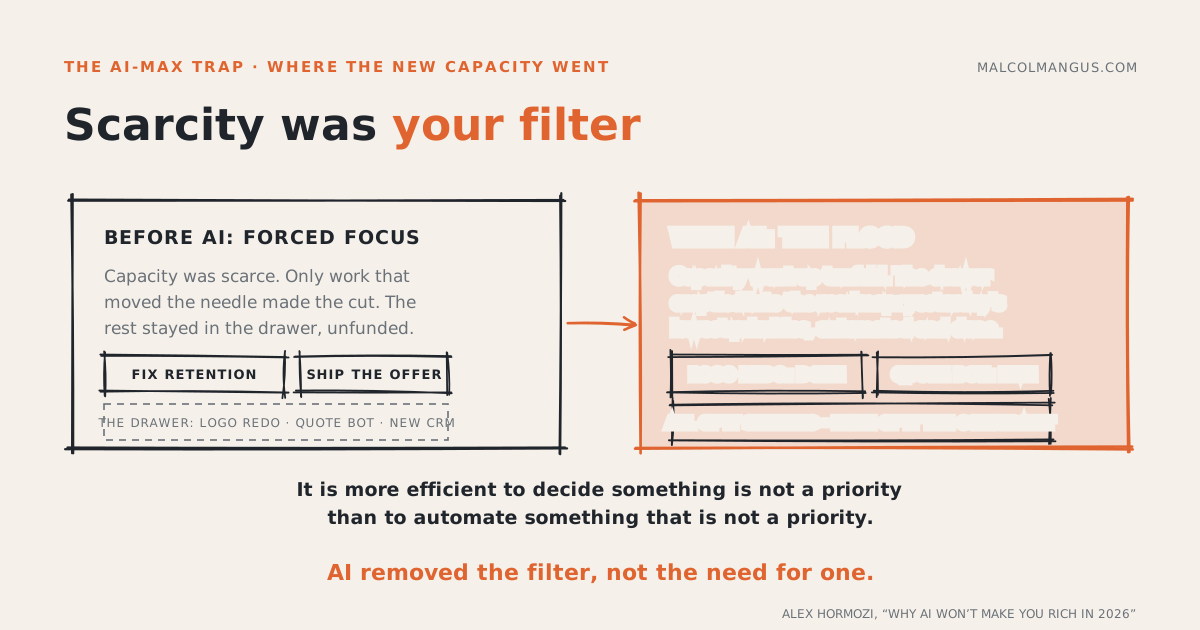
Scarcity was doing your prioritizing
The sharpest idea in the video is an inversion. Before AI, your capacity to work was scarce, and that scarcity was a filter: only the needle-movers got done, because nothing else fit. AI removed the filter. Now the freed capacity flows into things you would never have done before, and those things were, by definition, your lowest priorities. So businesses are doing less important work faster and automated, and the needle does not move, because the needle was never connected to that work. In his words: "it is more efficient for me to determine that something is not a priority than for me to automate something that is not a priority."
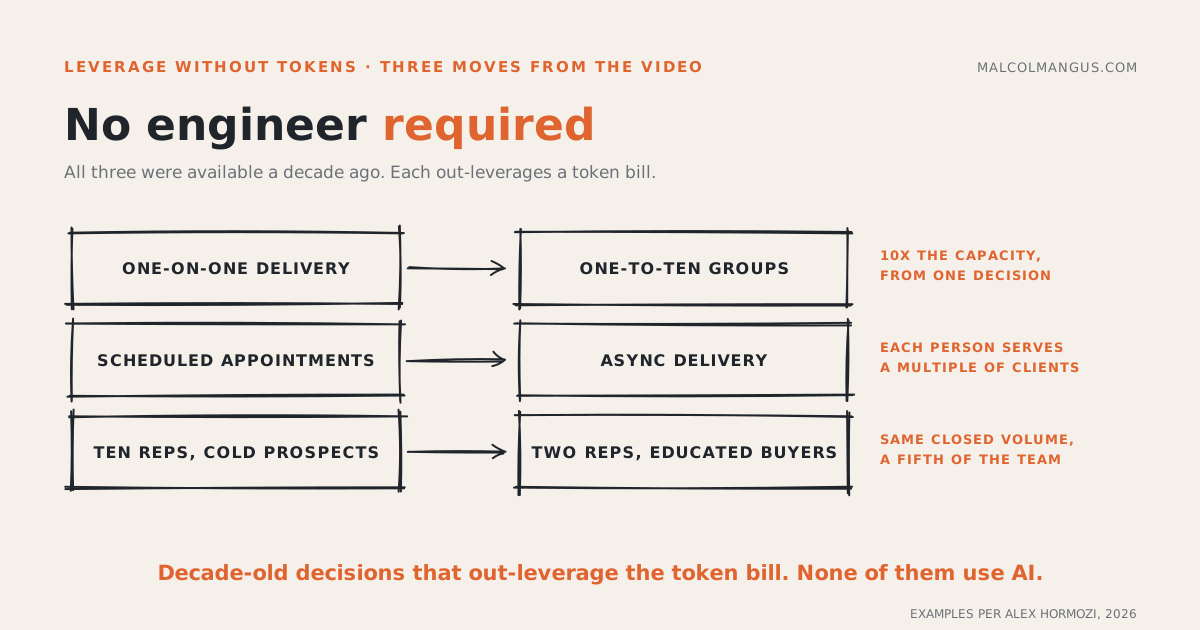
The moves that need no tokens
What makes this concrete is his list of leverage sitting on the table that requires zero technical skill. Take a one-on-one business to one-to-ten, and one decision multiplies delivery tenfold. Move scheduled client appointments to asynchronous delivery, and each person serves a multiple of the clients. Rebuild the sales motion so prospects arrive educated, and ten reps become two closing the same volume. None of it uses AI, all of it out-leverages a token bill, and all of it was available a decade ago.
The one-question audit
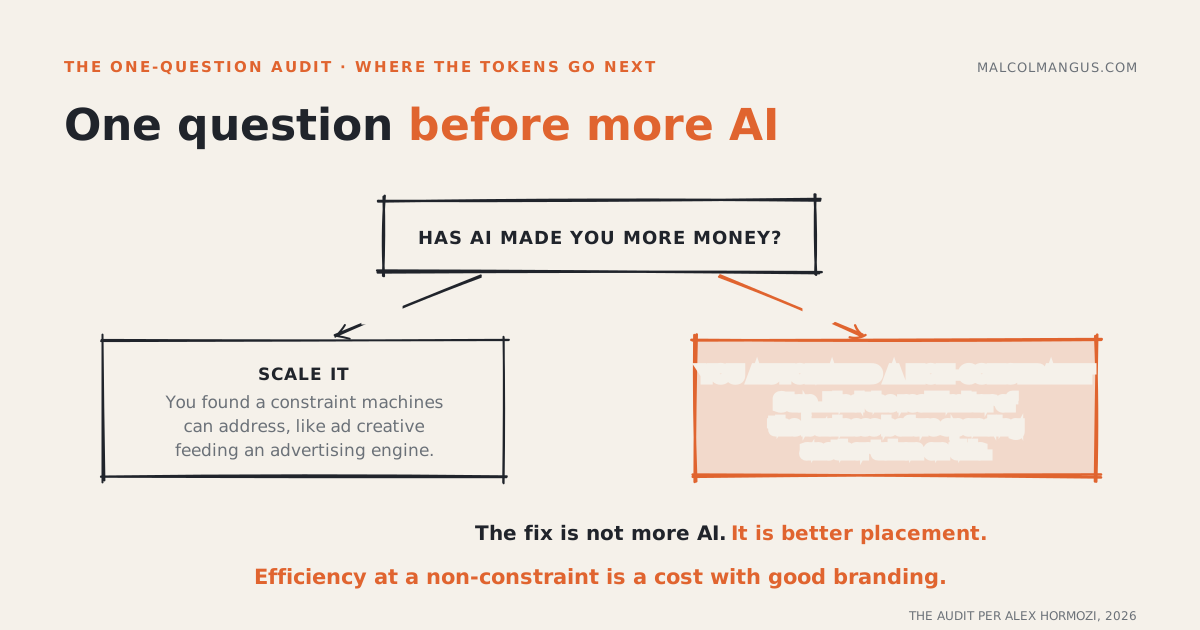
His test for the whole thing is one question: has implementing AI in your business made you more money? If yes, you found a place where the constraint was actually addressable by machines, like his ad creative, where more variants genuinely feed the advertising engine. If no, you automated a non-constraint, and the fix is not more AI. It is walking back to the oldest question in operating a business: what is the actual constraint, and how do you point your speck of resources at it. His own AI sales rep works fine, and he still discounts it, because sales capacity was never his limiter. Efficiency at a non-constraint is a cost with good branding.
He lands on an analogy that will age interestingly: most current AI use looks like access to a lot of cheap virtual assistants. VAs have existed for decades, sometimes at prices below today's token bills, and they changed nothing about who won. Quality still won, brands still won, good offers still beat bad ones. A terrible offer with AI on the back end is still a terrible offer.
Watch the original, it is eleven impromptu minutes and the delivery is half the value:
The argument and examples are Alex Hormozi's; the plates are mine. Folded into the combined essay Alex Hormozi: "AI does dumb things faster".