Show notes
Show notes: Why AI won't make you rich in 2026
2026-07-22
Video: Why AI won't make you rich in 2026, Alex Hormozi.
The core claim
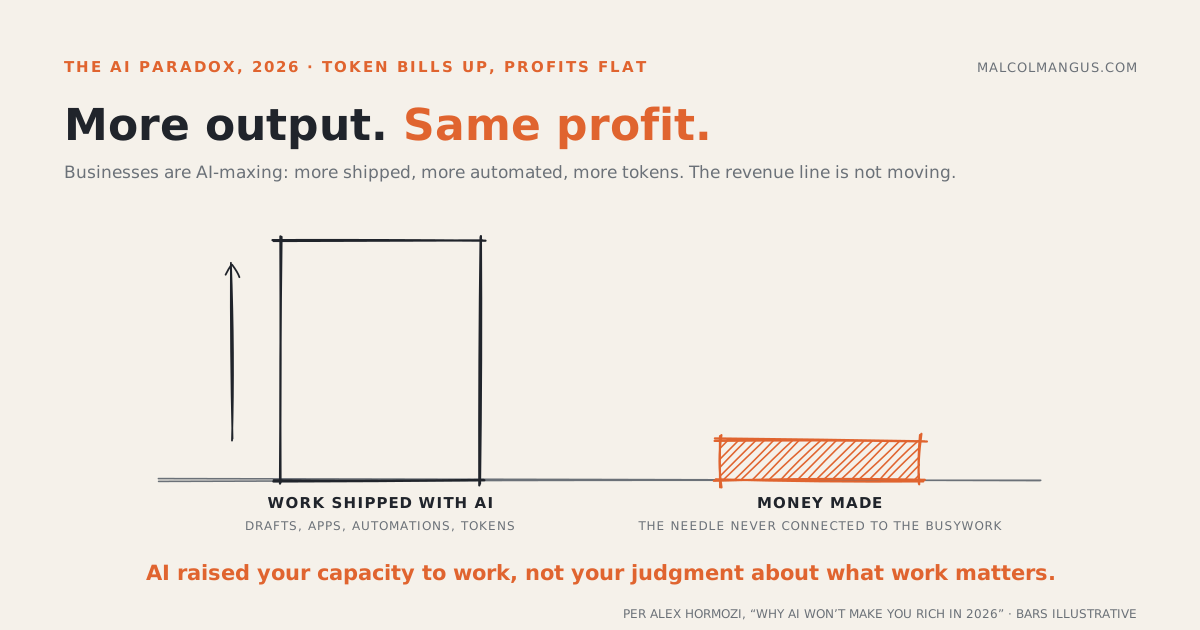
The big misconception is that AI somehow canceled every other form of leverage. Leverage = the ratio of what you get out to what you put in. AI introduces high leverage, but lots of things create leverage, and most of them still work exactly as they did. People token-maxing and vibe-coding apps are watching their token bills go up without their income going up, and the explanation is not that AI is weak. It is that they are pointing it at the wrong things.
Two proof points
- His own business just had another step increase in revenue, and it was not because of AI. If AI did not exist, the increase would have happened anyway. There is no direct line from AI adoption to the growth.
- His wealthiest friends, in private, admit they barely use AI day to day. Publicly everyone is an AI advocate because you have to be. Their teams use it, they bring in trainers, but the owners themselves? "No. No, I'm not." The people with the most money are the least personally AI-leveraged, because their leverage comes from elsewhere.
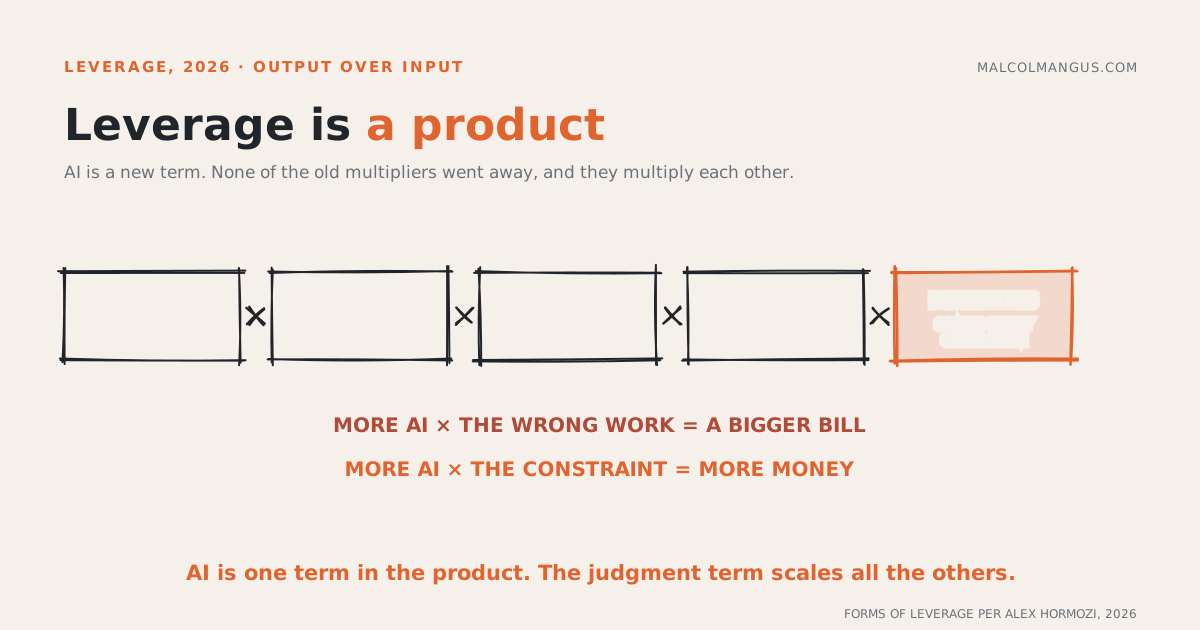
Leverage is a product, not a substitute
Capital still has tremendous leverage. Media still does (one video, millions of viewers). Teams still do; he notes the irony that frontier AI labs, holding the most AI on earth, still employ thousands of people. These forms multiply each other. AI is one more term in the product, not a replacement for the others.
The AI-max trap: doing the wrong things, faster
The mechanism behind "using AI a lot, not making more money":
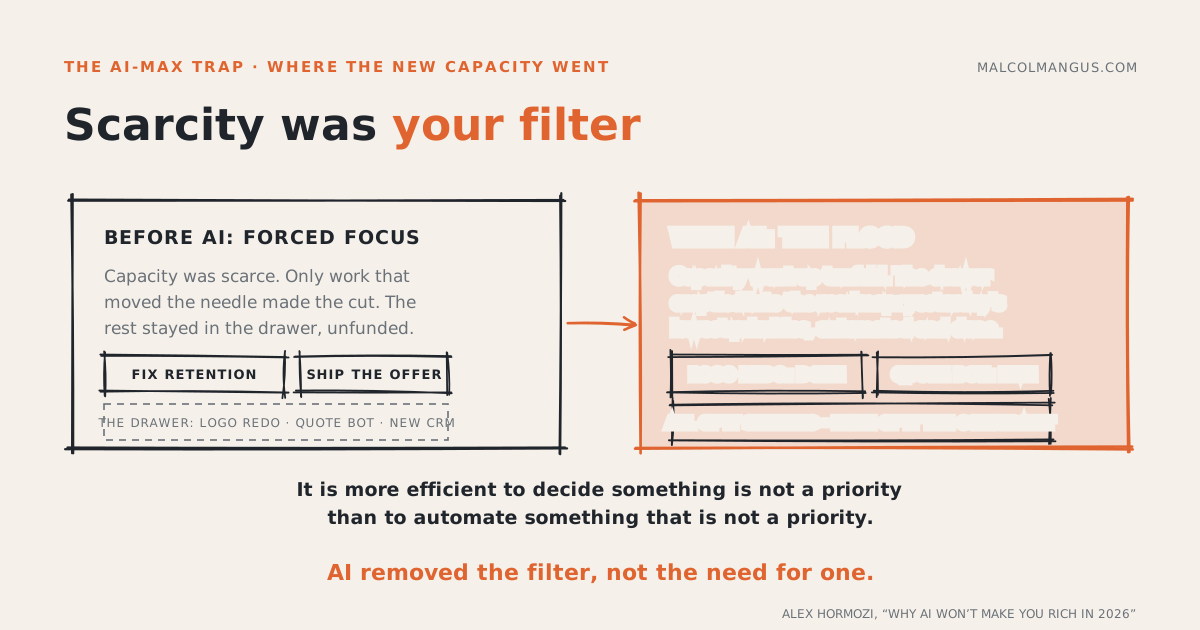
- AI increased everyone's capacity to work.
- With more capacity, people are now doing things they otherwise would not have done.
- The things they would not have done were, by definition, lower priorities.
- So they are doing less important things faster and automated. "Great. Not great. It doesn't matter."
The sharp inversion: not having AI forced you to prioritize. Scarcity of capacity was a filter that kept you on the needle-movers. Remove the filter without adding judgment, and the freed capacity flows into the backlog of things that never deserved doing.
The constraint test
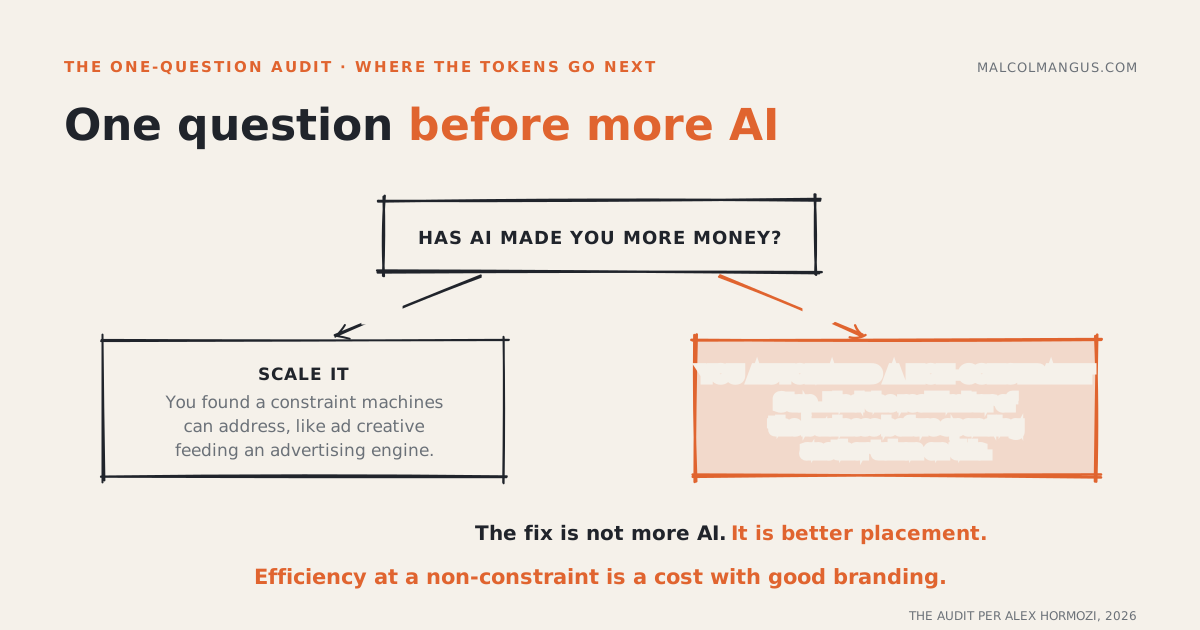
Most business constraints are still not perfectly solvable with AI; if they were, everyone would already be making more money. His AI wins are real but bounded: more ad creative helps advertising, an AI sales rep helps, but the sales rep was never the limiter of the business, because he already knew how to build sales teams. Efficiency at a non-constraint does not move revenue.
Non-AI leverage that is sitting on the table
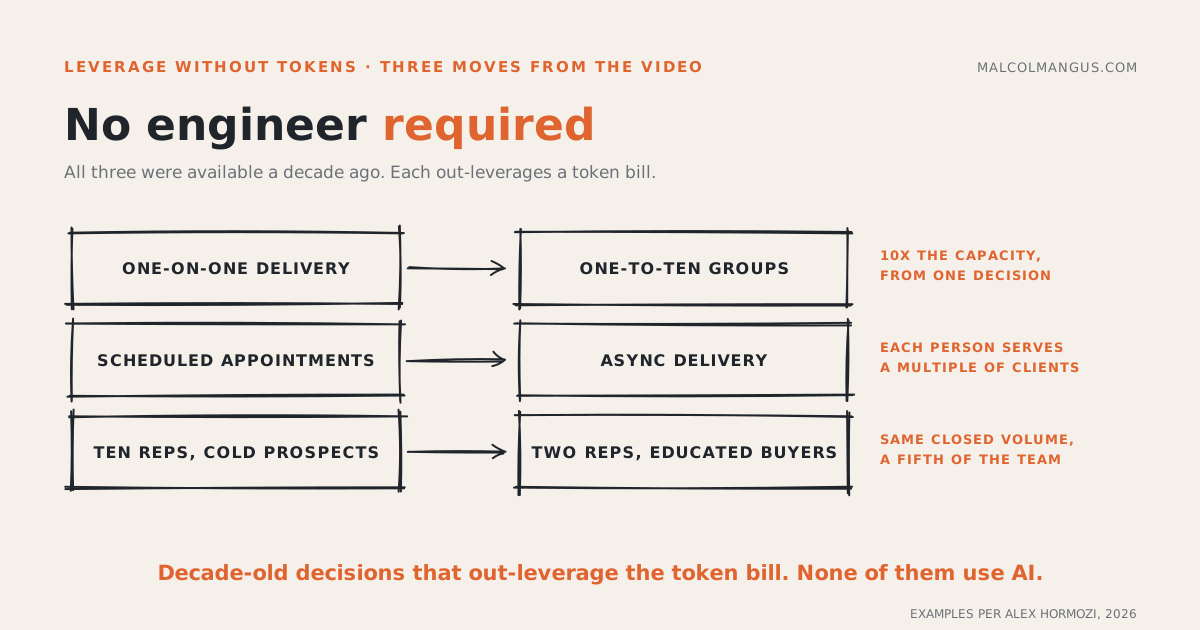
Moves that need zero tech expertise:
- One-on-one to one-to-ten: 10x delivery leverage from a single decision.
- Scheduled appointments to asynchronous delivery: a step change in how many clients each person can serve.
- A sales motion that educates prospects before the call: fewer, shorter, better-qualified conversations, so 10 reps become 2 closing the same volume.
The highest form of leverage
Higher leverage than AI: making good decisions. Telling the team "we are not doing that work at all, it stopped mattering" gets more out of the team than automating the work would. His line: it is more efficient to determine that something is not a priority than to automate something that is not a priority.
The virtual assistant analogy
Today's AI use cases mostly resemble access to a lot of cheap virtual assistants. VAs have existed for decades, sometimes cheaper than current token bills, and the marketplace stayed the same: quality still won, brands still won, good offers still beat bad offers. A terrible offer with AI on the back end is still a terrible offer.
The closing question
Ask: "Has implementing AI in my business made me more money?" If not, you were likely using it in the wrong place. Return to identifying your true constraint, and focus your speck of resources on the one thing that moves the needle. Skill at that allocation is worth more than the tool. AI is just a tool. It is not the answer.
Takeaways
- AI raises capacity, not judgment. Capacity without judgment flows to the unimportant.
- Leverage forms multiply: capital, media, people, code, and decisions. Dropping four to maximize one is bad arithmetic.
- Audit AI spend against the constraint, not against activity. Automated output at a non-constraint is a cost, not progress.
- The prioritization that scarcity used to force must now be done deliberately.