Show notes
Show notes: What SaaS buyers actually want in 2026
2026-07-22
Video: What SaaS Buyers Actually Want in 2026, Rob Walling with Einar Vollset (co-founder at TinySeed, runs Discretion Capital, which sells SaaS companies doing $2M to $20M ARR).
The framing story
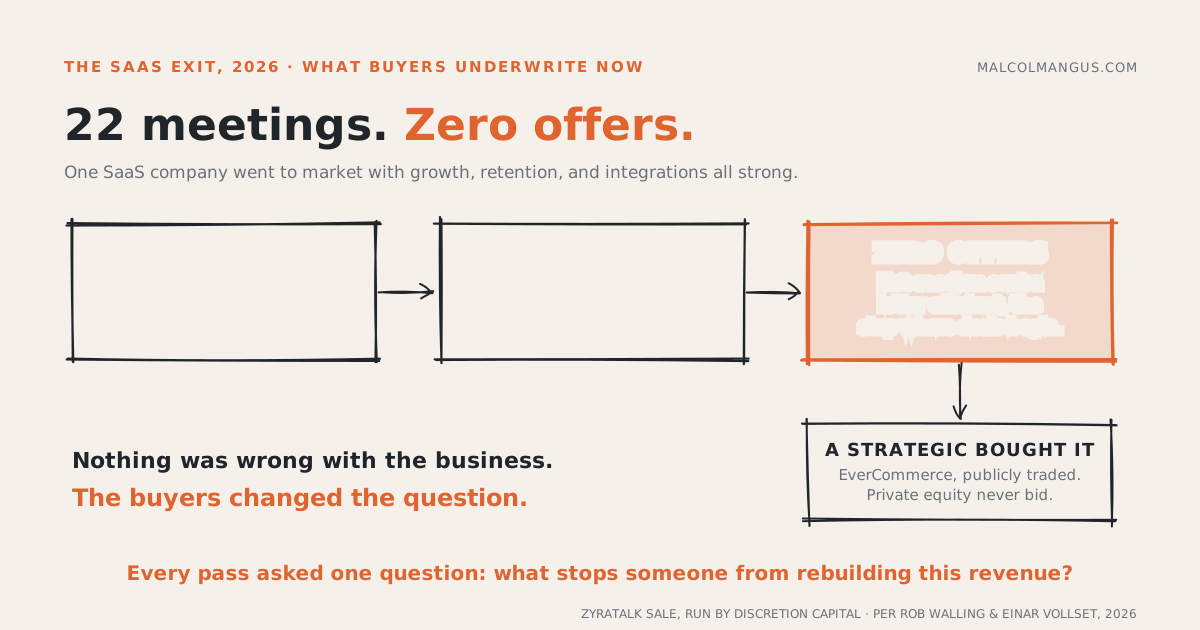
A SaaS company went to market with metrics most founders would kill for: growth, retention, integrations, all of it. 22 private equity firms took management meetings. Not one submitted an LOI. Nothing was wrong with the business. What changed is what buyers are looking for. PE firms have quietly raised the bar, and companies with great numbers are not even getting offers.
The question every PE firm now asks first: a year from now, is this revenue still there, and what stops someone from rebuilding it? Every moat below is a different way of answering that question.
Is AI killing SaaS? Einar says no
- AI is still software. People anthropomorphize it because they talk to it, but if you are bearish on SaaS you are effectively claiming the companies best in the world at deploying software will be bad at deploying this particular kind of software.
- Sentiment gap: inside the TinySeed portfolio (200+ companies) founders are the most upbeat he has seen. Dev costs are way down, features that took 6 months ship in 3 weeks. Public SaaS companies report no AI-driven churn. Meanwhile the public markets act like the sky is falling. The disruption story is loudest where the operating data is weakest.
Why care even if you never plan to sell
- Everyone sells eventually or shuts down. Nearly 100% of founders who swore they would never sell hit a moment (burnout, a life change, a $10-20M offer) where it makes sense.
- Even if you never sell, you are sitting on a valuable asset. Knowing what makes it valuable is like knowing the value of your house: you do not check daily, but you should be able to spot an opportunity or a storm.
The old moats still stand
From Rob's SaaS Playbook: custom integrations that put you in the core workflow, brand (the reason people just buy Salesforce or Zapier), high switching costs, and owned traffic channels like strong SEO. AI did not erase these, it changed their shape.
The false moat, then and especially now: unique features. Developers love to believe the clever thing they built is a moat. It never really was, and with AI it definitely is not.
The five moats buyers now price
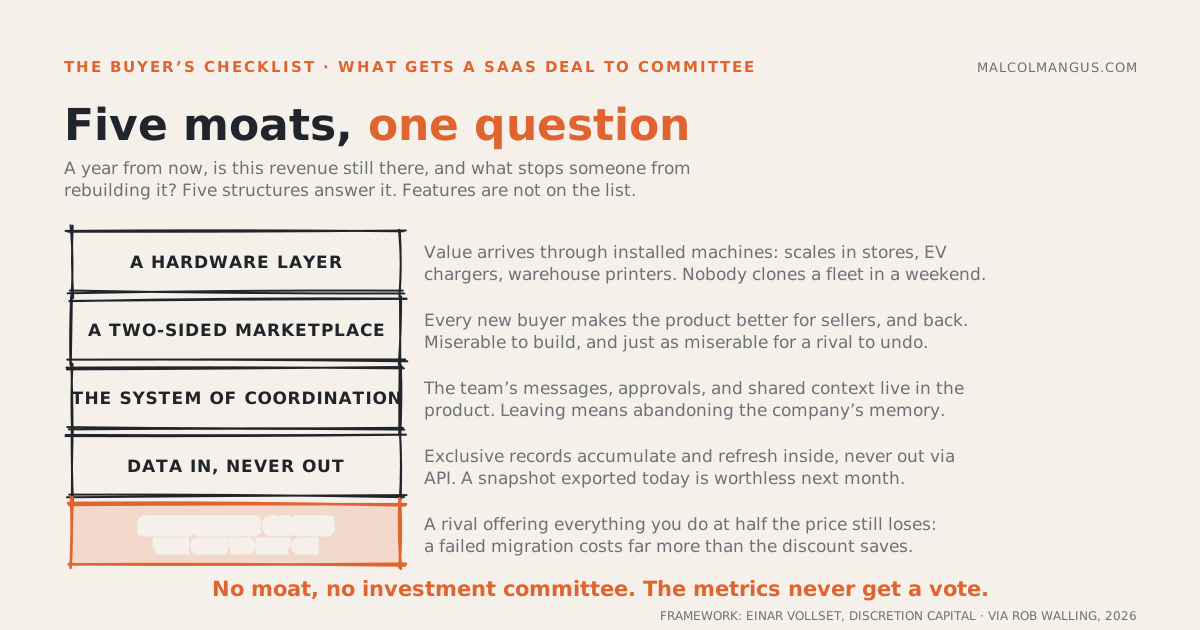
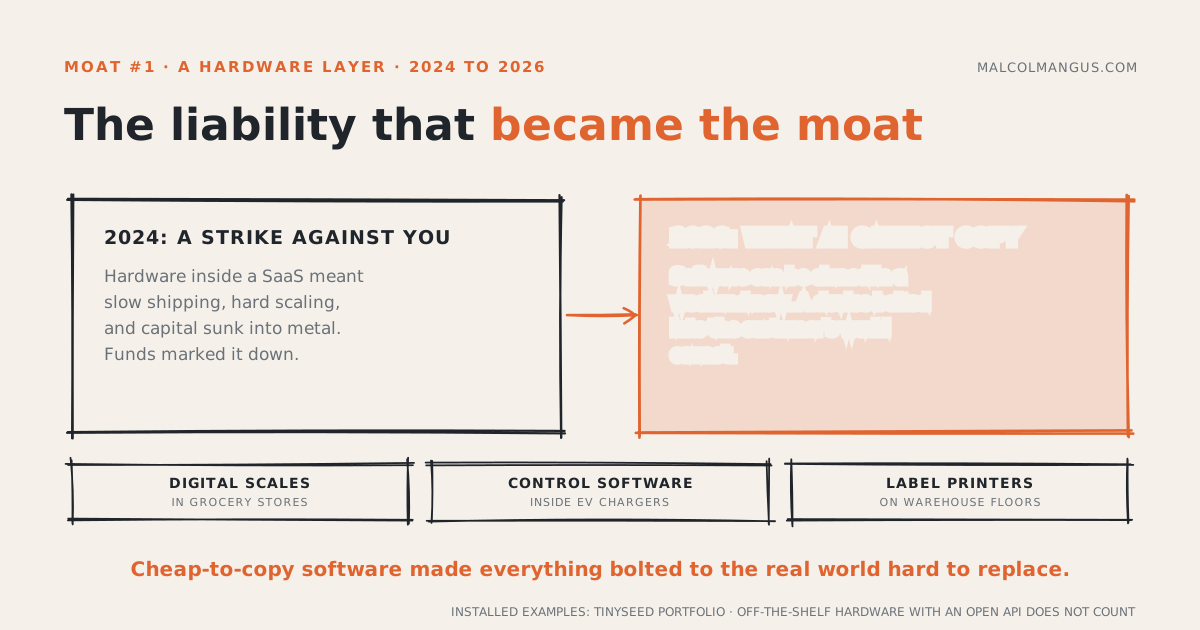
1. A hardware layer. Two years ago a hardware component was a strike against you at TinySeed: too hard to scale, too slow to ship. That has flipped. When value delivery is tightly coupled to a physical device, switching you out is not an API swap, it has real-world downstream consequences. Portfolio examples: digital scales in grocery stores, software inside EV chargers, printers in warehouse locations. Caveat: off-the-shelf hardware with an open API does not count, someone can vibe code around that in an afternoon. Nobody vibe codes around a physical device.
2. A two-sided marketplace. Hard to do, and hard to undo if you succeed. Each side makes the platform more valuable to the other, and the marketplace makes the core software stickier. Rob's standing rule holds: do not bootstrap one unless you already have access to one or both sides (TinySeed itself worked because he had founders and, it turned out, investors; Dynamite Jobs worked because Dan and Ian already had a remote-work audience). A manufactured moat, not a default one.
3. Being the system of coordination. The hardest software to rip out is where the team's messages, approvals, and shared context already live. Connects to Rob's pricing rule: there has to be something else going on when you log in. You will not sell 10 seats if all 10 logins see the same thing. The canonical example is the one everyone complains about and never leaves: "we try to leave Slack every year, and then we come back."
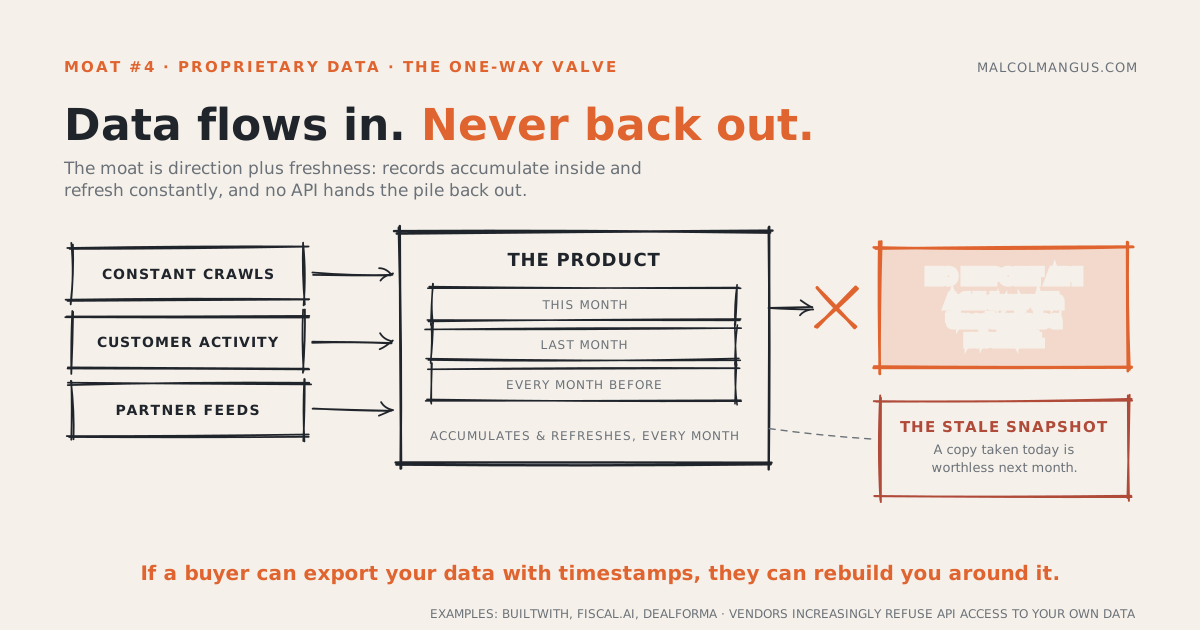
4. Exclusive, constantly refreshed data. Data flows in and never flows back out through an API. That asymmetry is the entire moat: if a buyer could export everything with timestamps, they could replicate the product around it. And freshness matters as much as exclusivity: a snapshot today is worthless next month (BuiltWith, fiscal.ai, DealForma). Note the incentive shift: companies increasingly will not give API access even to your own data.
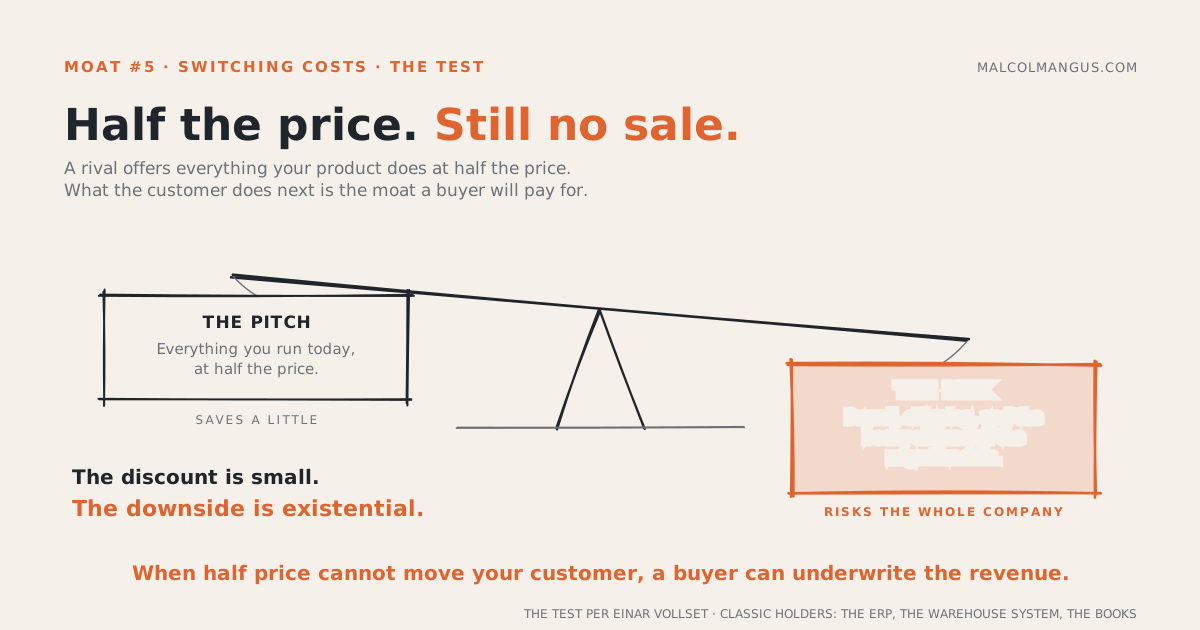
5. Switching costs. The moat Rob would bet on most, and it pulls the others together. The test: a competitor shows up offering everything you do at half the price, and the pitch does not even land. Classic system of record: the whole finance team runs on QuickBooks or an ERP, the whole warehouse runs inbound, outbound, approvals, and shipping through one system. You could rebuild it, but the risk of your actual business collapsing if the rebuild fails is not worth the savings.
Why "just vibe code it internally" loses
Part of what customers pay for is brand trust plus the ability to call someone and shout at them when it breaks, knowing they are that vendor's top priority. Einar's anecdote: the deeply technical people who were evangelical about self-hosted agent setups were tweeting "I spend more time fixing it than getting productivity out of it" two weeks later. If that is the technical hobbyist experience, a business doing millions in revenue with payroll to make will not accept that downside risk to save an inconsequential amount.
The investment committee gate
Some buyers, mostly PE plus some strategics, have told Discretion Capital: if a company has none of these five moats, do not even bring it to the investment committee. The IC is who signs off on sending an LOI. If they will not look, that firm cannot buy your company no matter how good the metrics are. The hurdle sits in front of the deal, not inside the negotiation.
AI-native does not get a pass, the bar is higher
Fast adoption stories are real (zero to $4M ARR in 3 months). But buyers have also watched at least one PE-backed fast-growing AI SaaS go to zero within a year. Velocity without a moat now reads as risk, not as upside.
How the framing story ended
The company was ZyraTalk, an AI voice agent (receptionist for HVAC and similar home services). Great metrics on every measure. 22 management meetings, zero PE letters of intent. The auction became a fight between strategics, and it sold to EverCommerce, a publicly traded company. Nobody passed because the company was weak. PE passed because they could not answer the durability question, and a strategic bought it because they could.
Takeaways
- Metrics get you meetings. Moats get you offers. These are now separate hurdles.
- Every moat is a durability argument: will this revenue exist in a year, and what stops a rebuild.
- Liabilities can become moats when the environment shifts (hardware went from strike-against to moat in two years). Worth re-auditing what you consider baggage.
- Data direction matters more than data volume: in but not out, and refreshing.
- Features are not a moat. Coordination, physical presence, network effects, data flows, and organizational risk aversion are.