Show notes
Show notes: AI is not killing vertical SaaS
2026-08-13
Listen to these notes
Video: AI Is Not Killing Vertical SaaS, It's Practical Leverage, Greg Head (Practical Founders) with Deepak Sindwani, founder and managing partner of Wavecrest Growth Partners, a growth equity firm that backs bootstrapped, capital-efficient B2B SaaS companies at $5 to $20M ARR.
The headline is wrong
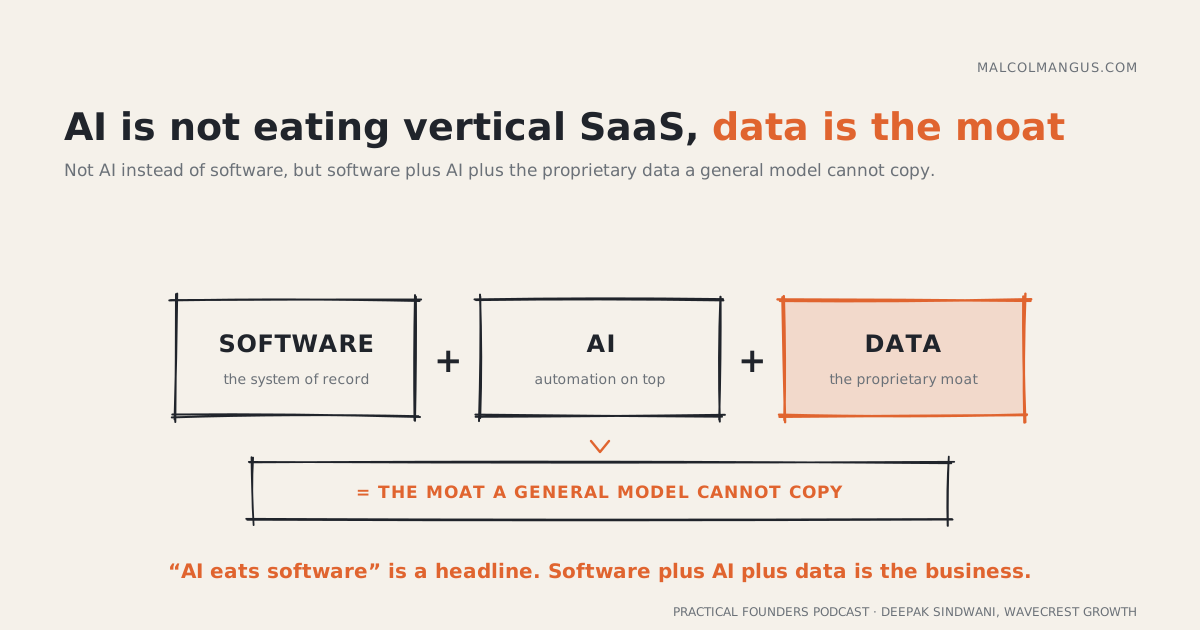
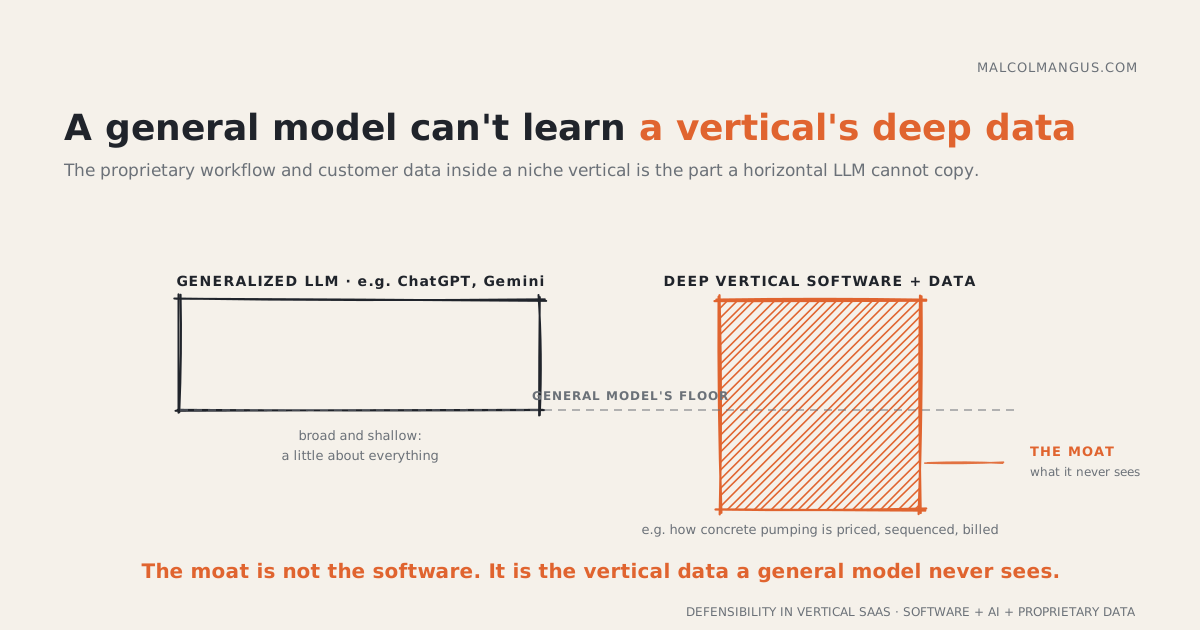
Sindwani's frame is direct: B2B SaaS is not dead. "AI eats software" makes a great headline, but the durable version is "software plus AI plus data." The software is still the system of record. AI adds automation on top. And the proprietary data the product accumulates is the part a general model cannot copy. Every company he is involved with has an AI initiative, but the thesis is additive, not replacement: what AI really does is increase a customer's ability to automate the use of your product and get more value out of it.
What growth equity actually is
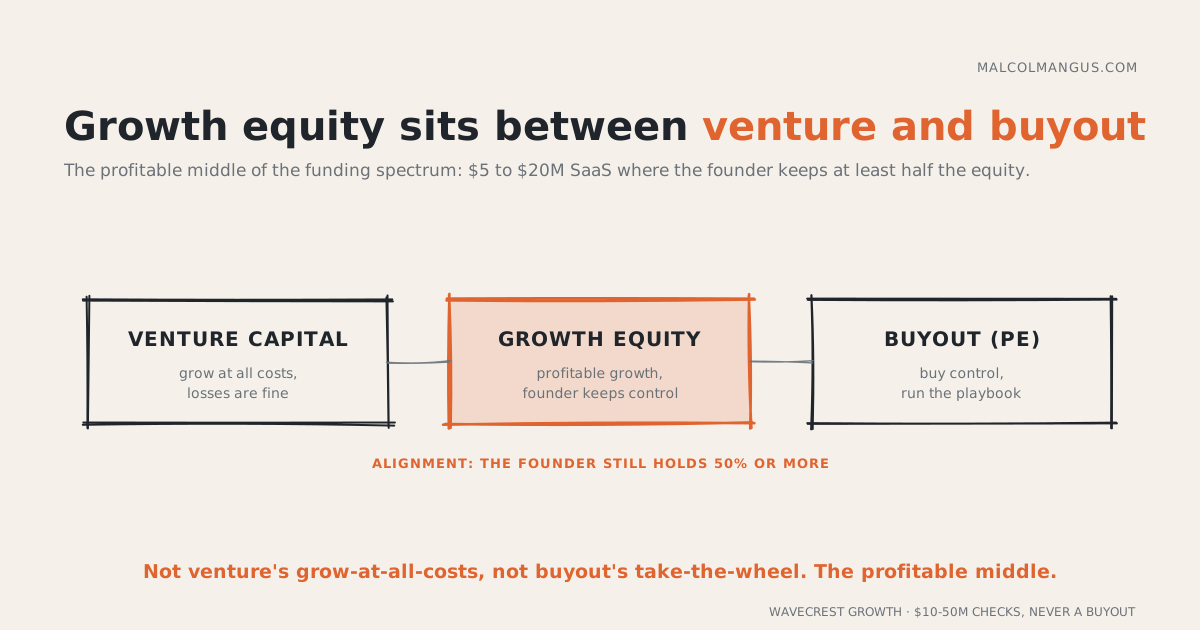
Half the conversation is a plain-language tour of a category founders often misread. Sindwani places growth equity "smack dab in the middle" of a continuum: venture capital on one end (grow at all costs, losses are fine), buyout private equity on the other (buy control, run the playbook). Wavecrest writes $10 to $50M checks into profitable or break-even companies at $5 to $20M ARR that are growing 50 to 60% a year. About half its deals are minority and half majority, but it does not do buyouts. The non-negotiable is alignment, which it measures one way: the founder keeps at least half their equity. If a business is growing 50 or 60% a year and the founder does not want to hold the majority of it, he says, that is telling him something.
He came from Bain Capital and his co-founder from Vista, the big multi-billion-dollar funds; this smaller, hands-on end of the market is where they wanted to be. Ten years in (the firm hit its tenth anniversary this January), it is just over $1B under management, its latest fund is $450M, and it has made 18 investments. The pitch to founders is experience, not capital: "the scars on our backs shouldn't be the scars on your backs."
Why founders take the money
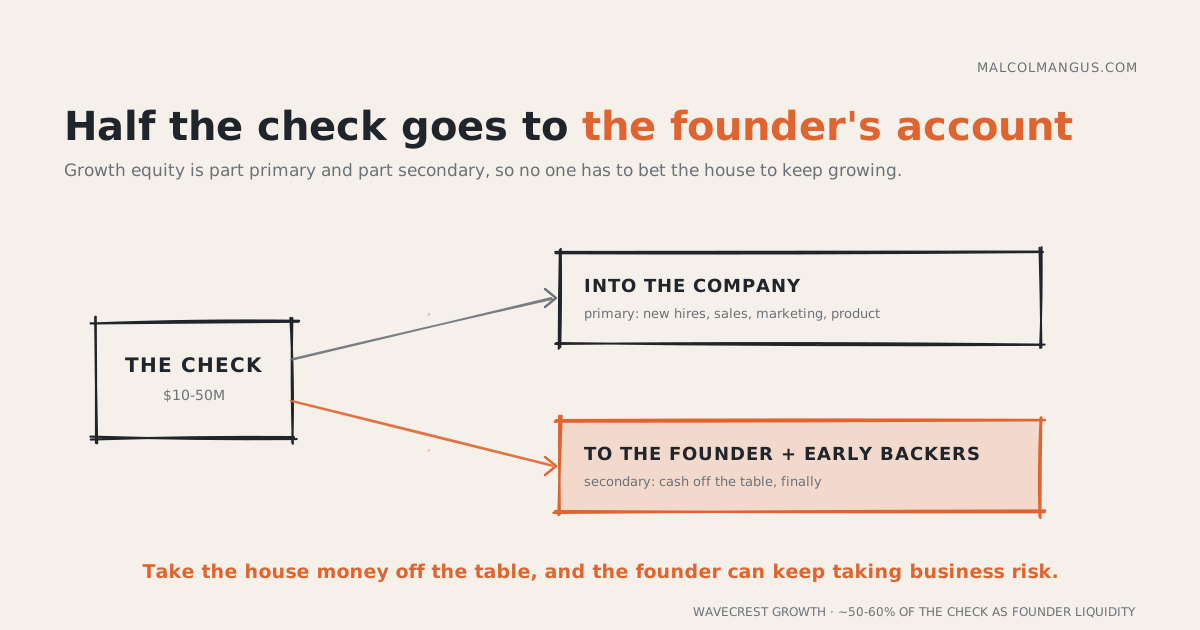
The mechanic that makes this work is secondary liquidity. Roughly 50 to 60% of the capital goes to the founder and their early shareholders as cash, not into the company. Sindwani's image: founders are "white-knuckling it," because every dollar in the business is their own dollar. Take three, four, five million off the table (pay off the house, the kids' tuition) and the founder gets a little space to think, and can start taking the controlled bets they would never have risked when it was all their own money. It is not that someone pulls out five million and takes their foot off the gas. It is de-risking the person so they can keep taking risk in the business.
Every stage is a different sport
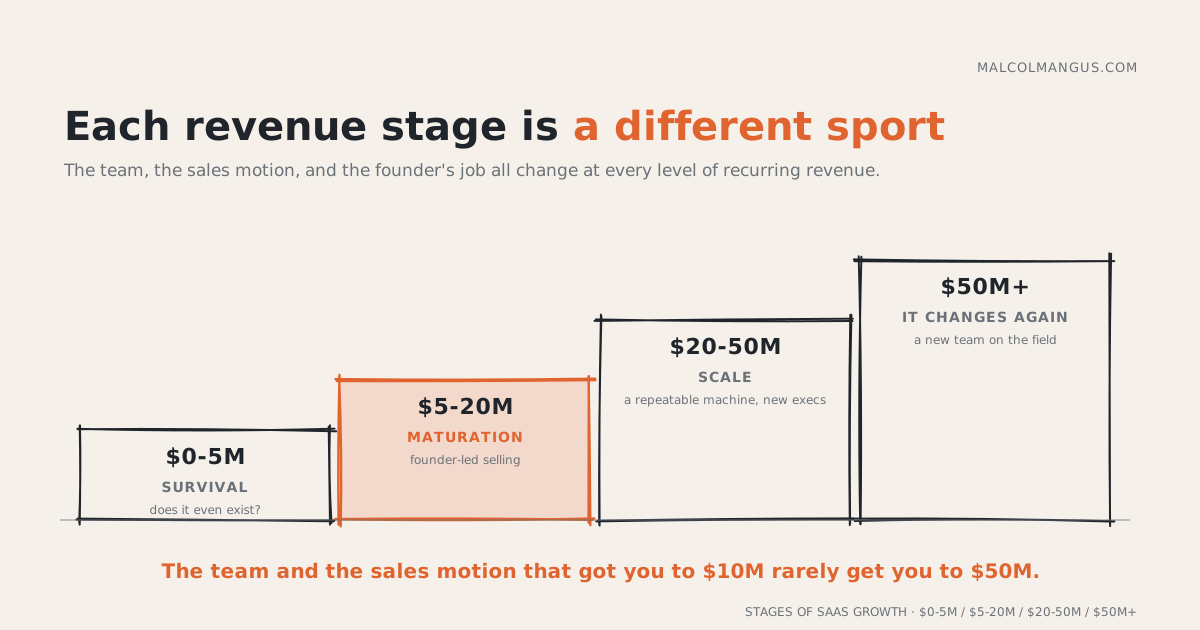
Getting past $10M, Head and Sindwani agree, is a different sport than the scrappy startup. Sindwani's stage model, which he traces back to his Infusionsoft days: $0 to $5M is existential, $5 to $25M is initial maturation, then $20 to $50M shifts again, and above $50M it changes once more. "The execs that get you to 10 or 20 usually don't also get you to 50." In go-to-market terms, at $7M it is the founder plus three or four reps, and nobody sells like a founder; at $35M you have to take that founder selling motion and replicate it across 20 reps, with the systems, comp plans, and tools to match. The way you got here is not the way you get to five times the size.
One word Sindwani will not use is "playbook." A co-founder came from a firm with "a manual of 130 things you need to do, and only one way to do it," and Wavecrest rejects that. At $5 to $20M, the businesses need customization, not a rigid template. What they offer instead is 25 "growth levers" (best practices on pricing, customer-success org design, generating net revenue retention) each with examples of how 20 other portfolio companies did it, applied bespoke or not at all. Delivering that is a small operating team: two people on go-to-market, one on finance and back office, one full-time on talent, and a product-and-AI best-practices hire on the way.
AI on two fronts
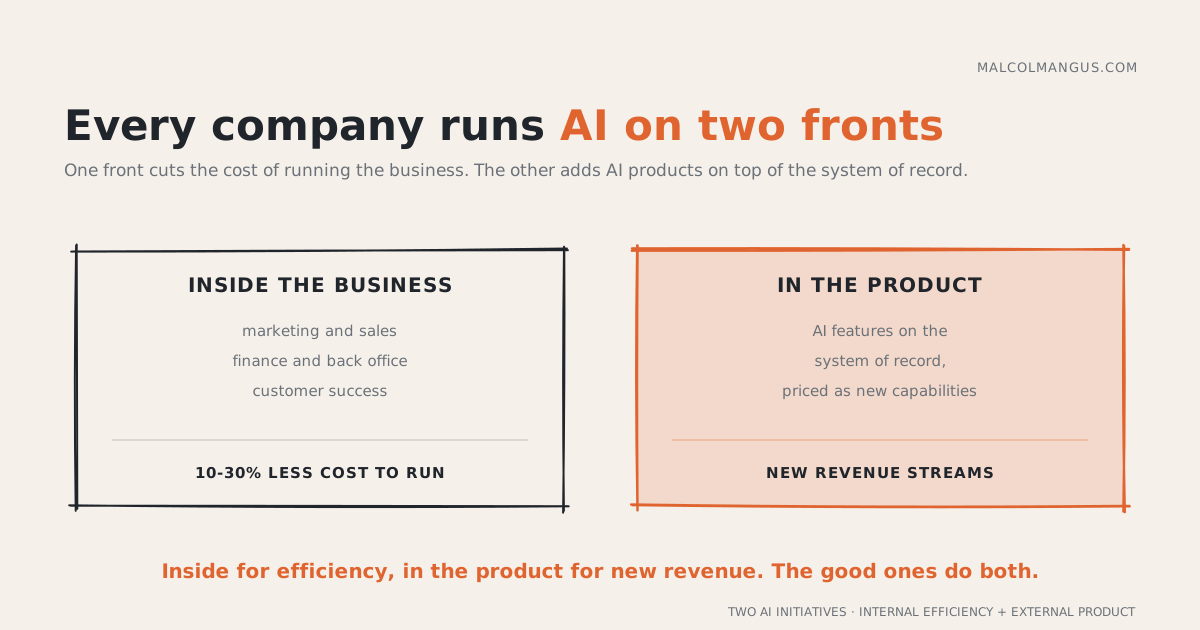
Sindwani splits AI into two distinct initiatives, and says every company should be running both. The internal one is how you run the business: marketing, sales, finance, customer success, where he sees 10 to 30% cost savings and founders saying they can double without doubling the team. The external one is AI-enabled products for customers: new capabilities layered on top of the system of record that you can charge for. The platform keeps doing its workflow and data job; the AI features are new revenue on top of it.
The moat is the vertical data
The competition question (won't four people in India, or an AI-only upstart, rewrite a full stack that took ten years to build?) gets the sharpest answer of the interview. Most of Wavecrest's companies are deep in a vertical, and that depth is the defense. A subcontractor-software business that understands how concrete pumping is priced, sequenced, and billed holds knowledge a generalized model simply does not have. "How do you train a model if you don't have all the knowledge in the vertical?" The customer relationships, the proprietary workflow data, and the ecosystem knowledge are the moat. He is seeing "vertical AI" businesses (software plus data plus AI) in pro sports, telecom services, and pharma that he does not expect to face real competition from a horizontal model like the ones OpenAI or Google ship.
The no-CRM CRM
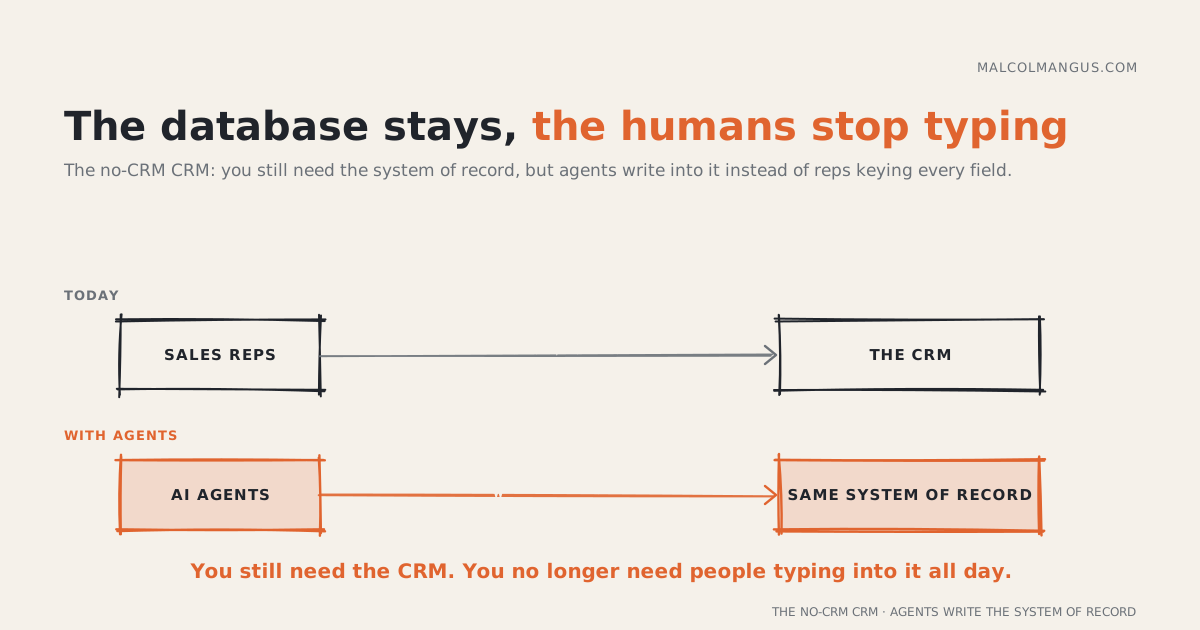
The example he reaches for is CRM. Salesforce, he says, is "a little bit under siege": horizontal workflow software where human beings key in the data is being replaced by agents and automation. He calls the result "the no-CRM CRM." You still need the database of customer records and every touchpoint. You no longer need people sitting in the fields typing it all in. If the machines write into the system of record instead, it is far more efficient, and the system itself stays exactly where it was.
Go-to-market is shifting
Across the funnel, Sindwani sees AI changing every component. In sales, it enriches prospect data so you waste less time and money chasing the wrong accounts, and automates follow-up. In marketing, "SEO is becoming GEO," generative engine optimization: more people run their searches inside ChatGPT or Claude, so placement there matters. Customer success and support is, in his words, the first and most obvious area for AI, from FAQs to instant responses to agentic support. The caveat is customer readiness. One rural-telecom CEO told him his customers "aren't ready to talk to an agent, they want to hear somebody with an accent that sounds like theirs," and moving too fast to full automation would cost credibility. It depends.
The exit window is reopening
Three kinds of buyers take these companies: a private equity firm that wants a platform, a PE-backed strategic (a "sponsor-backed strategic"), or a public SaaS or tech company. PE firms, he notes, have been the largest buyers of software for five years. After a liquidity "desert" that ran from late 2022 through most of 2025, Sindwani thinks 2026 to 2027 is a strong window: debt markets have healed, rates are coming down, PE capital is at record highs, and strategics are acquiring to modernize (he points to ServiceNow buying AI companies for billions). AI also cuts the cost of building, which makes staying practical more attractive than ever. Not everyone should take outside capital: he points to Epic's Judy Faulkner, who built a giant in Madison, Wisconsin without any. No one way.
Takeaways
- "Software plus AI plus data," not AI instead of software. The data is the part a general model cannot copy.
- Growth equity is the profitable middle: minority or majority, never a buyout, and the founder keeps at least half.
- Secondary liquidity de-risks the founder personally so they keep taking risk in the business.
- Run AI on two fronts: internal efficiency (10 to 30% cost) and external product (new revenue on the system of record).
- Depth in a vertical is the moat. A generalized model cannot learn what a niche industry never published.
- The system of record stays. The humans stop typing into it.